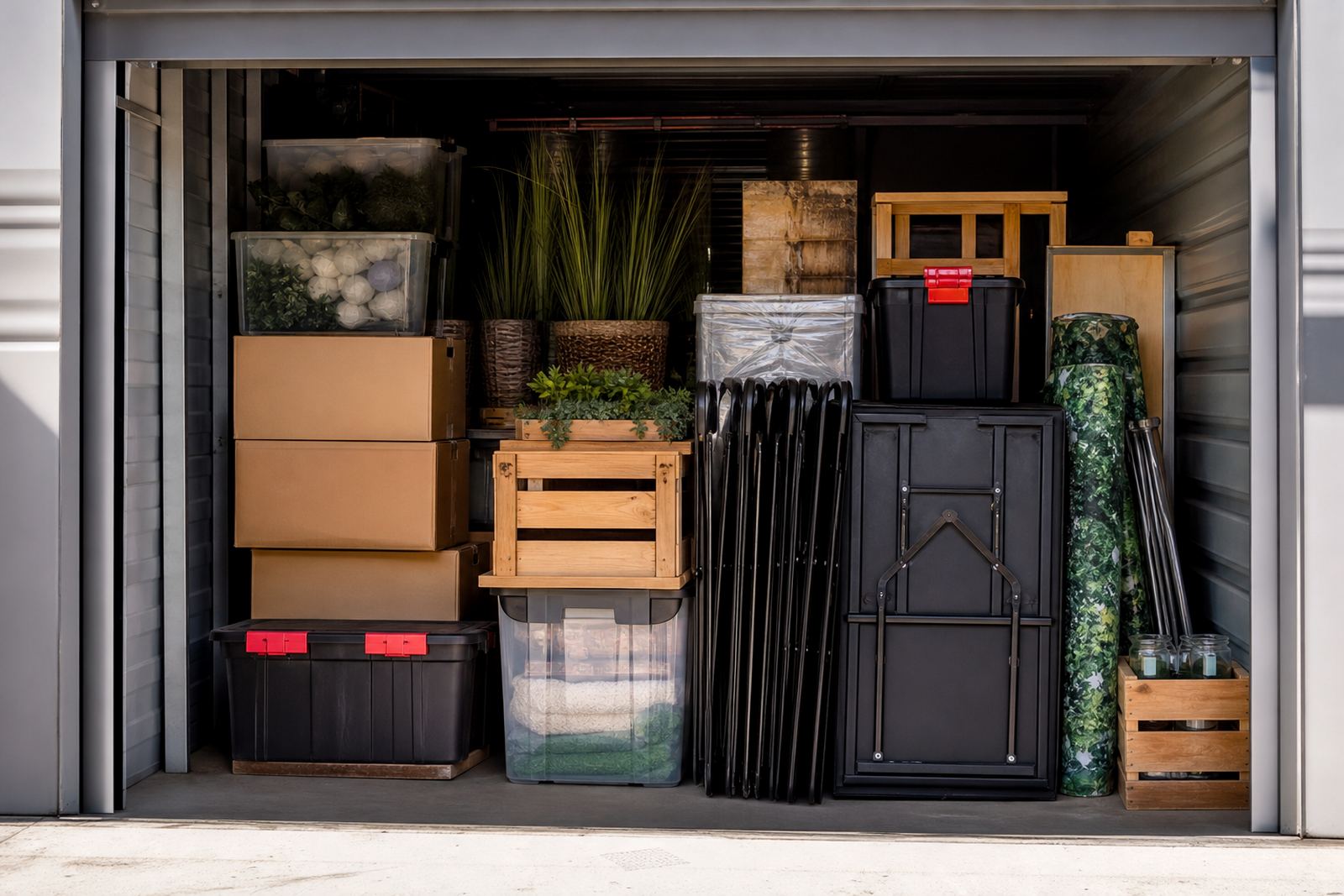

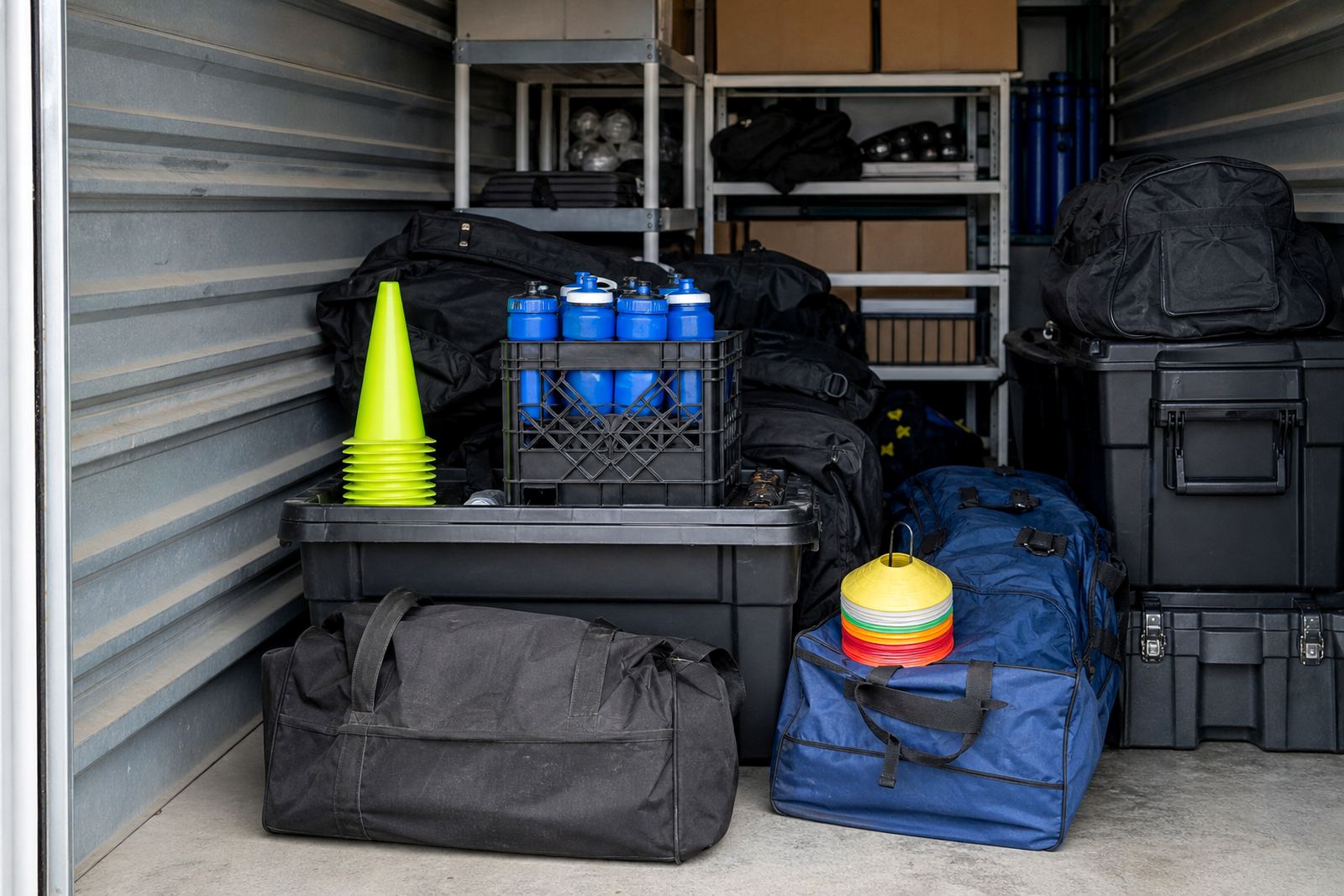
When the club room is full and the kit keeps growing
Many clubs start with a single room at a school, community centre or municipal sports ground, then the gear grows faster than the storage plan. Balls, bibs, cones, first aid items, training ladders, gazebo parts, score sheets and sponsorship banners all need a place that is not a dusty passage or a coach’s car boot. A self-storage unit gives the committee a clean, lockable space off site and that can help keep the clubhouse or office clearer for day to day use.
For clubs in Midrand, Johannesburg, Pretoria, Centurion and Kempton Park, the main benefit is simple access. You can store items between sessions, collect what is needed for the weekend and return it when the season slows down. It suits football, netball, rugby, hockey, cricket, tennis and swimming groups, plus development academies that keep extra stock for clinics and school programmes.
When everything has a place, it is easier to see what is missing and what must be replaced before match day.
What sports clubs usually store in a unit
Every club packs differently, but the same kinds of items come up again and again. The right unit should handle mixed equipment without forcing the committee to stack fragile items under heavy bags. It helps to separate training gear, match day gear and admin materials from the start.
- Training cones, markers and hurdles
- Balls, pump kits and repair tools
- Uniforms, tracksuits and spare socks
- Match sheets, clipboards and stationery
- First aid kits, ice packs and tape
- Fold-up tables, gazebos and banners
- Drinks containers and cooler boxes
- Archive boxes for registrations and records
If the club also sells refreshments or runs events, a little extra space for stock organisation can help. It keeps branded items together and makes stock take faster before a tournament or fundraiser. For coastal clubs or teams with gear that sits for long periods, dry storage matters because humidity can affect cardboard, fabric and metal fittings over time.
Planning the unit so match-day gear is easy to reach
A good storage layout saves time. Clubs often make the mistake of putting the newest gear at the back and leaving the least-used items at the front, which means every collection takes longer than it should. A better setup is to group the unit by purpose and frequency of use. Keep the daily training items near the door, then place the weekly match kit behind that, with archive boxes and spare signage at the back.
Use strong cartons, clear labels and a simple numbering system. For example, one row can hold uniforms by age group, another can hold balls by code or team, and another can hold admin files by season. Shelving helps if the club wants to store smaller items off the floor. Pallets or plastic tubs are useful for keeping gear away from moisture after rain or when the floor gets damp in winter.
- Label boxes by team, age group or event
- Keep wet or dirty kit separate from clean uniforms
- Store heavy items low and lighter items higher up
- Leave a clear aisle so two people can work in the unit
- Use sealed containers for papers, books and flags
When arranging access, think about who collects gear and when. A coach may need regular weekday access while a treasurer only comes in once a month. Setting a simple collection routine helps avoid keys being passed around without control, and it reduces the chance of items going missing.
Security, access and the practical side of club storage
Sports clubs often keep items that are easy to lose but expensive to replace, so security is a major part of the decision. A proper storage unit gives the committee a controlled space for equipment and documents, rather than leaving boxes in a changing room or store cupboard that many people can enter. Access arrangements should be clear from the start, especially where several team managers share the same stock.
It is also wise to plan around the club calendar. Before school holidays, league weekends and tournament periods, the unit should be checked so the essentials are ready to go. After the season, damaged kit can be separated, uniforms counted and old paperwork archived. That saves time when the next session starts. In busy areas like Sandton, Randburg and Edenvale, where volunteers often work around office hours, flexible access can make a real difference.
Good packing supplies are part of the security story too. Strong boxes, tape, wrap and labels keep items closed and easier to identify. For events with borrowed gear, a sign out sheet can help the committee track what leaves the unit and when it comes back. It is a basic step but it avoids confusion later on.
Common mistakes clubs make with storage
The biggest mistake is underestimating how quickly a season fills a unit. A club might start with a few boxes and later add trophies, event stalls, cleaning supplies and donated kit. Without a proper plan, the space becomes difficult to use and members end up leaving items in cars or at home. Another common problem is mixing old stock with current stock, which leads to double buying and missing items.
Clubs also sometimes forget about documents. Registration forms, disciplinary records, venue permits and meeting papers need a dry place and clear order. If these are stored in loose piles, they can be damaged or lost during a move. A small archive section within the unit can prevent that.
Here are a few errors to avoid:
- Storing damp kit with dry uniforms
- Using weak cartons for heavy balls or books
- Leaving no aisle for access to the back wall
- Keeping shared keys with too many people
- Failing to count stock before and after events
LastBox works with clubs that need more order than a spare room can offer. The aim is practical storage that supports the season rather than slows it down, even when schedules shift at short notice.
Budget ranges for sports club storage in Rand
Clubs often want a guide before they commit, especially if they are managing membership fees and sponsorship funds carefully. Budget usually depends on the amount of gear, how often the unit will be accessed and whether the club needs packing materials, shelving or help with planning. Smaller collections of balls and uniforms can usually fit a modest unit, while larger clubs with event gear, archives and stock for multiple teams need more room.
As a broad working range, many sports clubs look at a few thousand Rand per month for a smaller space, with larger units or more frequent access sitting higher. Packing supplies add a separate cost depending on how many boxes, rolls of tape, wraps and labels are needed. If the club is moving out of a clubhouse or consolidating gear from several sites, there may also be a once off spend on move in support, unit size guidance and packing station setup.
The most practical approach is to list what must be stored now, what is seasonal and what can stay in office filing. That way the club does not pay for space it will not use. A proper walkthrough of the gear list usually gives a clearer answer than guessing from the outside.
How LastBox supports clubs across Gauteng
From the Midrand base, LastBox supports sports clubs across Gauteng with self-storage units, moving boxes and packing supplies for organised storage. The team can help with move in support, packing supply advice, unit size guidance, access arrangement, business storage support, archive planning, decluttering support, student storage help, office move support, stock organisation, packing station setup and move-out planning. That makes it easier for club managers and volunteers to keep track of equipment during the season and off season.
Clients can reach the team through the enquiry form on the contact page. For clubs that need to plan storage around training days, school terms or tournament weekends, a short enquiry is often enough to start the process. The focus is on keeping the gear together, easy to reach and ready when needed, not buried in a back room where nobody can find it.
Whether the club is storing kits for one team or several age groups, the right unit gives the committee more control and less stress. That is useful when the fixtures are tight and the helpers are all volunteers.