
When event stock starts crowding your workspace
If you run events from home, a studio, a warehouse corner or a shared office, the overflow can build up quickly. One week it is plinths and backdrops, the next it is folding tables, branded stands, chair covers, linens, cables and boxes of lighting parts. Many Gauteng event teams only need temporary space between bookings, but that space still needs to be dry, secure and easy to work with.
Our Midrand base is suited to customers who move stock in and out regularly and need practical access for loading. Mxolisi Mdletshe and the team help with unit size guidance, access arrangement and move-out planning, so you are not paying for more room than you need. If your business serves Sandton, Randburg, Johannesburg, Pretoria, Centurion or Kempton Park, storage close to the major routes can save time on peak delivery days.
For event firms, the common pressure points are simple: too much stock in one place, fragile items getting scratched, and packing that was never meant for repeated handling. A proper storage plan helps you keep everything together by event type, by client or by item size, with less time wasted on the day before setup.
Typical items stored between functions and activations
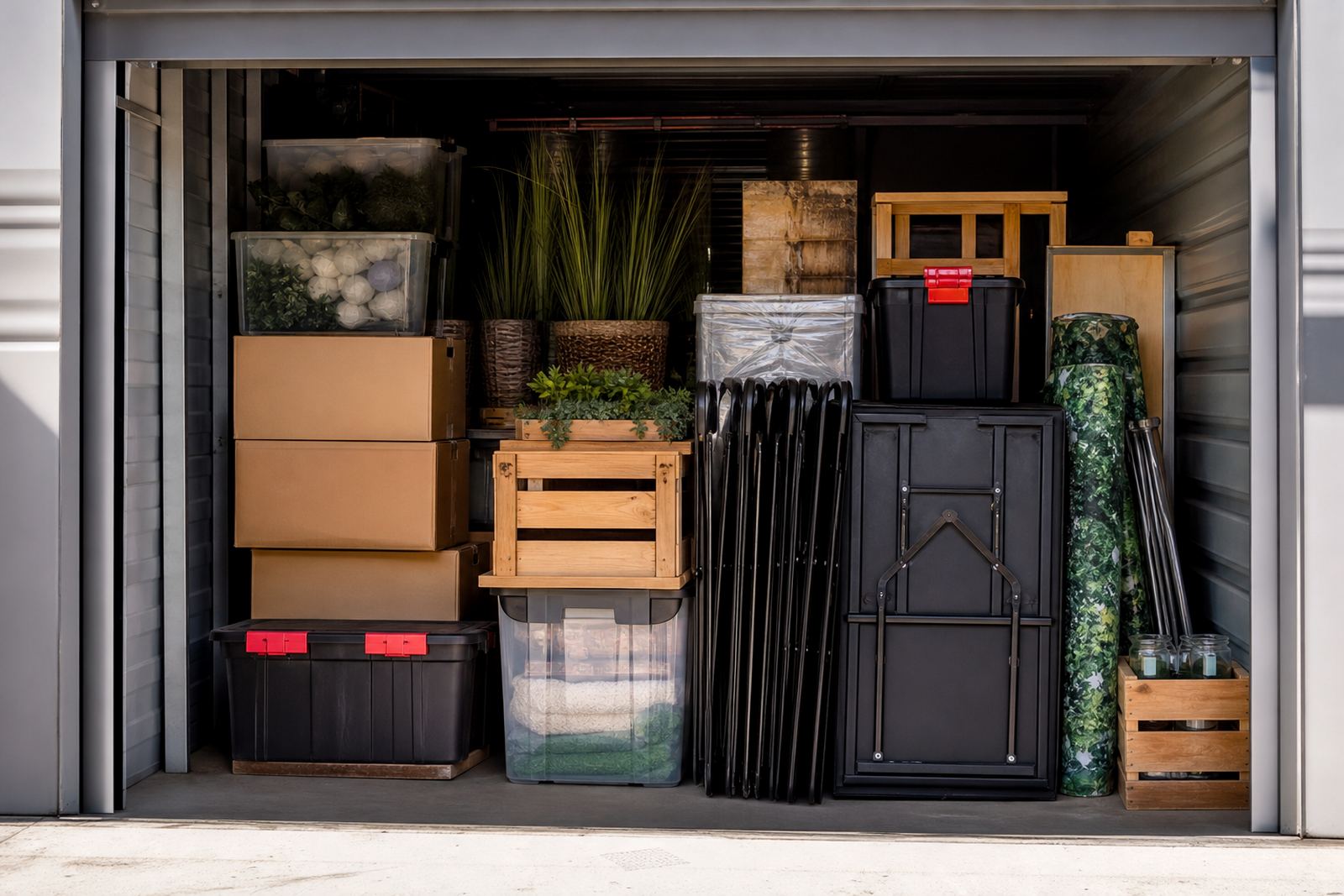
Event equipment is varied, but it usually falls into a few clear groups. Some items stack well, while others need padding, upright storage or a narrow access path. Farah Jacobs often advises customers on packing supplies for mixed loads, because the wrong box size or loose wrapping can cause damage fast.
- Décor items such as centrepieces, vases, fabric drapes and signage
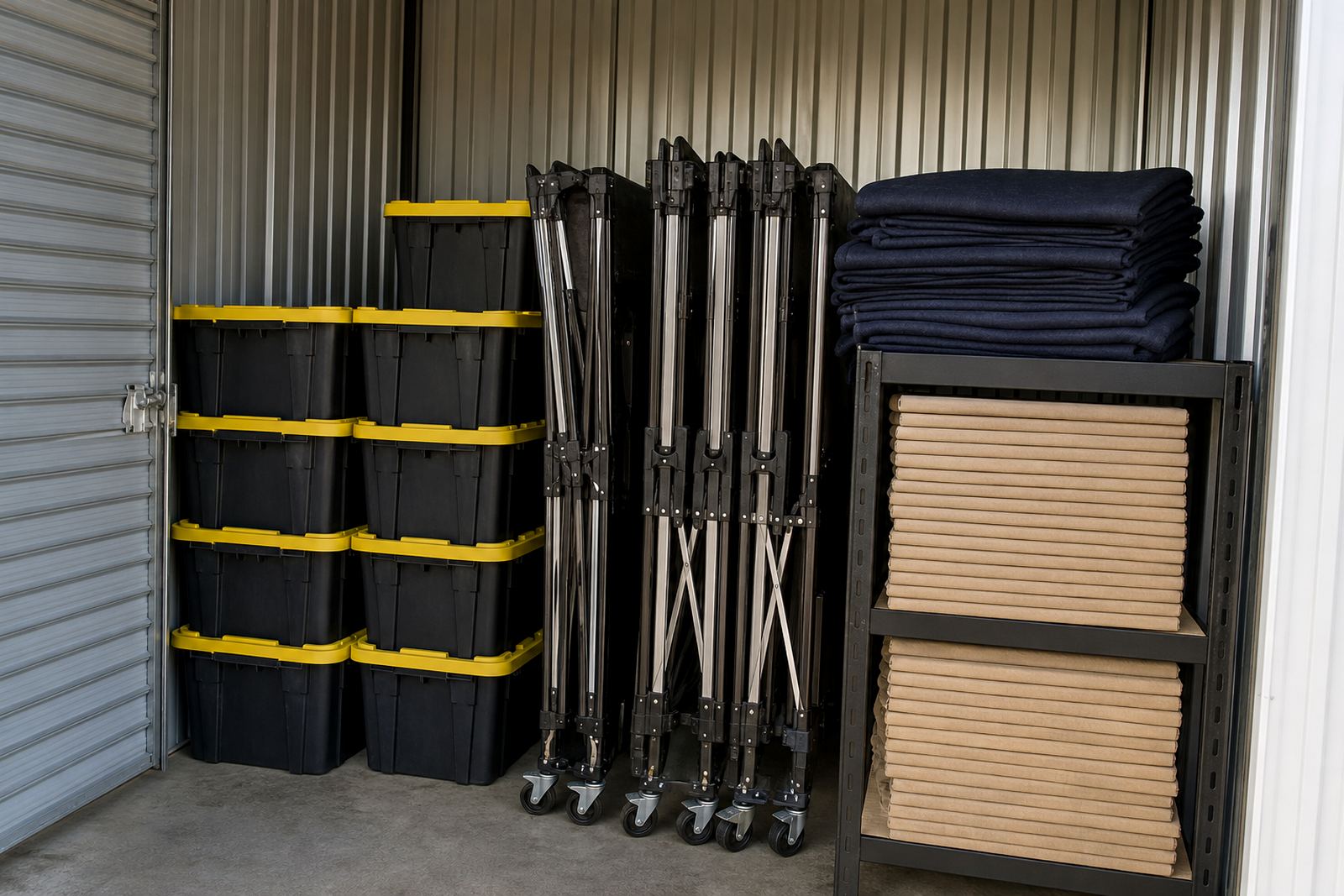
- Folding tables, plinths, stands and lightweight display frames
- Chair covers, tablecloths, runners and linen packs
- Cable boxes, extension leads and small lighting accessories
- Backdrops, pop-up displays and branded event materials
- Packaging, spare stock and consumables for on-site setup teams
For larger event operations, inventory can also include refill stock, printed material, AV accessories and cleaning kits. In Midrand and surrounding industrial areas, some businesses store a full event kit in one unit and use a second section for overflow stock or seasonal items. That makes stock checks easier when functions get busy and a few last-minute jobs land at once.
Kamini Soobramoney often sees that event teams underestimate the amount of small equipment they carry. One box of clips, one crate of cables, one bag of fasteners, then suddenly the cupboard is full. Storage works best when these smaller items are grouped clearly and labelled before they come in.
How to plan the unit so stock stays organised
Layout matters as much as the unit itself. Event stock is usually reused often, so the aim is quick access and clear grouping rather than long-term archiving. Goitseone Mabandla and Johan Shabalala help customers think through what should sit near the front, what should be stacked higher and what should be kept in sealed containers. A small planning step now can save a lot of lifting later.
A practical setup usually works like this: heavier tables and crates on the floor, frequent-use items near the entrance, and delicate décor in labelled boxes on shelving or pallets. If you are storing stock from several clients, create separate zones so items do not get mixed after a busy weekend. For businesses that work across Pretoria, Centurion and Johannesburg, this also makes dispatch simpler when teams collect different event packs on the same day.
- Keep a clear aisle so boxes can be moved without reshuffling half the unit
- Store fragile décor above floor level and away from heavier items
- Use the same box size where possible for easier stacking
- Label boxes by event type, season or client folder
- Wrap items that can scratch, chip or absorb moisture
- Leave a small gap from the walls for airflow, especially during damp weather
In Gauteng, dust and sudden rain can both affect stored stock if packing is careless. If you are storing fabric, printed materials or polished surfaces, sealed boxes and lined containers help keep items cleaner between jobs.
Access and security for busy event schedules
Event work rarely follows office hours. Site visits, bump-ins and late pickups are part of the job, which is why access needs to be arranged around real trading patterns. Omolemo Phasha handles a lot of customer queries from event teams who need practical collection timing, especially when bookings run late or a trailer arrives earlier than planned.
Security matters when stock has value and is used for paid work. That includes controlled entry, monitored premises and a unit that is kept in good condition. Moagi Ngcobo focuses on facilities checks so the storage environment stays orderly and suitable for regular handling. If your team stores high-turnover décor or branded pieces, knowing where each item is and who collected it last can prevent loss and confusion.
For customers coming from Midrand, Sandton or Edenvale, a nearby storage point can help reduce transport time, fuel costs and the risk of items being left overnight in a vehicle.
- Plan collections around traffic on the N1, R21 and main local routes
- Keep a checklist for what goes out and what comes back after each function
- Separate return items from outgoing stock to avoid mix-ups
- Use sealed containers for items that must stay clean and dry
- Book access with enough time for loading, not just a quick stop
Common storage mistakes event teams make
The biggest mistake is packing by urgency instead of by function. When items are rushed into storage after a late event, the unit becomes difficult to use the next time. Another common issue is keeping loose décor in oversized boxes, where pieces shift and get damaged during transport. Some teams also underestimate how often they need to reach stock in the first few weeks, then choose a layout that is too tight.
Another problem is mixing returnable hire stock with consumables and old event leftovers. That can lead to lost items, duplicate purchases and wasted time during busy seasons. A better approach is to separate reusable equipment, one-off materials and damaged pieces before they go into storage. If you are holding stock for wedding season, year-end functions or promotional campaigns, review the unit before those peak periods so you know what needs replenishing.
Decluttering support can help if you have kept items far longer than you planned. Sometimes the unit is full of broken stands, bent frames or old packaging that should have been cleared out months ago. Removing those items creates space for what still earns money. It also makes stock counts much easier for the operations team back at base.
Budget guidance for event storage and packing supplies
Costs depend on how much space you need, how often you access it and whether you also need packing materials. A small amount of well packed décor may fit neatly into a modest unit, while a full event inventory with tables, stands and signage often needs a larger setup. For many customers, the most practical starting point is to match the unit to current stock, then review after one or two busy months.
As a broad working range, customers often budget from a few hundred Rand for basic packing supplies and from low four figures per month for smaller storage needs, with larger event stock requiring more. The exact amount depends on how much floor area, access and organisation you need. It is usually better to pay for the right amount of space than to force stock into a unit that is too small, because damage and re-packing cost more in the long run.
Johan Shabalala can help assess whether your event gear should sit in one unit or be split across categories. If your business supplies corporate functions, weddings and activations across Gauteng, the right storage setup often changes with the season. A careful review before peak trading periods helps keep the budget under control.
How LastBox supports event businesses
LastBox works with event teams that need practical storage, clear access and help choosing the right packing supplies. From Midrand Storage through to Johannesburg Storage, Pretoria Storage, Centurion Storage, Kempton Park Storage, Sandton Storage, Randburg Storage and Edenvale Storage, the focus is on keeping your stock organised and easy to collect when you need it.
Through the enquiry form on our contact page, customers can ask about move-in support, packing supply advice, unit size guidance, business storage support, stock organisation, packing station setup and move-out planning. Whether you are storing décor for one season or keeping an active event inventory ready for the next booking, the aim is the same: less clutter, fewer damaged items and a cleaner working routine for your team.