
When seasonal gear starts taking over the house
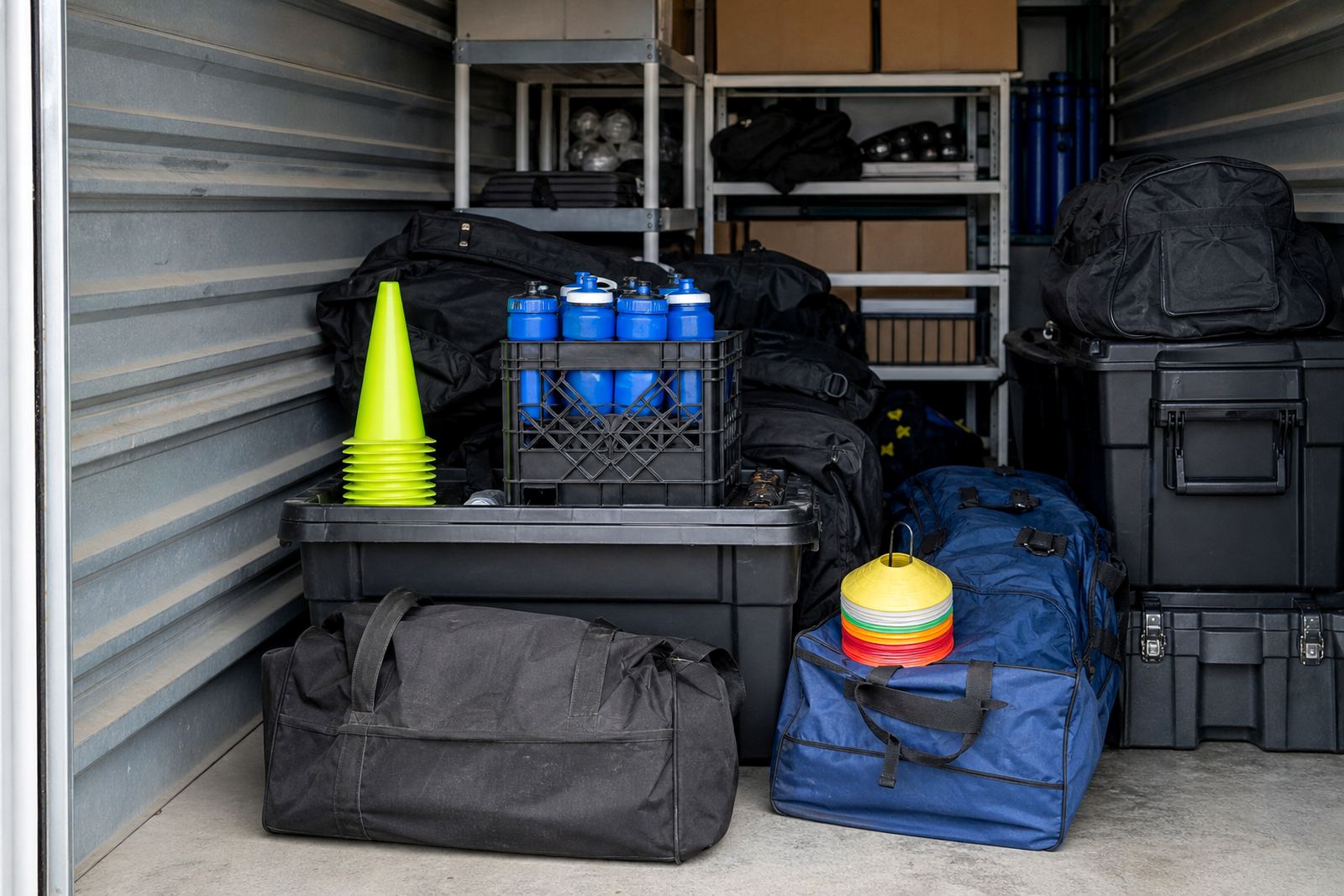
Seasonal item storage is useful when you only need certain belongings for a few months at a time but still want them close enough to collect without a long drive. In Midrand, Johannesburg, Pretoria, Centurion and Kempton Park, many customers use storage for summer patio sets, winter blankets, holiday boxes, school break items, camping kit and sports equipment. It is also a sensible option for small businesses that rotate display stock, promotional materials or event equipment.
The main goal is simple. Keep seldom-used items out of the way, protect them from dust and damp, and still know exactly where they are. That saves floor space at home and keeps your work area more organised.
What people usually store by season
Seasonal storage works best when the items are grouped before they arrive. That makes it easier to choose the right unit size and organise access later. We often see customers storing a mix of household, garden and business items that are only needed at certain times of the year.
- Christmas decorations, gift wrap and artificial trees
- Patio cushions, folding chairs and outdoor tables
- Camping gear, gazebos and picnic equipment
- Winter bedding, heaters and extra blankets
- School holiday toys, bikes and sports kit
- Retail display items, point-of-sale materials and seasonal stock
- Archive boxes, client files and spare office supplies
If items are sensitive to moisture, choosing proper packing and a dry unit matters. Coastal humidity affects how cardboard, fabric and some packaging hold up over time, so it helps to use sealed boxes and keep items off the floor where possible.
Planning the right unit layout before you move in
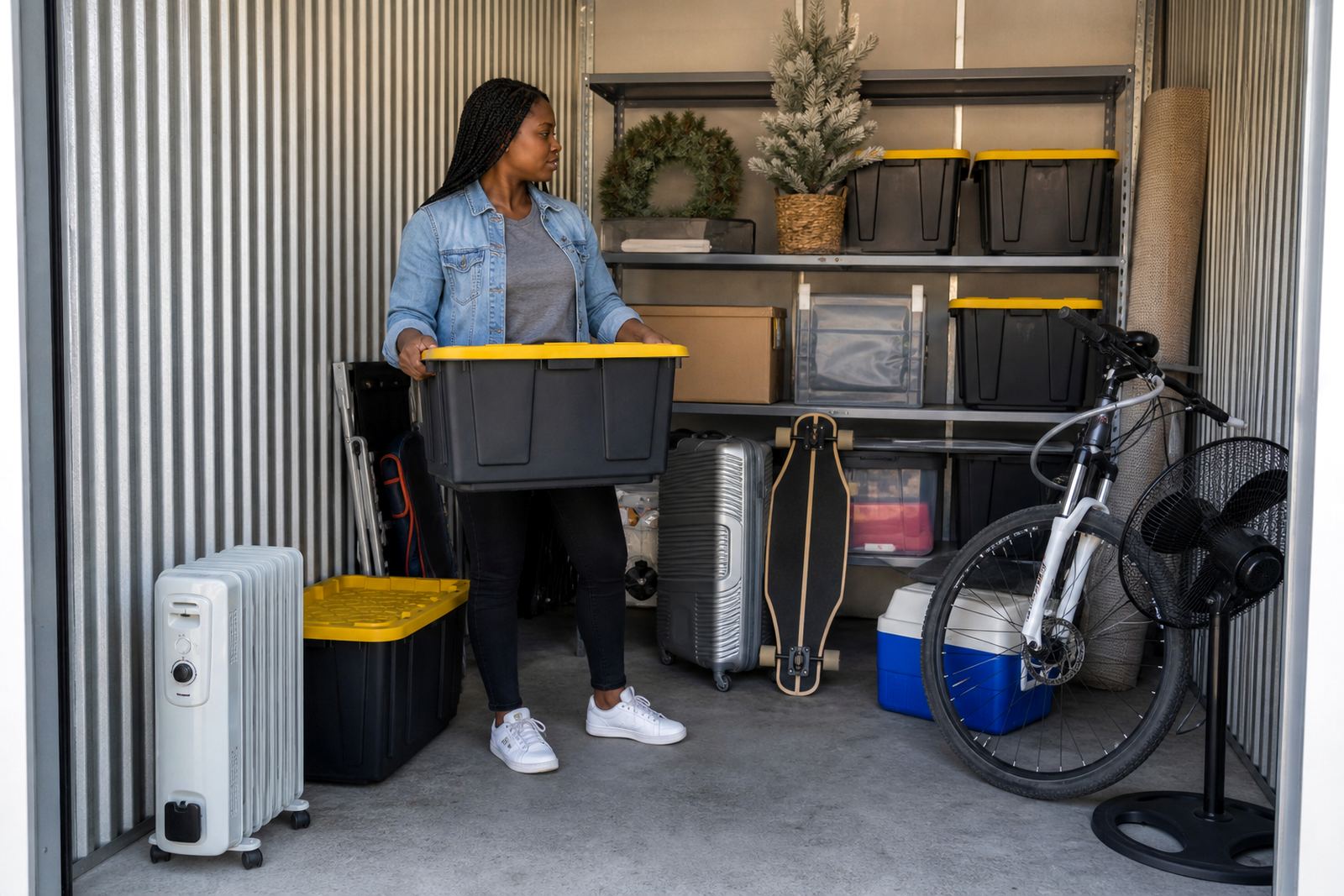
Good planning makes seasonal storage easier to use. A unit should be packed with the items you will need sooner near the front, and the long-term items at the back. That way you do not have to unpack half the unit to reach one box of holiday lights or a set of winter jackets. If your items are grouped by season or by room, labels become much more useful.
For many customers, a narrow but organised setup works better than cramming everything in tightly. Leave a small aisle if you expect to swap items during the year. Shelving can help with lighter boxes, while heavier items such as garden tools or bulk packaging should stay on the bottom. Our team can help with unit size guidance, access arrangement and packing supply advice so the layout suits the way you use your belongings.
- Label boxes on two sides, not only the top
- Keep a simple list of what is in each box
- Use same-size cartons where possible for safer stacking
- Wrap fragile items before placing them in storage
- Store upholstered items clean and fully dry
Security, access and practical storage habits
Access matters just as much as security when you are storing items for a season. If you need to collect sports kit, decorations or a stock order at short notice, the unit must be easy to reach without fuss. Our Midrand base supports customers who want practical access arrangements and a straightforward process for moving items in and out.
Security is also important, especially when the unit holds personal belongings, trade stock or equipment with replacement value. Seasonal storage should give you peace of mind without becoming complicated. It helps to choose a unit that is kept clean and well managed, with clear site rules and controlled access. If you are storing business materials, ask about stock organisation and archive planning so the space stays orderly through busy periods.
- Keep a copy of your storage list at home and another with your files
- Place valuable or fragile items where they are easy to inspect
- Use sturdy boxes rather than old cartons that soften over time
- Do a quick check after heavy rain or a humid spell
- Take photos of packed items before sealing boxes
Packing supplies that suit seasonal storage
Seasonal items last longer in storage when the packing is right from the start. Strong boxes, tape, wrapping paper, protective covers and markers all make a difference. For soft items such as curtains, cushions and bedding, clean packing is important because dust and moisture can settle in if items are stored loosely. For decorations and fragile pieces, smaller cartons are often better than overfilled large ones.
Many customers also ask for help setting up a packing station at home or at work before a move. That makes sorting easier and reduces the chance of mixed boxes. If you are packing business stock, standardising box sizes can help with stock organisation and quicker loading. LastBox supplies moving boxes and packing supplies across Gauteng, with support for Midrand, Johannesburg, Pretoria, Centurion, Kempton Park and surrounding areas like Sandton, Randburg and Edenvale.
Common mistakes that make seasonal storage harder
The most common problem is putting items into storage in a rush. People often skip labelling, use weak boxes or pack damp items that smell fine on day one but cause trouble later. Another mistake is choosing a unit that is too small, then stacking everything tightly so the first box you need ends up trapped at the back. A little planning saves time and keeps the contents in better condition.
It also helps to think ahead about the next season. If you know you will need the Christmas boxes in November and the garden furniture in spring, plan the front of the unit around that cycle. For business customers, move-out planning and business storage support can prevent stock from becoming mixed up with old event materials or archived files. If you are unsure, our storage advisor can help you work out a sensible setup before the first drop-off.
- Do not store wet fabric, paper or cardboard
- Do not overpack one box until the base gives way
- Do not bury frequently needed items behind everything else
- Do not ignore insects, dust or moisture control
- Do not guess at unit size when a quick check would help
What seasonal storage usually costs to budget for
Budgeting for seasonal storage depends on how much space you need, how often you visit the unit and whether you also need boxes or packing materials. Smaller seasonal loads may only need a compact unit for boxes and a few bulky items. Larger households and small businesses often need more room for outdoor furniture, archive cartons or rotating stock. The smartest approach is to match the unit to the actual volume, not to a rough guess.
As a general planning guide, customers often budget from a few hundred rand for basic packing supplies and from around the low thousands per month for storage space, depending on size and access needs. If you are storing multiple seasonal categories together, ask for guidance on layout first. It can prevent paying for more space than you need. You can reach LastBox through the enquiry form on our contact page to discuss the setup that suits your household or business.