When records outgrow the office filing room
Many businesses in Midrand, Johannesburg and Pretoria reach a point where archive boxes start taking over spare corners, storerooms and unused meeting space. That usually happens when new contracts keep coming in, staff numbers grow, or old records must stay on file for compliance, tax checks or internal reference. Document storage gives you a straightforward place to move those boxes so the office can work properly again.
We see this need often from accountants, attorneys, medical practices, logistics teams, body corporates and owner-managed firms that need order without losing access. The aim is not just to remove clutter. It is to keep records grouped, labelled and easy to trace when someone needs an invoice, signed form or historical file. For many clients, this becomes part of a wider move-out plan, archive planning or office move support project.
If records are left in mixed piles at the back of the office, they become harder to retrieve and easier to damage. Heat, dust, damp and accidental spills can all cause problems, especially in busy premises where the cleaner, contractor or staff member moving a box does not know what is inside. A proper storage setup makes it simpler to keep paper records in order and protect them from daily office traffic.
Typical document storage set-up for Gauteng businesses
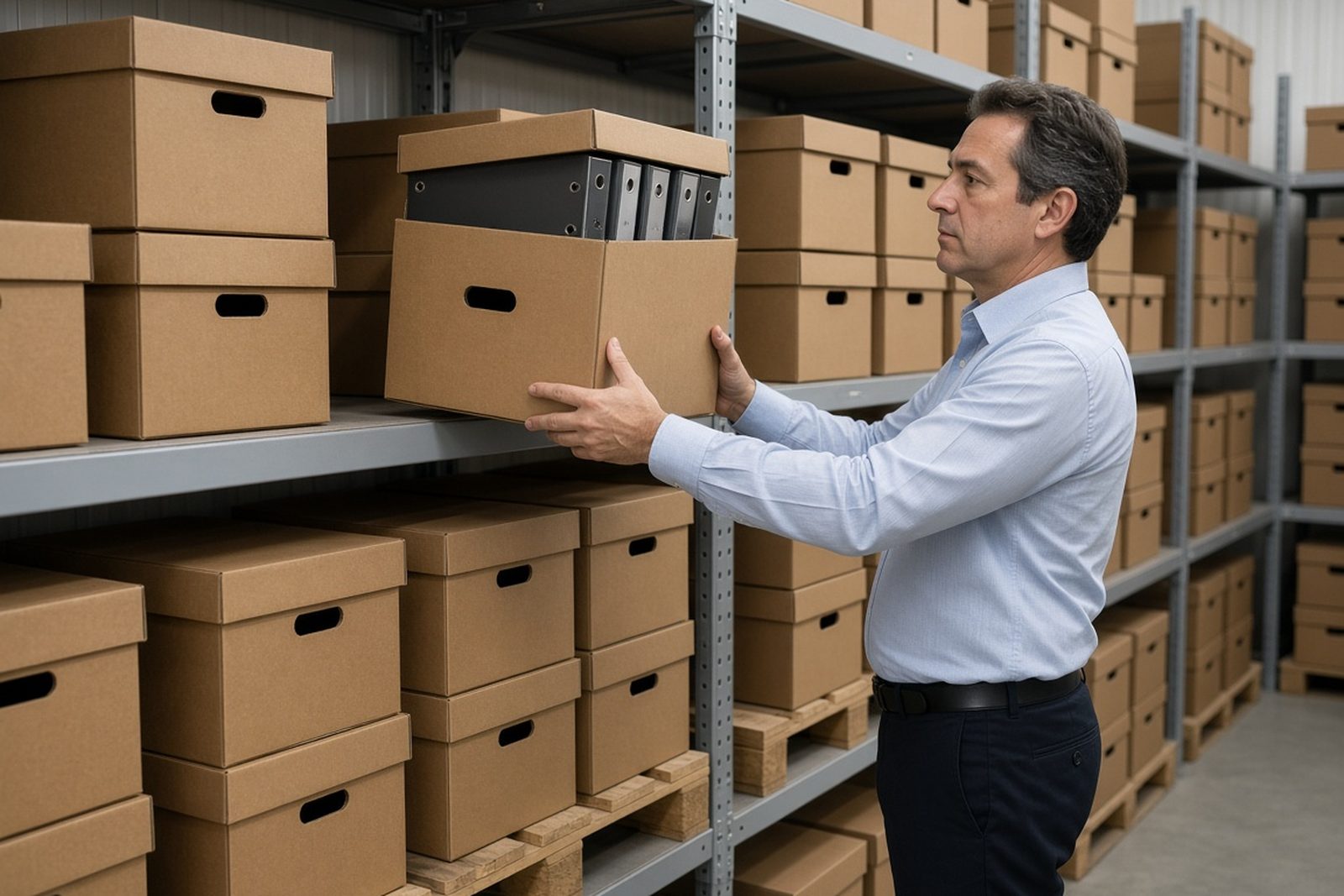
Document storage is usually built around archive boxes, file crates and clearly marked cartons. Depending on how much material you have, you may only need a few boxes or a larger section for rolling intake over time. We also help with packing supply advice so that records are packed in a way that suits the movement from office to storage and later back again.
For most businesses the usual equipment set includes the following:
- Strong archive boxes for files, statements and records that must stay grouped by year or department
- Smaller packing cartons for loose stationery, binders and support paperwork
- Labels and marker pens for box codes, dates and departments
- Plastic sleeves or folders for documents that are handled often
- Bubble wrap or protective packing for fragile items stored with records, such as hard drives or small office equipment
- Palettes or stacking aids where a loading area needs neater organisation
If you are moving records from an office in Sandton, Randburg, Edenvale or Kempton Park, it helps to keep the box count, access pattern and storage sequence simple. That way the team can get to the right files without opening every box on site.
Planning the layout so records stay easy to trace
A good document storage plan starts before the boxes leave the office. We normally suggest sorting records by year, department or client group, then assigning a clear code to each box. That makes it easier to arrange the storage unit in rows or stacks that follow the same logic. When a box is needed later, staff do not have to guess where it was placed.
For businesses with steady record intake, it helps to leave space for future boxes instead of packing the unit from wall to wall on day one. This matters when monthly invoices, compliance files or archived project paperwork keep arriving. A neat aisle or front gap can save time later, especially if records need to be checked during normal business hours.
Access arrangement is also worth planning carefully. If only one person knows the box system, retrieval becomes slow when that person is unavailable. A better method is to keep one master list, one label format and one agreed naming method. That way the accountant, office manager or external bookkeeper can all work from the same records without confusion. It sounds simple, but in practice it saves plenty of time and a fair amount of frustration.
For offices with regular off-site filing, Midrand storage often works well because it is central for clients travelling from Johannesburg, Pretoria and Centurion. That makes scheduled visits easier and reduces the risk of paperwork being carried around in a car boot for too long, which is never ideal in summer heat or during wet weather.
Security and access matters for paper records
Document storage is not only about having somewhere to put boxes. It is also about knowing those records are being kept in a controlled environment with sensible access control. Businesses usually want a unit or storage area where only authorised people can get in, and where boxes are not left open to general office traffic.
Good storage practice generally includes controlled entry, tidy stacking and clear separation between different clients or departments. It also helps to keep records off the floor, away from damp walls and out of areas where dust, leaks or building work can affect them. In coastal parts of Gauteng is not the issue, but humidity still varies enough that sealing and packing matter if files must stay in place for a long time.
When planning access, think about how often you will actually need the files. Weekly access calls for a different layout to records that are kept for compliance and only checked now and then. If a business wants business storage support, the storage plan should match the real workflow rather than an ideal one. Otherwise the unit quickly turns into a pile of boxes with no system.
Common mistakes businesses make with archive boxes
Most document storage problems start with poor packing, unclear labels or leaving the sorting for later. The quickest way to create trouble is to pack boxes by available space instead of by date or department. Once that happens, one file can take much longer to find and the whole unit becomes harder to manage.
Other common mistakes include overfilling boxes, storing loose papers without folders, and mixing active files with records that should be archived. It is also common to leave a few open boxes in the office because someone thinks they will sort them next week. In reality those boxes often sit for months, gathering dust and making the office feel more crowded than it should.
- Do not pack heavy files into weak cartons that may sag when stacked
- Do not leave labels vague, such as office files or old paperwork
- Do not place records near damp walls, windows or areas with leaks
- Do not mix archive material with stock, stationery or unrelated equipment
- Do not rely on memory for box locations if several people may need access
A simple method is usually best. One box type, one label format and one storage list can make a big difference, especially for SMEs that do not have a full records department.
Budget ranges and what affects the monthly cost
Document storage budgets usually depend on the amount of space needed, how often you need access, and whether you also need help with packing supplies or move-in support. A small set of archive boxes can cost far less to store than a full departmental archive with regular retrieval needs. Businesses should also allow for cartons, labels and packing materials if the records are not already boxed correctly.
As a practical guide, smaller document storage needs may start around R650 to R1 500 per month, while larger or more frequently accessed record holdings can sit in the R1 500 to R4 000 plus range depending on the setup. If you are storing a full office archive, adding packing materials or arranging a move from another site, the total can be higher. The best approach is to match the budget to the actual volume and access pattern rather than guess.
LastBox supports clients across Midrand, Johannesburg, Pretoria, Centurion and Kempton Park through the enquiry form on our contact page. The team can help with unit size guidance, packing supply advice, archive planning and move-out planning so the records are stored in a way that makes sense for the business. For document storage, that practical setup matters more than having boxes tucked away somewhere and forgotten.