
Protective wrapping for items that chip, crack or scratch
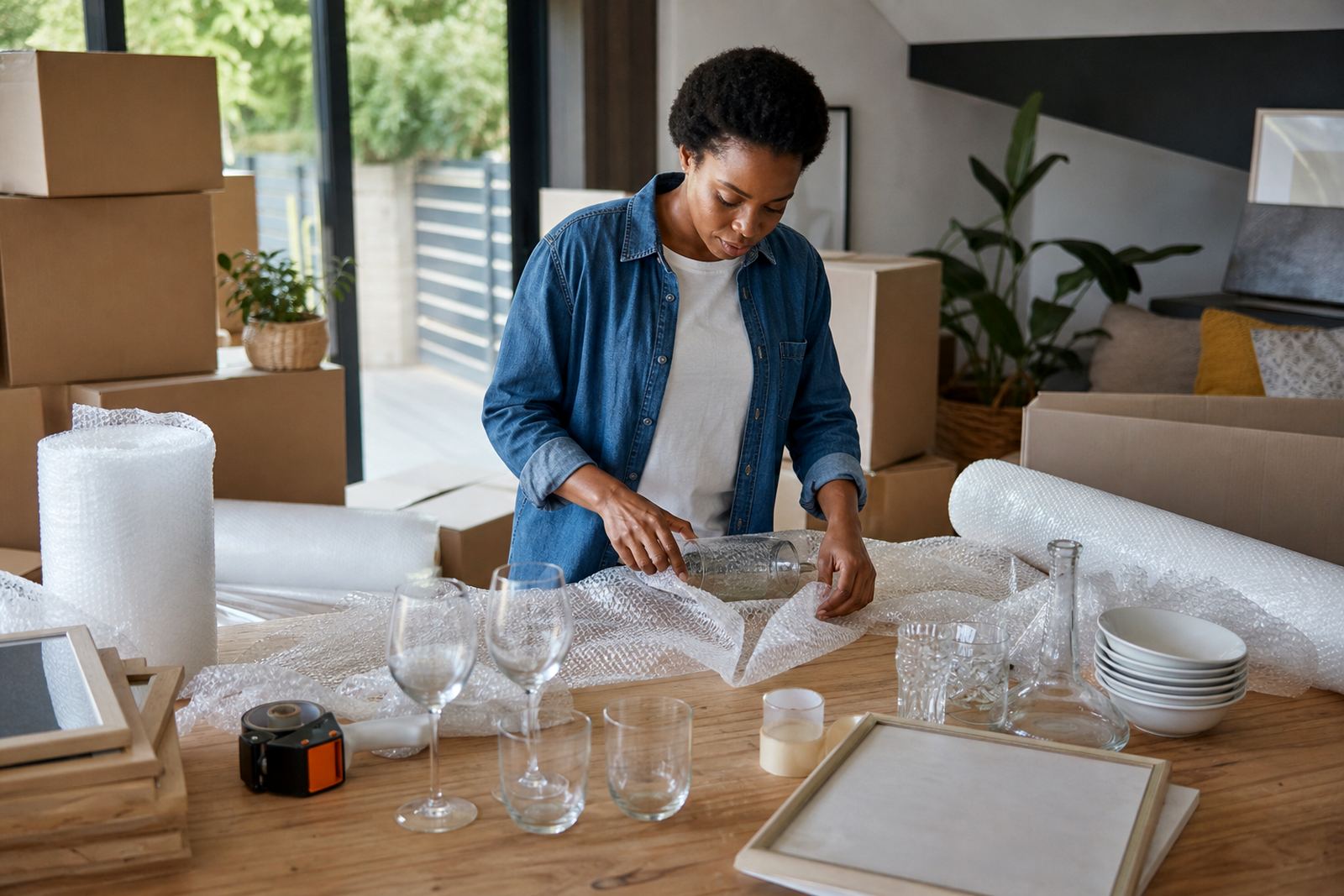
Bubble wrap is used to cushion fragile items so they do not knock directly against each other or against boxes, shelving or vehicle sides. It works well for glassware, framed pictures, ornaments, light fittings, vases, small appliances and stock that can mark easily. In Midrand and the surrounding Gauteng areas, it is a useful packing supply for home moves, office clear-outs and storage preparation where goods may be handled more than once.
For best results, the item should be wrapped with the bubble side facing inward when extra cushioning is needed, then sealed with packing tape. Heavier or sharper pieces may need a double layer, while polished surfaces often benefit from a clean paper layer first so the plastic does not rub directly against the finish. It is a simple material, but the right wrap can save time and reduce damage on move day.
- Suited to fragile household items and small business stock
- Helps reduce scratching, vibration and minor impact damage
- Useful for both short moves and longer storage periods
Roll sizes and packing options to suit different jobs
Bubble wrap is usually supplied in rolls, with different widths and bubble sizes depending on what needs packing. Narrow rolls are easier for wrapping smaller goods and filling gaps, while wider rolls suit furniture edges, larger décor items and stacked cartons. Small-bubble wrap is often chosen for lighter fragile goods, while larger bubbles are handy where extra cushioning is needed around corners and irregular shapes.
When ordering, it helps to think about how much you are packing, whether the items will be stored, and how often they may be moved after packing. A student storing kitchenware for a holiday break will need a different quantity from a retailer packing stock for dispatch or a family preparing for a house move. Bubble wrap is often ordered alongside packing tape, boxes, markers and protective paper so the whole job can be done at once.
- Available in different roll widths for small and large items
- Small and large bubble options for light or more delicate packing
- Can be combined with boxes, tape and paper for fuller protection
Where bubble wrap suits home, office and storage use
This packing material suits a wide range of local uses. Homeowners often use it for kitchenware, picture frames, ornaments, lamps and seasonal décor before storing items in a unit or garage. Businesses use it for archived items, sample stock, promotional goods and fragile office equipment that must be kept clean and sorted. It is also useful for market traders and online sellers who need a clean, consistent packing method for products that need extra care.
In coastal parts of Gauteng travel paths can still be humid in storage rooms and vehicles, so wrapped items should be packed in dry cartons and kept off the floor where possible. If a unit is used for longer storage, bubble wrap should be part of a broader packing plan that includes sealed boxes, labels and organised stacking. It is not a substitute for proper storage handling, but it helps keep goods in better condition.
- Suitable for moving, storage and stock preparation
- Useful for homes, offices, online sellers and light industrial stock
- Helps keep wrapped goods clean and grouped by category
How to pack safely without damaging the item
The main thing is to pack carefully and choose the right size. Items should be dry, clean and fully wrapped before being placed in a box or storage crate. Sharp edges should be covered first, then the item should be wrapped tightly enough to stay in place without crushing the bubbles flat.
Glass and mirrors need extra attention around corners. Plates and bowls should be stacked with padding between each piece. Smaller pieces can be wrapped individually and then grouped together in one carton with filler around them. For business users, packing station setup can save time, especially when there are many small items to wrap and label in one session.
- Pack dry items only and seal cartons once wrapped
- Use corner protection and filler for awkward shapes
Checking quality, thickness and quantity before ordering
Before ordering bubble wrap, check the thickness, bubble size and roll length against the job at hand. Thin wrap may be fine for light décor and small household items, but more delicate or valuable pieces often need a heavier grade with better cushioning. It is also worth checking whether you need perforated sheets for quicker packing or a full roll for continuous wrapping. If the goods will be stored for a while, ordering enough wrap at the start is better than trying to source more halfway through the move.
Make sure the roll size suits your packing area and storage space too. A very wide roll can be awkward in a narrow storeroom or back room, while a smaller roll may run out too quickly if you are packing a lot of stock. Customers often ask for guidance when they are unsure how much to buy, and that is especially common for office moves, archive packing and decluttering jobs where item quantities change as the packing progresses.
- Check bubble size, thickness and roll length
- Match the roll to the type of item being packed
- Order enough at the start to avoid delays later
Care, storage and handling in Gauteng conditions
Bubble wrap should be stored clean, dry and away from direct sun. Heat can affect the plastic over time, so keep rolls out of hot vehicles and closed metal spaces for long periods. If the wrap is used repeatedly in a business setting, it should be kept free from dust, oil and moisture so it stays suitable for packing. Damaged or heavily crushed wrap will not cushion as well, so inspect the roll before using it on fragile goods.
For units used in Midrand, Johannesburg, Pretoria, Centurion and Kempton Park, keeping supplies together helps with access and re-packing. Label one section for packing materials, another for fragile stock and another for returned items. Good storage habits matter where there is regular access arrangement or move-out planning, because items can be wrapped, unwrapped and repacked more than once. That is practical for households and small businesses alike, and it avoids a messy pile of loose wrapping all over the floor.
- Store in a dry, shaded place away from direct heat
- Keep rolls clean so they remain suitable for packing
- Organise supplies for quick access during repeat use
Unit details
| Product type | Protective wrapping material for fragile goods |
|---|---|
| Common use | Home moving, storage and business packing |
| Roll format | Supplied in rolls for manual packing |
| Bubble options | Small bubble and larger bubble variants |
| Best suited for | Glassware, décor, frames, small appliances and stock |