
What unit shelving does inside a storage space
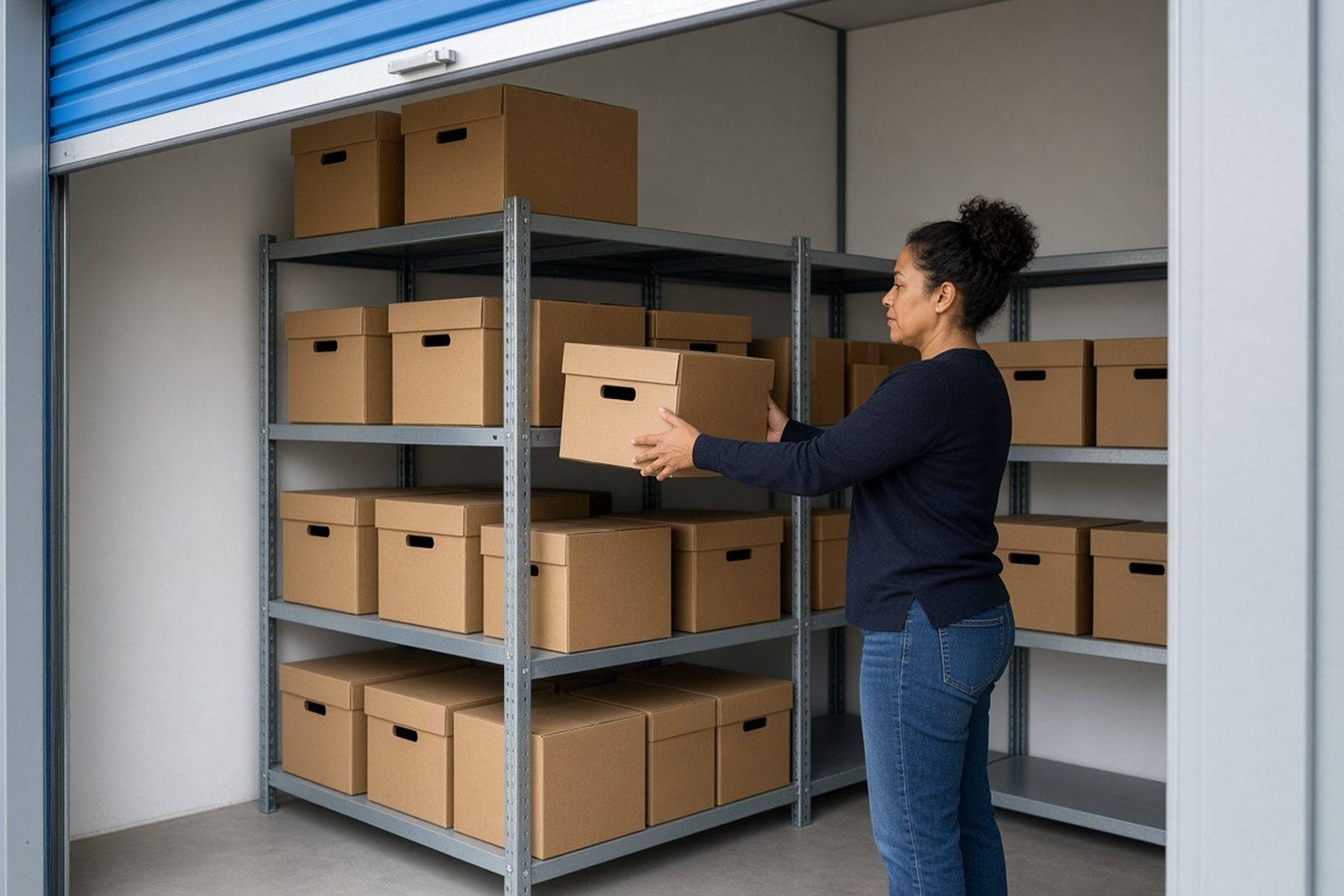
Unit shelving is a straightforward way to create more usable storage in a unit without stacking everything on the floor. It gives you level storage for cartons, archive boxes, tools, stock and household items, which makes the space easier to work in and safer to load and unload.
For many customers the real benefit is access. When smaller items are lifted onto shelves, you do not have to move three boxes just to find one.
- Helps use vertical space in a unit
- Makes items easier to label and find
- Reduces pressure from stacking heavy loads too high
- Works well for personal storage and business stock
Sizes, layouts and practical options
Shelving for storage units is usually chosen to match the unit size, the width of the items you are storing and how often you need access. A smaller setup may only need one or two bays along a wall, while a larger unit can hold a full row with a central walkway. The aim is to leave enough space for safe movement and for opening boxes without having to pull everything out.
Common options include open metal shelving, adjustable shelf levels and narrower bays for files or light stock. Heights can be planned to suit standard cartons, archive boxes and plastic tubs. If you are storing mixed goods, it often helps to combine low shelves for heavier items with higher shelves for lighter goods.
- Single wall units for compact storage
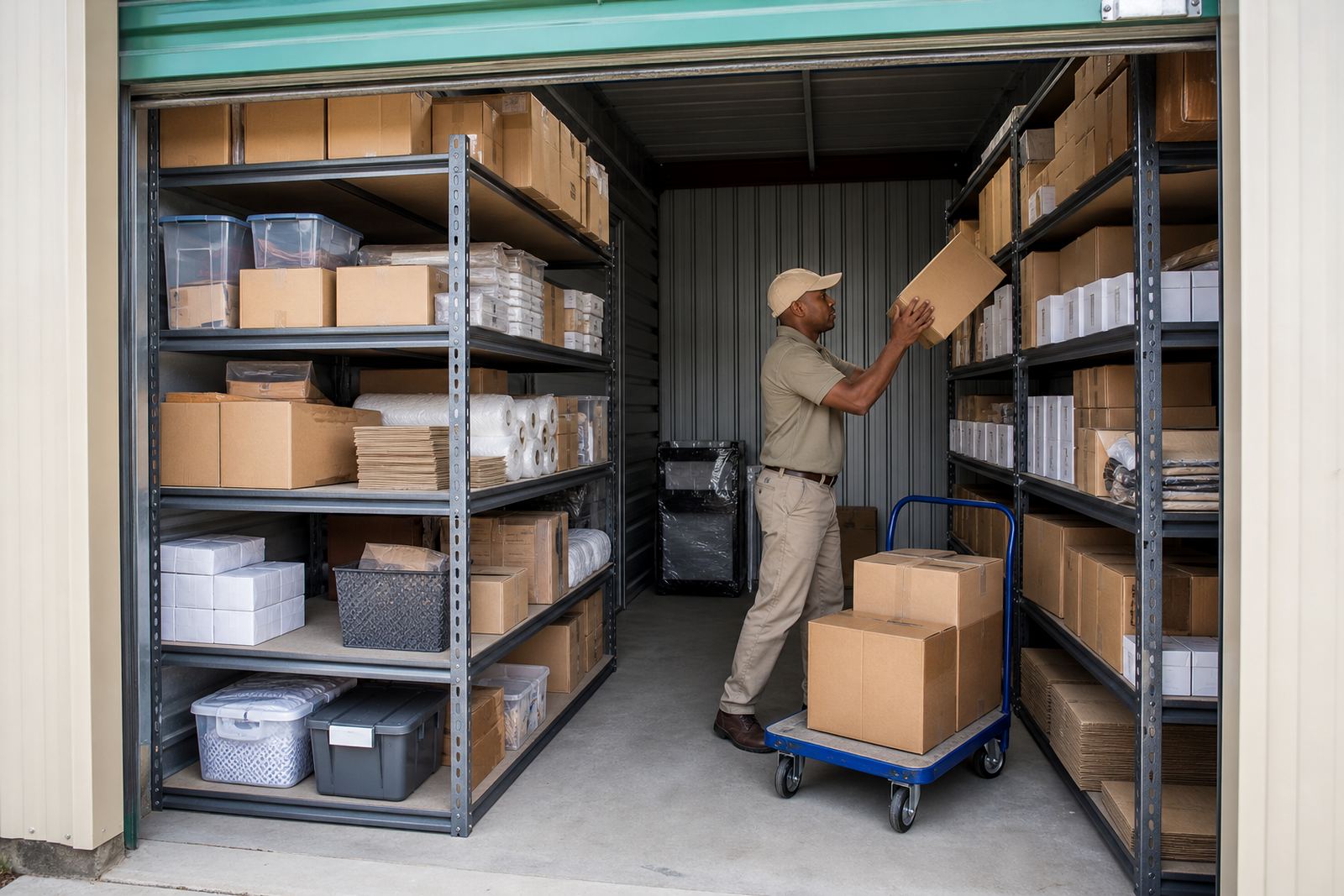
- Double-sided or aisle layouts for larger units
- Adjustable shelf spacing for mixed box heights
- Light-duty or medium-duty options depending on load
Where shelving suits best
Shelving works well when a unit is used for more than just long-term box storage. It is a practical choice for small businesses keeping stock, spare parts, documents or promotional materials close at hand. It also suits families who are between homes, decluttering, or storing seasonal items that should not sit under one another in a heavy pile.
In Gauteng, many customers use shelving to manage office moves, archive planning and stock organisation. In coastal or humid areas nearby, raised storage can also help keep cartons off the floor where there is a greater chance of damp coming in from concrete floors after rain or washing. For student storage, shelving helps keep textbooks, bedding and kitchen items separated and easy to collect later.
- Business stock and paperwork
- Household goods during a move or renovation
- Student belongings between terms
- Archive storage and document sorting
Planning the walkway before shelving goes in
Before shelving is added, the unit layout needs to be checked properly. Floor condition, wall clearance, access route and the type of items to be stored all matter. Shelving should be placed so that the main walkway stays clear and the door can open freely. In units where larger loads are moved in and out often, it is best to keep enough turning space for trolleys and hand-carry access.
Shelving is for dry, non-hazardous goods only.
- Allow clear access from the unit door to the back wall
- Keep heavier items on lower shelves
- Do not block ventilation gaps or fire access routes
Care and cleaning over time
Shelving should be checked now and then, especially if a unit is visited often. Dust, loose fittings and overloading can become a problem if nobody looks at the setup for months. A quick check of shelf level, fixing points and weight spread goes a long way. If the unit is in an area with more dust or humidity, wipe shelves down before packing items back on top.
Cardboard boxes should stay dry and labelled. If you are storing archive boxes or office files, leave a little space between the back wall and the items where possible so air can move around them. For businesses in Midrand and nearby industrial areas, regular stock rotation helps keep the most-used goods on the easiest shelf to reach.
- Check fixings and shelf stability regularly
- Wipe dust from shelves before reloading
- Do not exceed the recommended load on each level
- Rotate stock and files so older items are not buried
What to confirm before you order shelving
When ordering shelving for a unit, start with the item list. Measure cartons, tubs, files and any long or awkward goods first. Then check the internal width, height and usable depth of the unit so the shelving fits without crowding the door or blocking access. If you expect to add more stock later, leave room for a second row or an extra bay.
It also helps to confirm how often you will visit the unit and whether you need help with layout planning. Some customers only need a simple wall line for boxes, while others need a packing station setup with space for labels, tape and sorting. If the unit is for business use, ask about access arrangement and how the shelving will affect loading during deliveries and collections.
- Measure the actual items, not just the box count
- Check access width for trolleys and hand-carry movement
- Plan for future stock growth if needed
- Keep a clear list of items that must stay close to the front
Unit details
| Material | Powder-coated metal shelving |
|---|---|
| Shelf style | Open shelf bays with adjustable levels |
| Typical use | Boxes, files, stock, tools and household goods |
| Placement | Against a wall or in a central aisle layout |
| Care | Dry wipe, dust removal and periodic fitting checks |
| Suitability | Personal storage, business storage and archive planning |