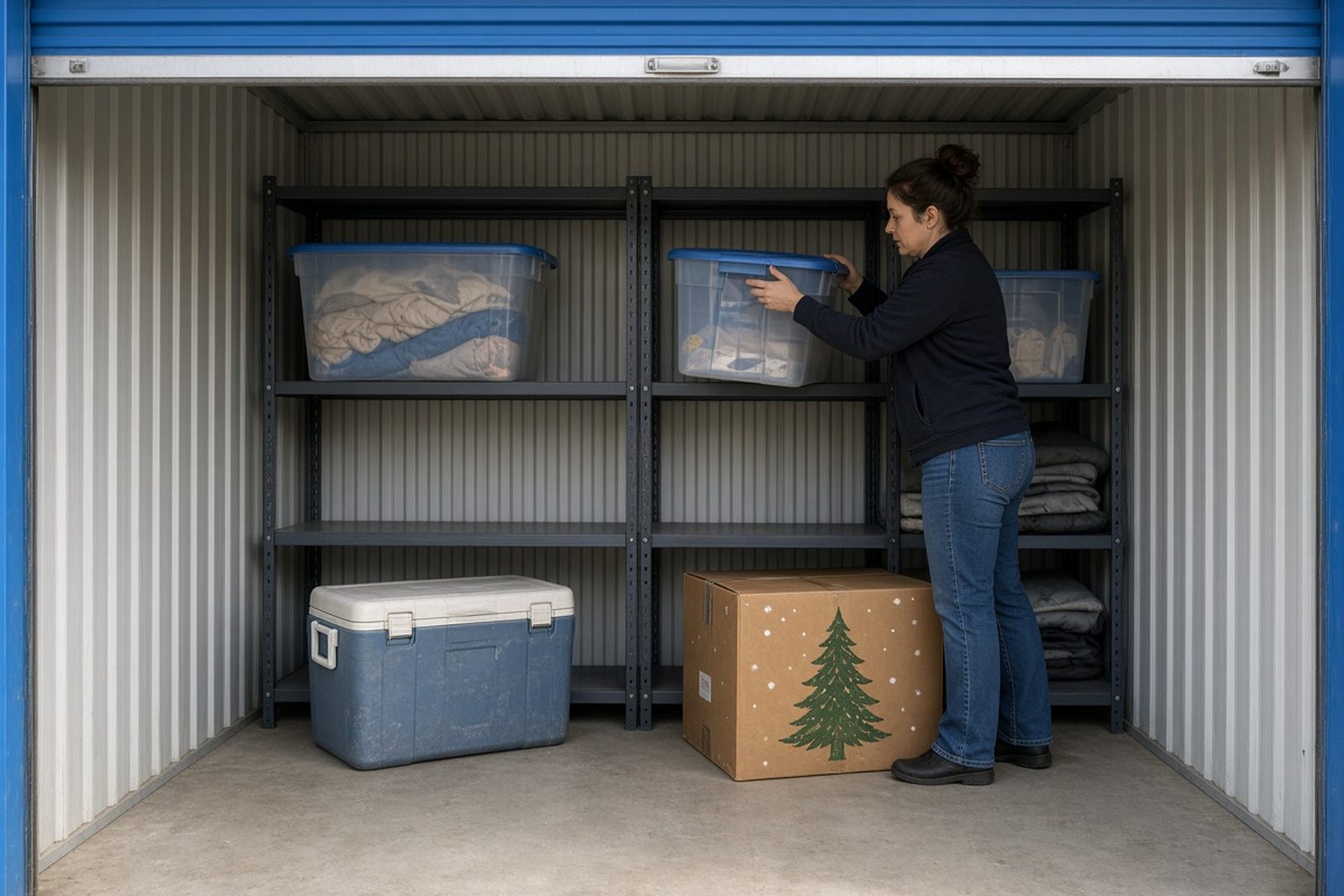
Why seasonal storage makes everyday space easier to manage
Most homes and small businesses in Gauteng have a few items that only come out at certain times of year, such as winter bedding, camping gear, festive décor, garden furniture, school holiday stock, or display items for a short promotion. Keeping these things in cupboards, garages or spare rooms usually means they get mixed in with daily-use goods, which makes the space feel smaller than it really is.
Using self-storage for seasonal items gives you a clear routine. When the season changes, you move the less-used goods out of the way and free up room for what matters now. It is a practical option for families in Midrand flats, houses in Pretoria, or small shops in Johannesburg that need a bit more breathing room during busy periods. The main benefit is simple: less clutter, better access, and fewer items getting damaged while they are squeezed into the wrong place.
Sort items before you pack them away
Before you place anything into storage, go through it properly. Separate what you still use, what can be donated, what should be repaired, and what is ready to pack away until next season. This step saves space and makes the next swap much easier. It also helps you avoid storing broken or worn-out goods that you will not want later.
For a clean seasonal rotation, try this simple order:
- Group items by season, such as summer, winter, festive, school or business stock
- Check for moisture, dust, rust, tears or insect damage before packing
- Keep similar goods together, like blankets with linen or décor with lighting
- Label every box on more than one side so it is easy to read when stacked
- Make a short list of what is inside each box and keep it at home too
If you are storing goods from a business, separate fast-moving stock from slow-moving stock. That makes stock control simpler and helps you avoid opening every box just to find one item.
Pack seasonal goods so they stay in good condition
Good packing matters just as much as the storage unit itself. Use strong boxes, plastic tubs for fragile items, and proper wrapping for anything that scratches easily.
Clothing and bedding should be clean and fully dry before packing. Never store damp items, even for a short time, because that is when musty smells and mould begin. Use clean packing paper, bubble wrap for breakables and sturdy tape on all seams. Heavier items should go into smaller boxes so they are easier to lift. Do not overfill boxes because they can burst when stacked.
For soft items like cushions, jackets or curtains, use breathable covers where possible. For electronics, remove batteries and cords, then pack accessories together in one labelled bag. It helps to keep an inventory and to note what needs checking before the next season starts. A small mistake now can turn into a lot of work later, so it pays to pack carefully.
Choose a unit size that suits how often you need access
Seasonal storage works best when the unit matches your habits. If you only need to swap items once or twice a year, a smaller unit may be enough. If you are a business with changing display stock, archives or promotional goods, you may need extra room for sorting and regular access. The right choice depends on how much you store and how often you need to fetch something.
Think about access before you move anything in. Ask yourself whether you will need to reach boxes at the back, whether shelves will help, and whether some items should stay near the front for quicker collection. A bit of planning saves time on every visit. It also helps if your boxes are stacked by season or category, so you do not have to unpack half the unit to get one item.
- Store holiday décor near the front if you know you will need it first
- Keep business records and archived files together in clearly marked boxes
- Use shelves for light items and leave the floor for heavier boxes or equipment
- Leave a narrow walkway if you plan to access goods more than once a month
In Midrand and surrounding areas, people often use storage while they are between homes, doing a shop fit-out or managing family overflow after school holidays. A practical layout makes those short visits far less stressful.
Security, access and peace of mind during the change of season
Seasonal items are often valuable in a practical way, even if they are not expensive to replace. Think of baby goods, camping gear, a business’s sample stock, or festive lights that are only used once a year. You want a storage space that gives controlled access and clear security measures, so your belongings are not left in an open, busy area.
When you ask about a storage unit, check how access is managed, what happens after hours, and how the site is monitored. It also helps to understand whether only authorised people can collect goods. If you are storing business items, ask about access arrangements that suit your work schedule, especially if you need to load or offload around school runs, traffic or municipal operating hours. Good access should make life easier, not harder.
Security is only useful if the site is kept tidy and well managed too. Clean passageways, working lights and organised units reduce the chance of damage and make visits safer. In a place like Midrand, where many people balance home storage with office or stock needs, those small practical details matter every day.
A simple rotation plan for homes and small businesses
The easiest way to store seasonal items is to treat it as a routine rather than a once-off task. Pick one weekend at the start or end of each season and follow the same steps each time. Take out what you need, put away what you do not, and update your labels and list before you close the unit again.
A useful rotation plan looks like this:
- Remove items from the house or office in one category at a time
- Clean and dry everything before packing
- Use the same box sizes where possible so they stack neatly
- Keep a running list of what is in storage and what has been taken out
- Review damaged or unused items before the next season begins
This approach works well for families in Pretoria storing winter blankets, for shops in Centurion rotating display stock, and for businesses in Kempton Park that keep overflow goods between busy periods. It is a practical way to stay organised without filling every spare corner at home. Once you get into the habit, seasonal changeovers become quicker and less tiring.
When to ask for help with packing or unit planning
If you are not sure how much space you need, or if you have awkward items like stands, files, boxes of stock or bulky household goods, it helps to get guidance before you move anything. Unit size guidance, packing supply advice and move-in support can save time and reduce the risk of packing too tightly. That matters if you are doing a school holiday clear-out, moving office files, or sorting a garage full of seasonal equipment.
LastBox works with customers across Midrand, Johannesburg, Pretoria, Centurion and Kempton Park, with storage areas including Sandton, Randburg and Edenvale. Through the enquiry form on the contact page, customers can ask for help with access arrangement, decluttering support, archive planning, stock organisation and move-out planning. For seasonal storage, that kind of practical guidance often makes the difference between a unit that stays useful and one that turns into a jumble of boxes.
Owned by Mxolisi Mdletshe and supported by a local team led by Goitseone Mabandla, Johan Shabalala, Omolemo Phasha, Farah Jacobs, Moagi Ngcobo and Kamini Soobramoney, the focus stays on straightforward storage that works in real life. The aim is simple: keep seasonal items safe, accessible and ready for next time.