
Start with the heaviest boxes on the bottom
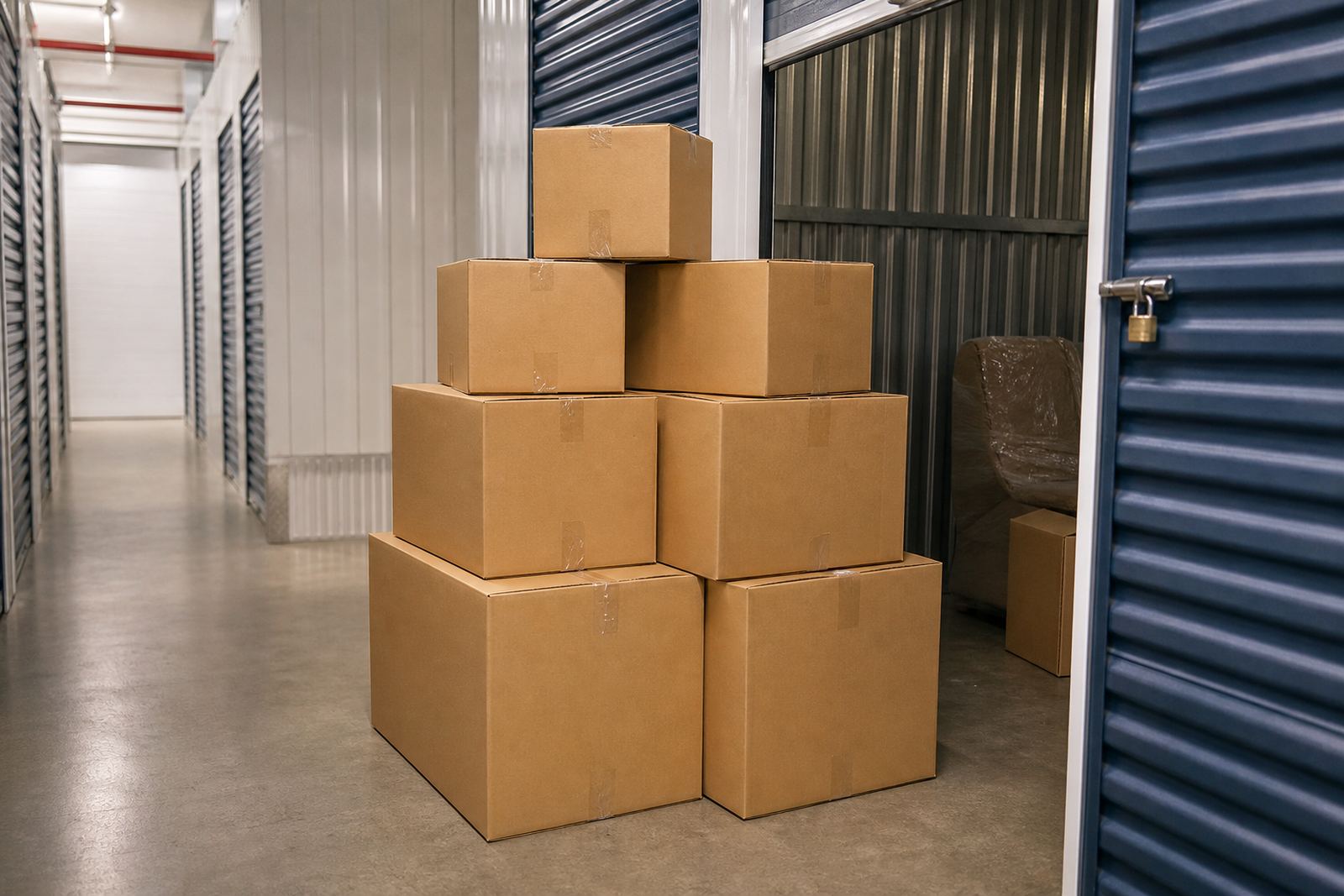
Good stacking starts before the first box goes into the unit. Put the heaviest boxes on the floor and build upwards with lighter boxes on top. This helps prevent crushed cartons, bent lids and awkward piles that shift when you open the door. In a Midrand unit, where people often store mixed household items, office files and spare stock in the same space, weight balance matters more than many customers think.
Use strong, uniform boxes where possible. If the cartons are different sizes, make sure the lower layer is the strongest and flattest. Avoid placing loose bags or soft items under heavier loads because they can settle over time and make the stack uneven.
- Place books, tools and files at the bottom
- Keep fragile items near the top
- Do not stack on damaged or damp cartons
- Check that each box is fully closed and taped
Build straight columns, not leaning towers
It is tempting to fill every gap as quickly as possible, but a leaning stack is harder to access and more likely to topple. Straight columns work better in self-storage because they let you use the height of the unit without blocking the whole area. If you are storing in Johannesburg or Pretoria, where people often need to visit on a tight schedule, a neat layout saves time when you need one specific box.
Try to keep each stack no higher than you can safely handle from the ground. A common mistake is overreaching for a box at shoulder height and knocking the full pile loose. Leave a small gap between stacks so you can see labels and reach items without moving everything else.
- Keep corners aligned as you stack
- Leave space to step back and inspect the pile
- Do not bridge one stack across two separate piles
- Use a trolley or hand truck for heavier items
Label every side you can still see
Labelling is one of the simplest ways to keep a storage unit organised. If you only label the top, you may have to unstack several boxes later just to find a kettle, invoice file or spare cables. Write on more than one side so you can identify the box from the front and from the aisle. For business storage in areas like Sandton, Randburg and Centurion, clear labels help when you are rotating stock or checking archive boxes.
Keep labels short and specific. Instead of writing “kitchen” or “office”, list the main contents. That makes access faster and reduces the chance of opening the wrong box and damaging items while looking for something else.
- Use large, bold writing
- Mark fragile boxes on at least two sides
- Number boxes in sequence if you have many to store
- Keep a simple list of what is in each stack
Protect fragile items before they go into the pile
Even a well stacked unit can cause damage if the packing inside the box is poor. Wrap glasses, crockery, frames and small appliances with suitable packing material before sealing the box. Fill empty space inside the carton so contents do not shift when another box is placed on top. This is especially important in coastal humidity areas or during rainy Gauteng months, when weaker cartons can soften faster if they are not packed properly.
If you are storing seasonal goods, office equipment or student belongings, keep fragile cartons together in one section of the unit. That way they are easier to inspect and you do not need to move heavier boxes around them every time you visit.
- Use packing paper, bubble wrap or other cushioning material
- Close and tape all seams firmly
- Keep fragile boxes off the floor where possible
- Store electronics in their own labelled cartons
Use the unit layout to keep access simple
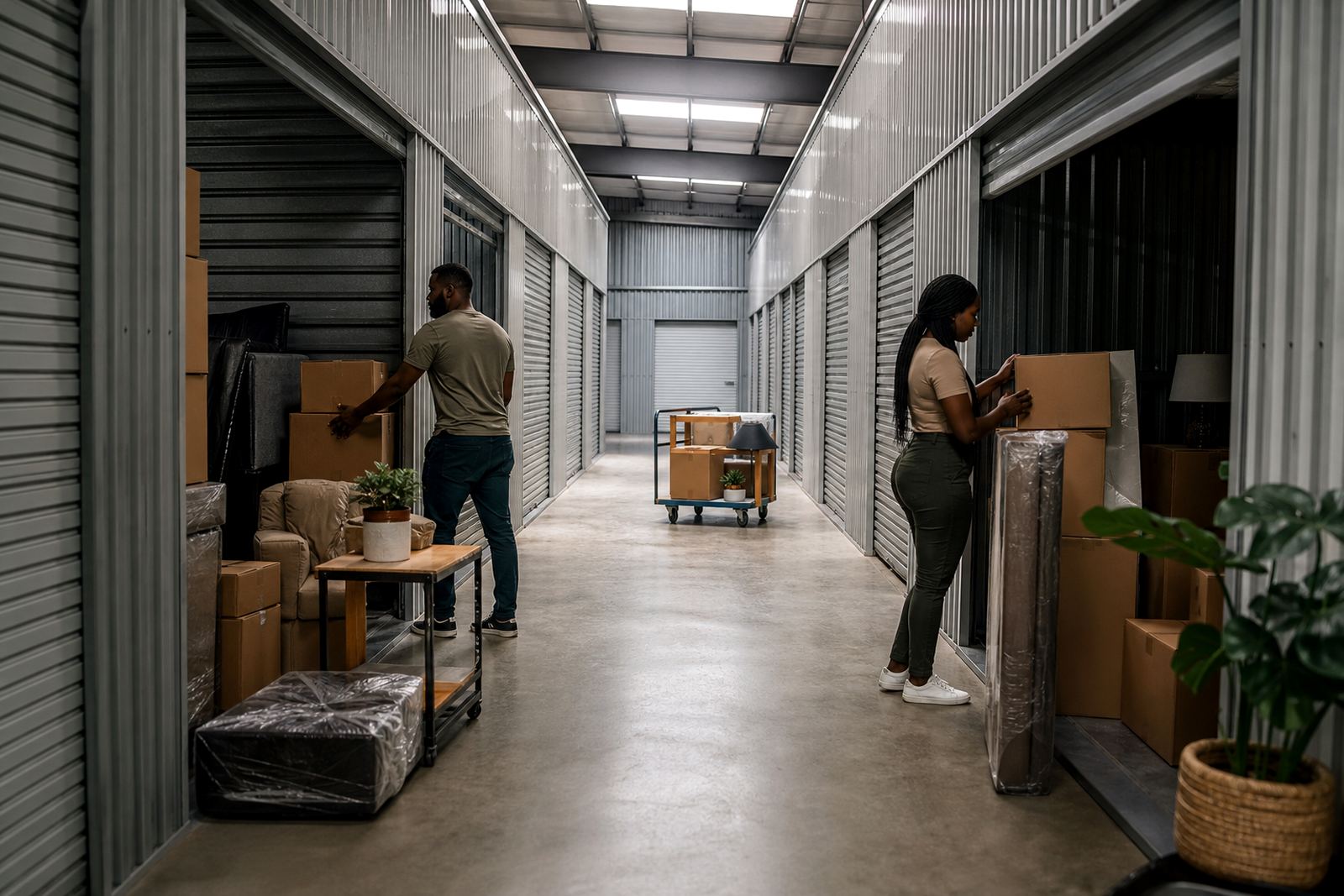
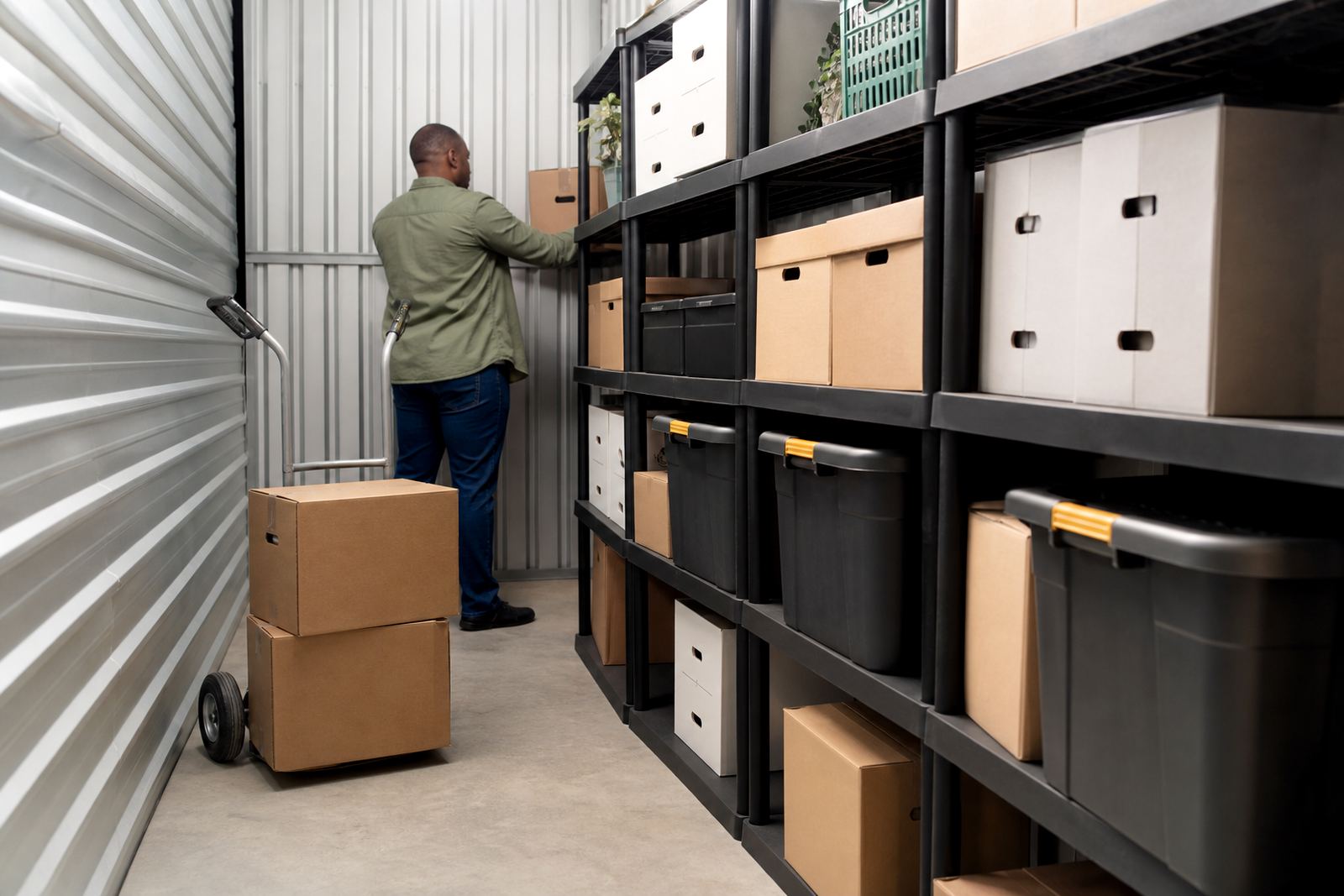
A storage unit should not become a wall of boxes from front to back. Leave an access path so you can reach the back of the unit without shifting everything in front. Many customers in Midrand use storage for business stock, move-out holding or temporary overflow, and they often need repeated access. A narrow aisle down the middle or along one side can make a big difference.
Place items you may need sooner near the front. Put archive boxes, spare furniture parts and off-season stock further back. If your storage arrangement changes often, keep the most frequently used boxes at chest height and the heavier items below. That makes each visit quicker and safer, especially if you are collecting after work or during a tight loading window.
- Keep a clear path from the door to the back wall
- Put high-use items within easy reach
- Do not block the door with loose cartons
- Store long items flat if they can safely rest that way
Stack differently for business stock, archives and household goods
Not everything should be packed the same way. Business stock needs quick identification and a system that makes counting easier. Archive boxes need dry, steady storage and clear sequence. Household goods may need extra cushioning and a stronger focus on protecting fragile pieces. The best stacking plan depends on what you are storing and how often you need to get to it.
For office move support or stock organisation, group similar items together before they go into the unit. For decluttering support or student storage help, sort by category first so you are not opening every box later. If you are unsure about unit size guidance or how to arrange the space, a practical layout can save you from renting more space than you need.
- Group files, stock and household items separately
- Keep the same type of box together where possible
- Use the front area for frequent access
- Review the layout after the first visit and adjust if needed
At the counter: A Midrand move
A family moving from a flat near Midrand to a larger home in Gauteng may use storage for dining items, winter clothing and a few boxes of documents. If they stack the heavy cartons first, label the sides and leave a small central aisle, they can collect what they need without undoing the whole unit. The same applies to a small business storing packaging, records and spare stock while office works are underway. A tidy stack means fewer damaged items and less time spent searching.
That practical approach is what makes self-storage useful. It is not about packing every space until it is full, but about making sure each box has a place and can be reached when needed. A little planning on the day of move-in can prevent a lot of frustration later on.
At LastBox, the team can help with move-in support, packing supply advice, access arrangement and unit size guidance through the enquiry form on the contact page. The aim is simple: store with less hassle and keep everything easier to manage from the start.