
Why shelving matters inside a storage unit
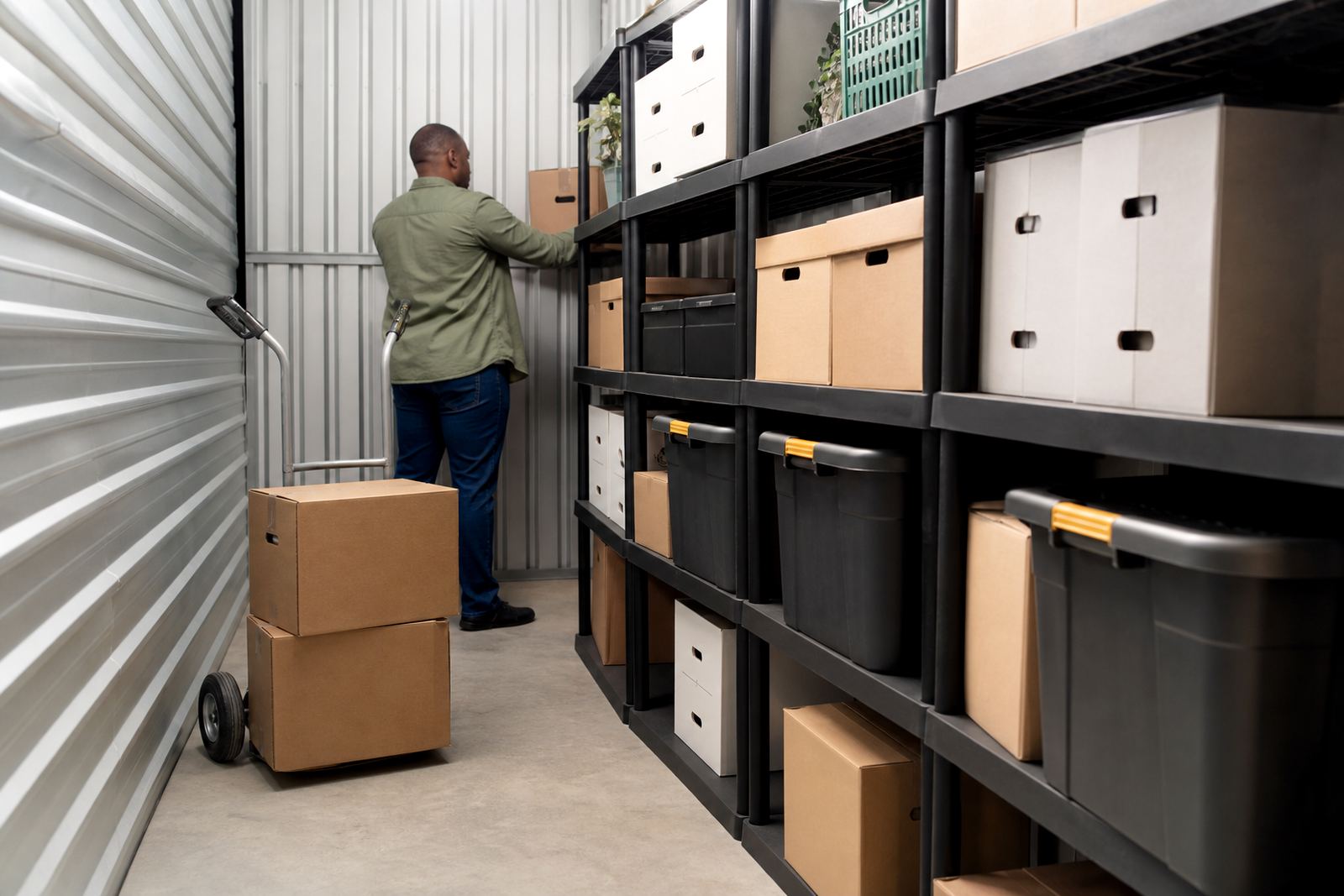
A storage unit can fill up faster than people expect when everything is stacked on the floor. Shelving gives each item a proper place, which helps you use the full height of the unit instead of making one tall pile that is hard to manage.
That matters whether you are storing household goods during a move, keeping business stock in order, or setting aside files and spare equipment. When boxes are off the ground, you can check labels, reach commonly used items and reduce the chance of crushing lighter things under heavier loads.
In Gauteng, where many customers are moving between suburbs, offices and shared homes, shelving also helps when you need to access one item quickly without pulling out half the unit. It is a practical choice for anyone who wants clear walkways and less time spent searching.
- Improves visibility so you can see what is stored
- Makes it easier to access items at the back of the unit
- Helps protect cartons, files and smaller goods from being squashed
- Supports neater stacking for both home and business storage
What to store on shelves and what to keep on the floor
Not everything belongs on shelving. The best setup usually keeps heavier or bulkier items lower down and lighter or frequently used items at eye level. This makes the unit safer and easier to work with, especially if you are visiting in a hurry between school runs, site visits or deliveries.
Boxes with documents, packaging materials, small tools, stock records and seasonal items are often good shelf candidates. Large appliances, very heavy cartons and awkward items may still need floor space. If you are storing stock for a small business in Midrand or Centurion, shelving can help separate fast-moving items from reserve stock without mixing everything together.
A good rule is to keep the items you need most within easy reach and place long-term storage higher up or further back. That way you avoid repeated lifting and cut down on unnecessary handling.
- Best for: labelled boxes, archive files, spare parts, packing materials and boxed stock
- Keep low: heavy appliances, tools, bulky cartons and awkward shaped items
- Place at the front: anything you may need to collect often
How shelving helps with security and unit care
Shelving does not replace proper security, but it does help you keep a storage unit orderly and easier to inspect. When items are clearly arranged, it is simpler to notice if something has moved, if a carton has been damaged or if a seal has come loose.
It also supports better air flow around stored goods. That is useful in Gauteng, where dust can get into open spaces and summer humidity can affect certain items. By lifting boxes and containers off the floor, shelving can reduce direct contact with concrete and help keep items cleaner. In some cases it can also help protect goods from small damp patches after heavy rain or general floor moisture.
If you have limited light while visiting the unit, a clear shelf layout makes it easier to find what you came for without unpacking everything.
- Keep aisles open so you can move safely inside the unit
- Leave space between shelves and the wall for air movement where possible
- Use clear labels to spot changes quickly
- Store delicate items above floor level to reduce contact with dust and moisture
Packing habits that make shelving work better
Shelving works best when the packing is done properly from the start. Boxes should be packed to a consistent size where possible, with heavier contents at the bottom and lighter contents on top. That makes stacking more stable and keeps shelves from bowing under uneven loads.
Use strong cartons, proper tape and clear labels on more than one side. If you are storing in a unit in Pretoria or Kempton Park, a simple numbering system can save a lot of time later. Label by room, product type, project or month so you know exactly what is where.
It also helps to leave a little space around frequently used items. If every shelf is packed tight, one small item can become difficult to remove. A bit of planning at the start can save you from having to re-stack the entire unit later on.
- Use uniform box sizes where possible
- Label boxes on the front and side
- Do not overfill cartons so they keep their shape
- Place a list at the front of the unit for quick reference
A practical setup for Midrand and nearby business storage
Many local businesses use storage units as overflow space for stock, samples, files or event equipment. In Midrand, where traffic and delivery schedules can change quickly, shelving makes it easier to manage short visits and repeat collections. You can sort stock by category, keep packing materials in one place and avoid wasting time opening every box.
A simple shelf plan can work well for a retailer, contractor or office team. Put fast-moving goods at the front, slower stock higher up and archive boxes along one side. If the unit is shared by more than one person, mark each section clearly so everyone knows where items belong.
For customers in Sandton, Randburg or Edenvale who need to separate personal and business items, shelving can also make mixed storage easier. One side can hold home goods while the other side carries stock or files, provided the layout is kept tidy and the access path stays clear.
Our team can advise on unit size guidance, access arrangement, business storage support and archive planning so the layout works for the way you use the space. It is often the small decisions at the start that make the unit easier to manage month after month.
When shelving is worth adding and when simple stacking is enough
Not every unit needs shelving. If you are storing only a few large items for a short time, simple stacking may be enough. But if you need regular access, want better organisation or have a mix of boxes and smaller items, shelving is usually worth considering.
It is especially useful for student storage, move-out planning, decluttering support and office move support. These situations often involve a lot of different items that need to stay separate. Shelving helps you avoid putting everything into one pile and hoping it will stay manageable.
If you are unsure, think about how often you will need to visit the unit, how much you need to find quickly and whether any items are fragile or business critical. That will usually point you toward the right layout.
- Choose shelving if you need frequent access
- Choose shelving if you have mixed item sizes
- Choose shelving if your items need to stay organised for weeks or months
- Simple stacking may be fine for short-term, low-access storage