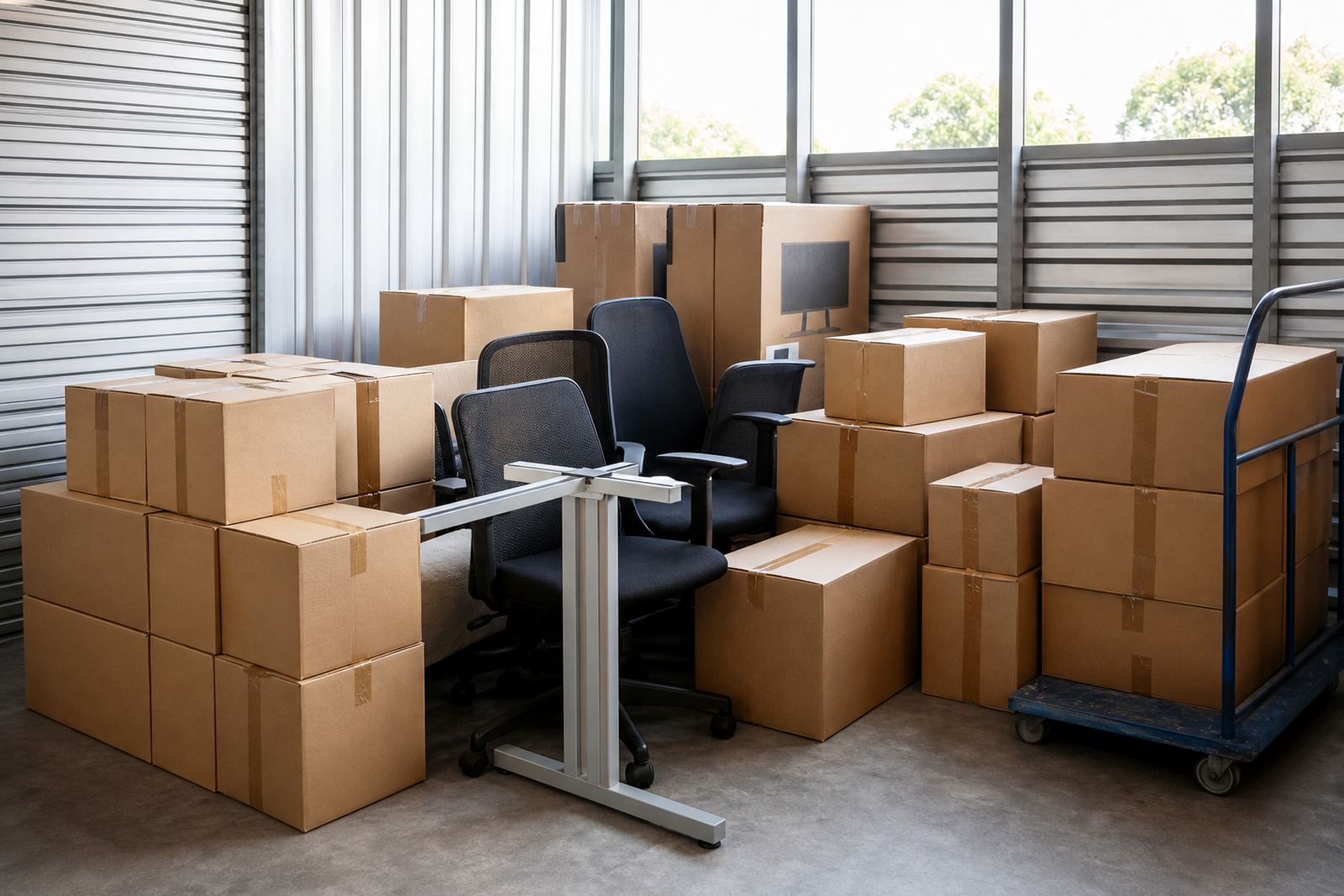
Why online sellers outgrow home storage so quickly
Most small sellers do not notice the shift at first. A few parcels, a roll of tape, some mailers, then boxes start landing in passageways, garages and under tables.
Storing stock in a dedicated unit gives you a clear line between home life and business stock. It also makes it easier to count what you have, separate fast movers from slow movers, and keep packaging materials out of the way until you need them. For sellers who handle fragile items, electronics or clothing, keeping everything dry and orderly matters too, especially in humid coastal-style weather patterns that can still affect Gauteng during heavy rain periods and summer moisture.
A good storage routine starts with knowing what is worth keeping near you and what can move out of the house. If your inventory is growing by the week, that is usually the point where a unit starts making practical sense.
What to keep in a storage unit and what to leave at home
A unit should hold the things you need access to, but do not need on your table every day. That usually includes reserve stock, seasonal items, bulk packaging and archived paperwork. It is not only about making room. It is about keeping the business easier to run.
- Keep reserve inventory that you can restock from when orders come in.
- Store packing cartons, tape, void fill, labels and wrap together.
- Set aside returned items that need checking before resale.
- Keep order records or archive boxes in clearly marked containers.
- Move bulky or slow-moving stock out of your home workspace.
At home, leave only what you need for the next few orders and your daily packing tasks. If you are shipping from Midrand to Johannesburg, Pretoria or Centurion, this sort of split can save a lot of time when orders come in late afternoon and you need to pack quickly before courier cut-off. A tidy routine also helps when municipal waste rules or building rules make it harder to leave cardboard and loose packaging lying around.
Packing supplies deserve their own system
Boxes, tape, fillers and labels are often treated as an afterthought until they run out at the worst possible moment. Small sellers usually need a packing station setup that is simple, visible and easy to replenish. If your supplies are stored properly, you waste less time searching and less money replacing damaged cartons.
Keep packing materials in a dry section of the unit, away from the floor if possible. In winter, cold mornings and in summer, damp conditions can affect paper-based packaging if it is left open. Plastic wrap, carton stock and labels should be stored flat or stacked neatly so they do not curl, crush or pick up dust.
- Use one box or crate for each supply type so you can see stock levels at a glance.
- Store heavier cartons at the bottom and lighter filler materials above them.
- Keep a small packing kit at home for urgent orders.
- Label every shelf or stack with item type and reorder notes.
- Check supplies once a week so you are not caught short during busy periods.
Many small businesses in Kempton Park, Sandton and Randburg find that a separate supply area stops packing from becoming messy. It also helps staff or family members pack in the same way each time, which reduces mistakes.
How to organise stock so you can find it fast
The best storage setup is not the one with the most space, it is the one that makes picking stock quick. Group items by category, then by size or colour if that helps your order process. If you sell several product lines, do not mix them in the same stack unless they are clearly marked. A few extra minutes spent labelling saves a lot of time later.
For online sellers, a simple stock map can make a major difference. Put fast movers near the front, slower stock at the back and bulky cartons along the sides. Use shelving where possible, or stack in stable rows with a clear walking gap. If you are storing archive files, keep them in closed boxes with dates on the side so old paperwork does not get in the way of inventory handling.
This is also where unit size guidance becomes useful. A seller with a few shelves of goods does not need the same setup as one moving monthly inventory for a growing client base. If your stock changes often, choose a unit arrangement that lets you re-stack without unloading everything.
Security, access and peace of mind for growing stock
Security is one of the main reasons small sellers move stock into self-storage. You want controlled access, visible order and a place where goods are not left in a crowded garage or shared room. Good access arrangement also matters, because stock does not only move in during office hours. Deliveries and collections often happen around other commitments, so it helps to know your routine can work around normal business life.
Look for a setup where your goods are stored in a managed environment and where entry is handled properly. That matters whether you are keeping fashion stock, homeware, spare parts or archive boxes. If you are operating from Midrand and serving customers across Gauteng, a central base can also cut down on back and forth trips.
- Choose a unit close enough to reach without wasting fuel and time.
- Keep an updated stock list before and after every restock.
- Use sealed containers for small parts and loose items.
- Separate high-value goods from everyday packing materials.
For many businesses, a good storage routine is not just about keeping things safe. It is about being able to work at a steady pace without stock pressure every day.
A practical Midrand example for a small online seller
Take a small seller in Midrand who starts with handmade home goods and a few packing boxes in the spare room. Orders grow through Johannesburg, Pretoria and Centurion, then stock begins arriving faster than it leaves. Suddenly there are cartons in the lounge, tape on the kitchen counter and returns mixed in with fresh stock. That is usually the point where storage support becomes useful.
By moving reserve inventory and packing supplies into a unit, the seller can separate new stock from returned items, keep packing supplies in one place and organise stock by order priority. If the business also stores archive files, seasonal items or event materials, there is room to keep those apart too. With proper labelling and a simple checklist, the seller can collect what is needed, pack orders and leave the rest undisturbed until the next restock.
That kind of setup is especially helpful for businesses that need move-in support, packing supply advice, business storage support or stock organisation. It creates a working system rather than just an extra room for boxes.