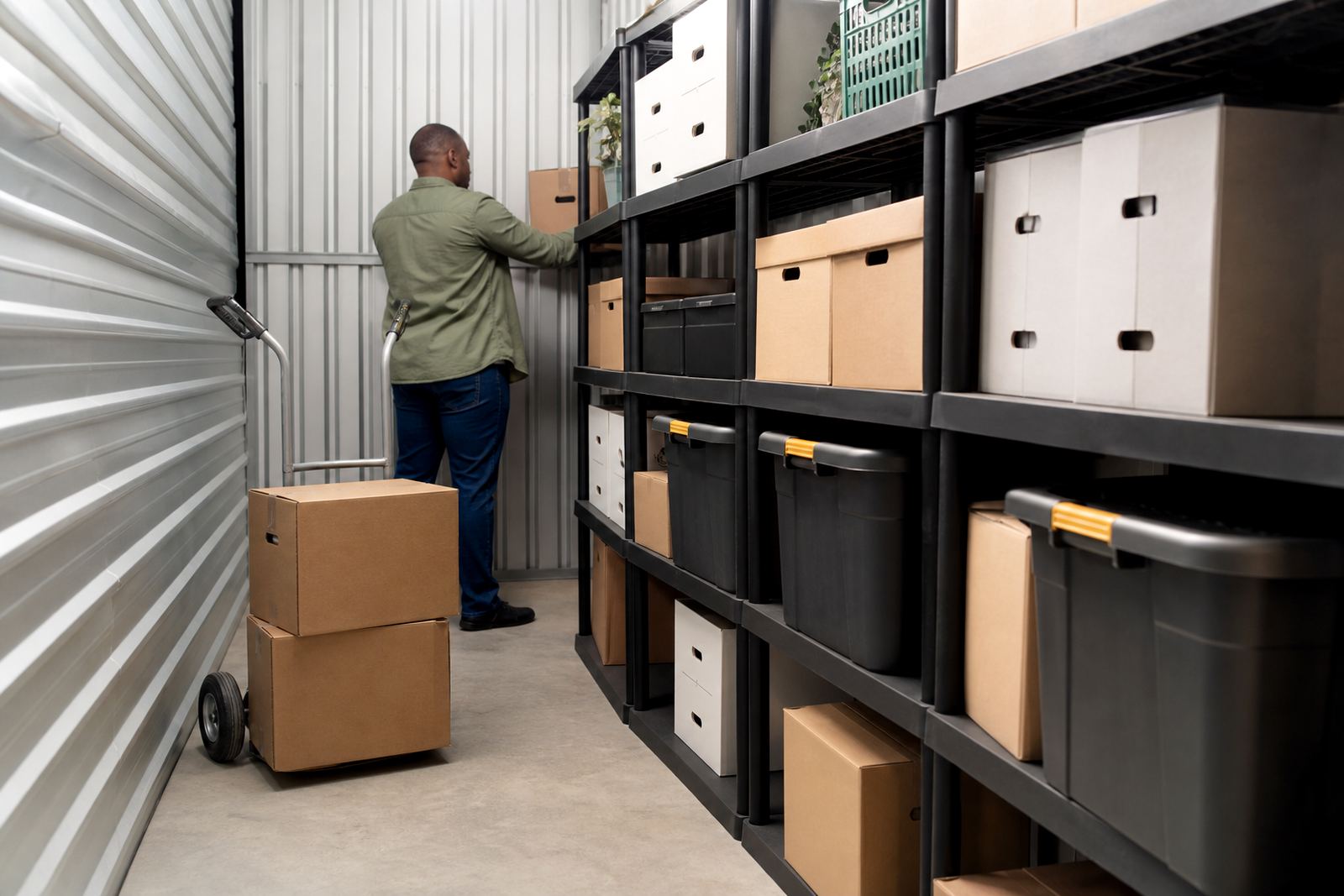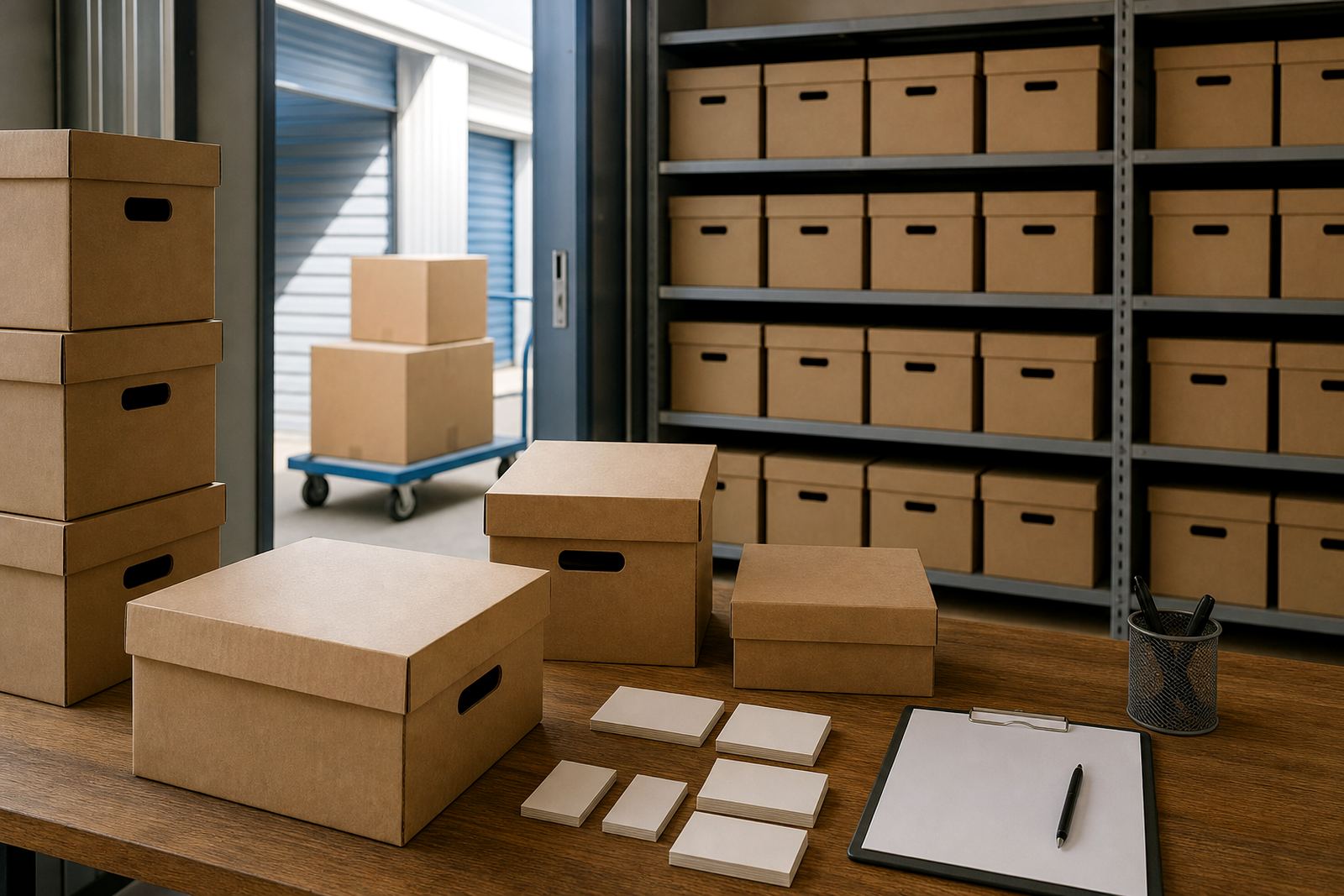
Why labels matter from day one
When boxes go into storage, people often think they will remember what is inside each one. That works for a week or two, then the first rush to find a kettle, a file or winter clothes turns into a search through half the unit. Clear labels solve that problem before it starts.
At a Midrand base, where customers store business stock, household goods and office records, labels do more than name a box. They create order. A neat label tells you what is inside, which room it came from and whether it needs careful handling. That matters when you are moving between Sandton, Centurion, Pretoria or Kempton Park and want quick access without unpacking everything.
Good labelling also helps when storage is shared between family members or staff. If one person packed the unit and another has to collect an item months later, the box should speak for itself. That is why clear labels are part of sensible storage planning, not an extra step.
What to write on every box
A useful label is simple, readable and consistent. Use the same format on every box so anyone can understand it at a glance. If you change the style from box to box, the system stops working.
Write in large letters on at least two sides of the box, not only on the top. In a stacked unit, the top may not be visible. For heavier or sealed items, add a short note on the contents and the room it belongs to. If a box needs upright handling, mark that clearly too.
- Contents: kitchen plates, office files, winter jackets, printer paper
- Room or category: kitchen, study, bedroom, stock, archive
- Priority: urgent, seasonal, seldom used, first out
- Handling note: fragile, keep dry, this side up, do not stack
For businesses in Gauteng, labels should also show stock codes, product groups or file ranges. That makes it easier to manage inventory when you are collecting items in stages rather than all at once.
Colour coding saves time in busy units
Colour coding is one of the easiest ways to speed up access. A red sticker for urgent items, blue for office records and green for household goods helps you spot a group before you start opening boxes. It is especially helpful if you share a unit with family or move stock through several storage visits each month.
You do not need fancy supplies to make it work. A roll of coloured tape, marker pens and printed tags are enough for most storage needs. Some customers in Midrand use one colour for personal items and another for business stock so the two never get mixed. That is useful when a unit holds both sample stock and home items during a move or renovation.
Keep the system simple. If the colour rules are too complicated, people stop using them. The best system is the one your whole household or team can follow without thinking.
- One colour for household boxes
- One colour for business stock
- One colour for archive files
- One colour for priority items needed within 24 hours
How labels help during tight schedules
When your time on site is limited, every minute spent opening the wrong box is a minute lost. Clear labels help you get in, find the item and leave again without turning a quick visit into a long one.
If you are storing stock or equipment for a small business, labels also help when your team rotates. One person may know where the courier labels are, another may need packing tape, and someone else may be collecting archived files. A clear system keeps everyone on the same page even if they do not work the same shift.
For seasonal items, labels are even more important. Think of holiday decorations, rain gear, school books or event supplies. If the box is marked well now, you will not waste time digging through several units later on.
Packing for access, not just for stacking
Many people pack to fit as much as possible into a box, but storage works better when you pack for future access. Heavy items should stay low, delicate items should be wrapped properly and labels should stay visible. If a box is packed too tightly, it becomes hard to open and harder to identify.
A practical method is to place a simple list inside the box as well as on the outside. That way, if the outer label fades or gets scuffed during transit, you still have a record. Use plain paper and keep the list at the top so it can be checked without emptying the box. This is especially helpful for archive planning and office move support where documents are stored in groups.
- Use sturdy boxes for heavier contents
- Keep one category per box where possible
- Leave a small gap so the lid closes properly
- Do not cover labels with tape or rope
- Keep a master list of all labelled boxes
Booking a unit for a move in Midrand
Picture a small business in Midrand moving part of its stock into storage while the office is being renovated. The team has boxes of printed material, sample products, stationery and records. Without clear labels, the first stock run after the move becomes slow and stressful. Staff open box after box looking for one item, and the wrong boxes get shifted around to reach the right ones.
Now picture the same move with labels that show product category, sequence number and urgency. The team can collect the top-priority stock first, leave archive boxes at the back and keep packing supplies in one marked section. The difference is not dramatic on paper but it matters in daily work. It saves time, avoids mix-ups and keeps the unit organised when visits are spread out across the month.
This approach works just as well for households in Pretoria, students in Centurion and families in Edenvale who only need access to certain boxes at certain times. Clear labels make storage feel manageable instead of messy.
Build a labelling habit that lasts
The best storage system is the one you can still understand six months later. That means using the same naming style, checking labels before each unit visit and updating them when contents change. If a box starts as winter clothing and later holds mixed household items, relabel it straight away.
When you collect packing supplies, choose markers that stay readable and tape that does not hide the writing. Keep a spare marker in the car or packing station so you can correct labels on the spot. Small habits like this make a big difference when you are moving between storage units, managing stock or helping a student settle between terms.
At LastBox, customers across Midrand, Johannesburg, Pretoria, Centurion and Kempton Park use storage differently, but the same rule applies: if you can find it fast, the whole unit works better.