
Why office move staging starts before the removal truck arrives
Most office moves go wrong because packing starts too late. Teams wait until the final week, then try to clear counters, archive files, label IT gear and handle staff admin at the same time. Staging the move in advance gives you breathing room and helps you move department by department instead of clearing the whole office in one rush.
For businesses in Midrand, Johannesburg, Pretoria, Centurion and Kempton Park, temporary self-storage is often the practical bridge between the old space and the new one. It lets you remove non essential items early, keep valuables in a controlled place and work around contractor dates, lift bookings and building access rules. That is especially useful in office parks where moving hours are limited and loading bays must be booked ahead.
With proper staging, your move team can separate daily-use items from archived records, spare furniture and stock. That means less clutter on moving day and fewer mistakes when the new office opens.
What to place in storage during an office move
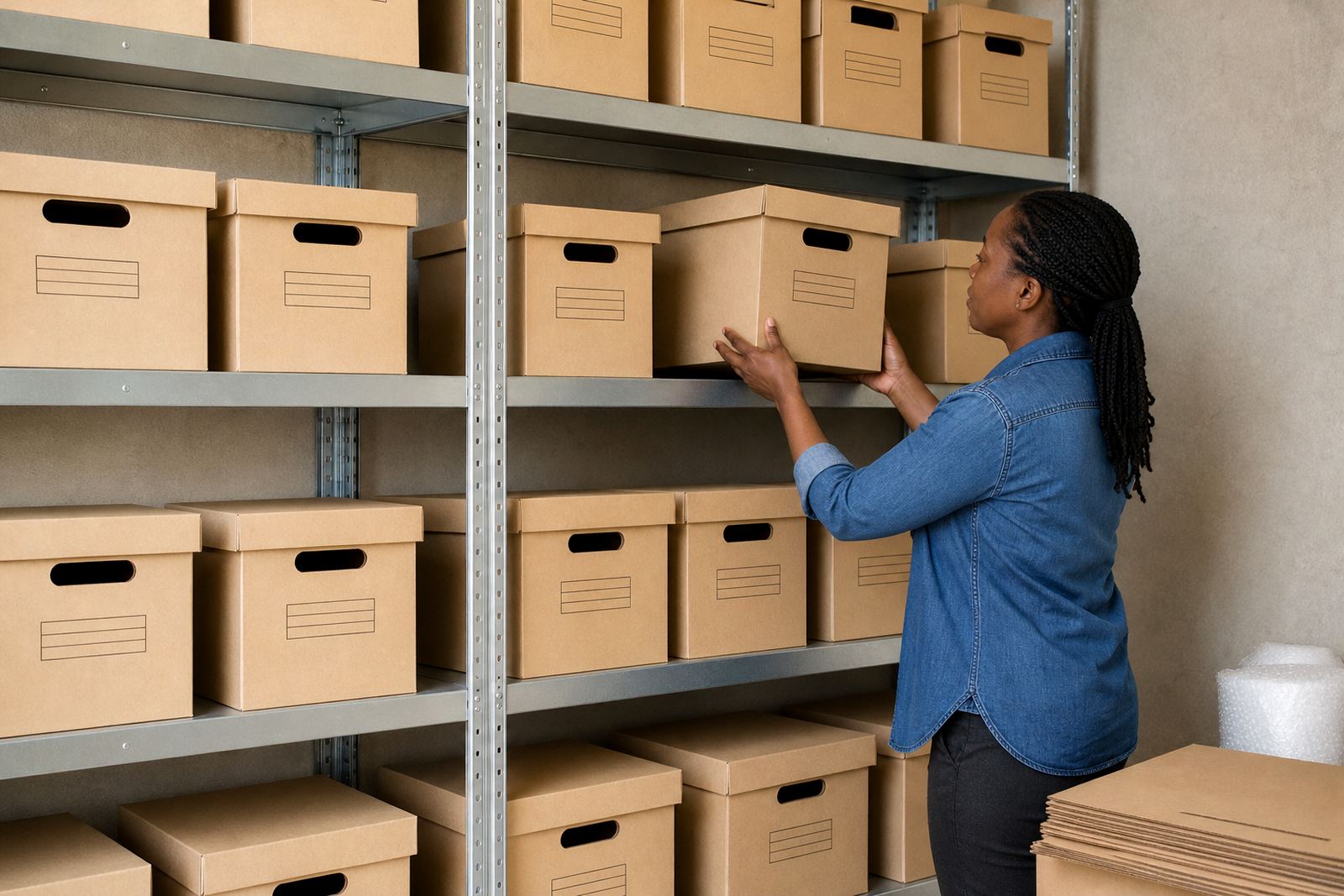
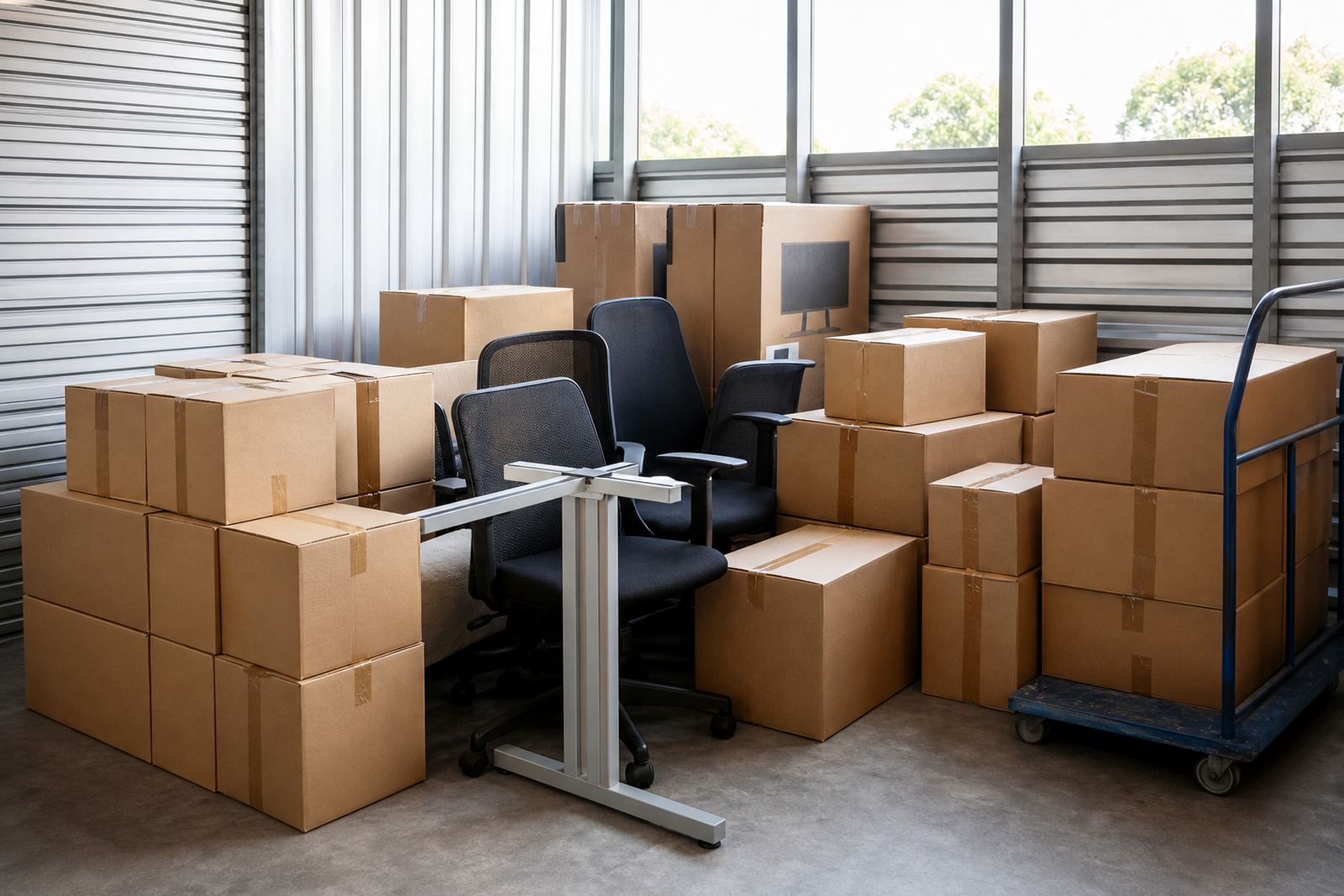
The best items to store are the things you do not need every day, but still need to keep safe. That usually includes old filing cabinets, marketing material, spare monitors, seasonal stock, archived boxes and surplus office chairs. Some teams also store boardroom furniture, extra printers and client sample items while they prepare the new layout.
Office move staging is also useful for keeping pathways clear. If a landlord, contractor or electrician needs access to the old premises, storage prevents cartons from blocking doors or fire exits. It can also help if your new space is not ready for all departments at once and you need to move in phases.
- Archived records and boxed files
- Spare counters, chairs and cabinets
- IT peripherals and backup equipment
- Retail stock or sales samples
- Packaging, stationery and promotional items
If your business handles sensitive documents, use strong cartons and label each box by department and retention period. Clear labelling matters when the storage period stretches longer than expected, which happens more often than people admit.
How temporary storage helps keep the office open while you move
Many Gauteng businesses cannot simply shut down for a week. They need phones answered, orders processed and staff working while the relocation takes place. Temporary storage helps by reducing the amount of material on site, so the office stays usable during the transition.
It also supports a phased move. You can move one team at a time, store the rest and bring items back only when the new area is ready. That keeps your operations running and gives the facilities team time to sort out network points, signage and furniture placement without tripping over half packed boxes.
At LastBox, office move support typically includes unit size guidance, access arrangement, packing supply advice and move-out planning. That is useful when a business in Sandton needs to clear a floor over two weekends, or when a Pretoria branch must free up space before a lease handover. The aim is simple: less pressure on staff, less damage to equipment and fewer last-minute decisions.
If printers, scanners and smaller server items must be switched off and packed at different times, storage gives you a safe place to keep them until the IT team is ready. It is one of those small steps that saves a lot of drama later.
Packing the right way so office items stay organised
Good staging depends on good packing. Office items are often mixed together in a rush, but it is worth taking time to separate them properly. Heavy files go in smaller cartons, fragile equipment should be wrapped and cable sets need to stay together so they can be reassembled without guesswork.
Use packing supplies that suit the job. Strong cartons, tape, marker pens, wrapping paper and protective covers all help to reduce breakages. A packing station in the old office makes the process faster because staff can label items as they go, instead of carrying loose files around the building and hoping nothing gets missed.
- Pack by department, not by whatever box is nearest
- Label each carton with room, contents and priority
- Keep plugs, leads and screws in sealed bags
- Separate confidential files from general paperwork
- Mark items that must go to the new office first
Businesses in humid coastal conditions usually know to use dry, clean cartons and avoid storing anything damp. Even in Gauteng, it helps to keep equipment off the floor and away from walls so air can circulate properly. A little planning here saves on replacement costs and frustration later.
A local example: moving a Midrand office into a phased setup
Consider a Midrand company moving from a mixed-use office park into a larger space closer to Centurion. The lease dates do not line up neatly, the IT team needs two days to reinstall workstations and the boardroom furniture will only fit once painting is complete. Instead of crowding both offices, the business stages the move in layers.
First, archive boxes, spare chairs and marketing stock go into storage. Next, the finance and admin teams move with only the essentials they need for the week. Finally, the remaining furniture and equipment are released once the new office is ready. This kind of plan reduces downtime and gives managers better control over who moves when.
For a business with clients coming and going, that matters. Staff are not stepping over sealed cartons, visitors are not seeing unpacked clutter and the move feels more like a managed project than a scramble. Mxolisi Mdletshe and the team at the Midrand base regularly see that careful staging makes the difference between a smooth handover and a week of confusion.
What to ask for when arranging storage support
If you are planning an office relocation, it helps to ask the storage provider about access times, unit size options, security measures and how easily your team can load and collect items. The answer should match your building schedule, not the other way around.
You should also ask about support for business use. Some teams need help planning archive space, others need guidance on stock organisation or a packing station setup. If your staff are splitting across branches in Johannesburg, Pretoria and Kempton Park, that advice becomes even more valuable because each department may be moving on a different timetable.
- Can we access items when our move dates change?
- Is there space for files, furniture and boxed stock?
- Can we get guidance on packing supplies before move day?
- Will our team be able to collect items in stages?
LastBox also supports move-in support, decluttering support and move-out planning, which is useful when a relocation needs more than just a place to keep boxes. The right setup helps you protect your equipment, keep staff productive and hand over the old office without chaos.
Keeping the move calm from first box to final handover
Office move staging is not about storing everything for the sake of it. It is about making the move easier to manage. When you use temporary storage well, you create space to pack properly, move in stages and keep your business open while the relocation is under way.
For Gauteng businesses moving across Midrand, Sandton, Randburg, Edenvale or Pretoria, that extra space can be the difference between a rushed handover and a controlled, professional move. With the right unit, proper packing and a clear access plan, your team can focus on getting settled instead of chasing missing boxes.
The best office moves are the ones where people can still work, files stay organised and the new space opens with less stress than expected. That is what good staging is meant to do.