Turn the spare room into a space that works for you
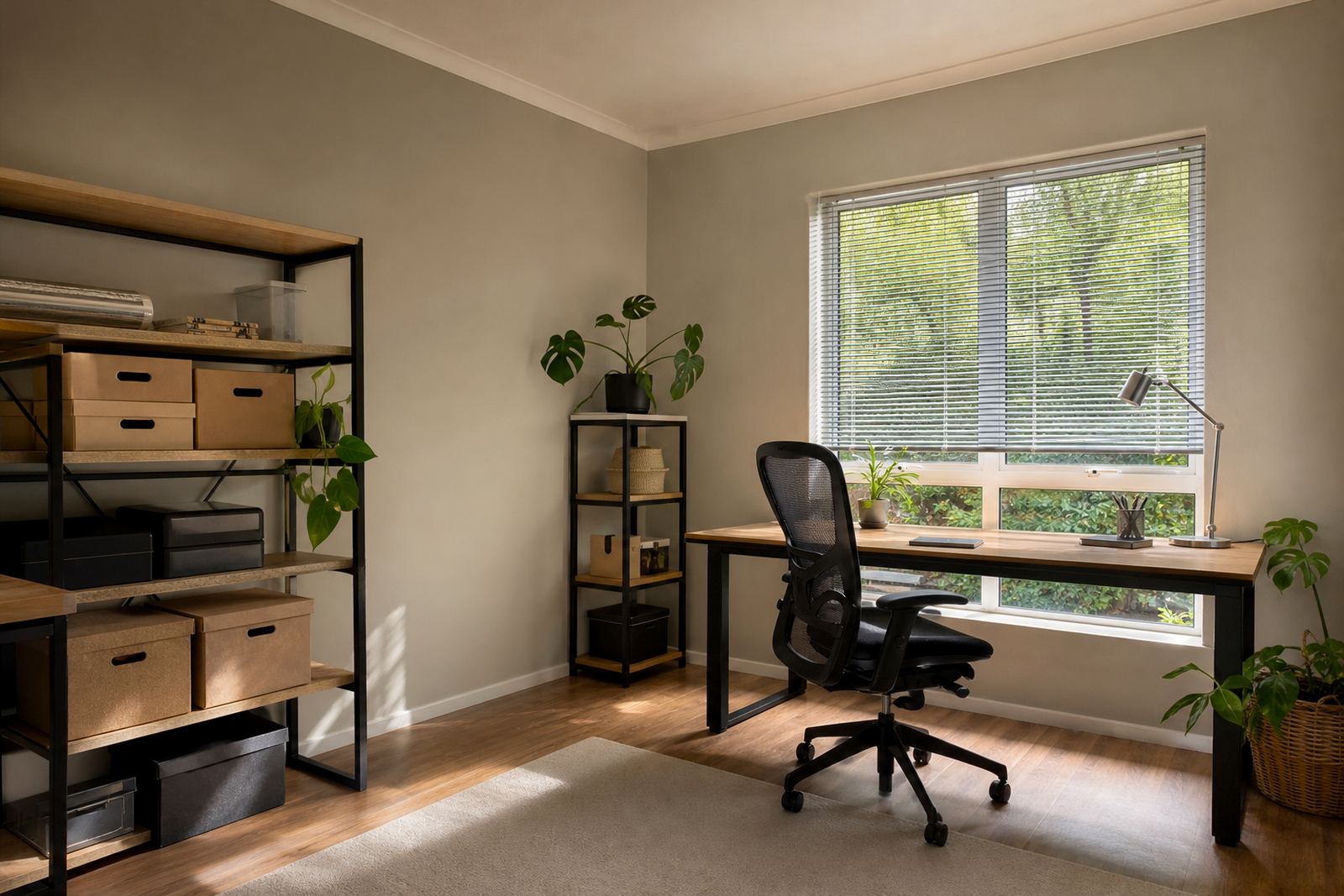
A home office does not need to be large, but it does need to be clear. If the room is crowded with seasonal items, archived files, stock or broken furniture, it is hard to work properly and even harder to keep the area tidy. Putting those extras into storage gives you the space to fit a proper table, shelving, task lighting and a chair that supports long hours.
For many people in Midrand, Johannesburg and Pretoria, the real challenge is not finding a place to work, it is finding space for the things that do not belong in that room. Storage helps separate work items from household clutter, so the room can do one job well.
- Move out spare furniture you do not use every day
- Store seasonal decor, files and old paperwork safely
- Keep office stock or equipment off the floor
- Make cleaning quicker and daily access easier
Use storage to keep what you need but not in the way
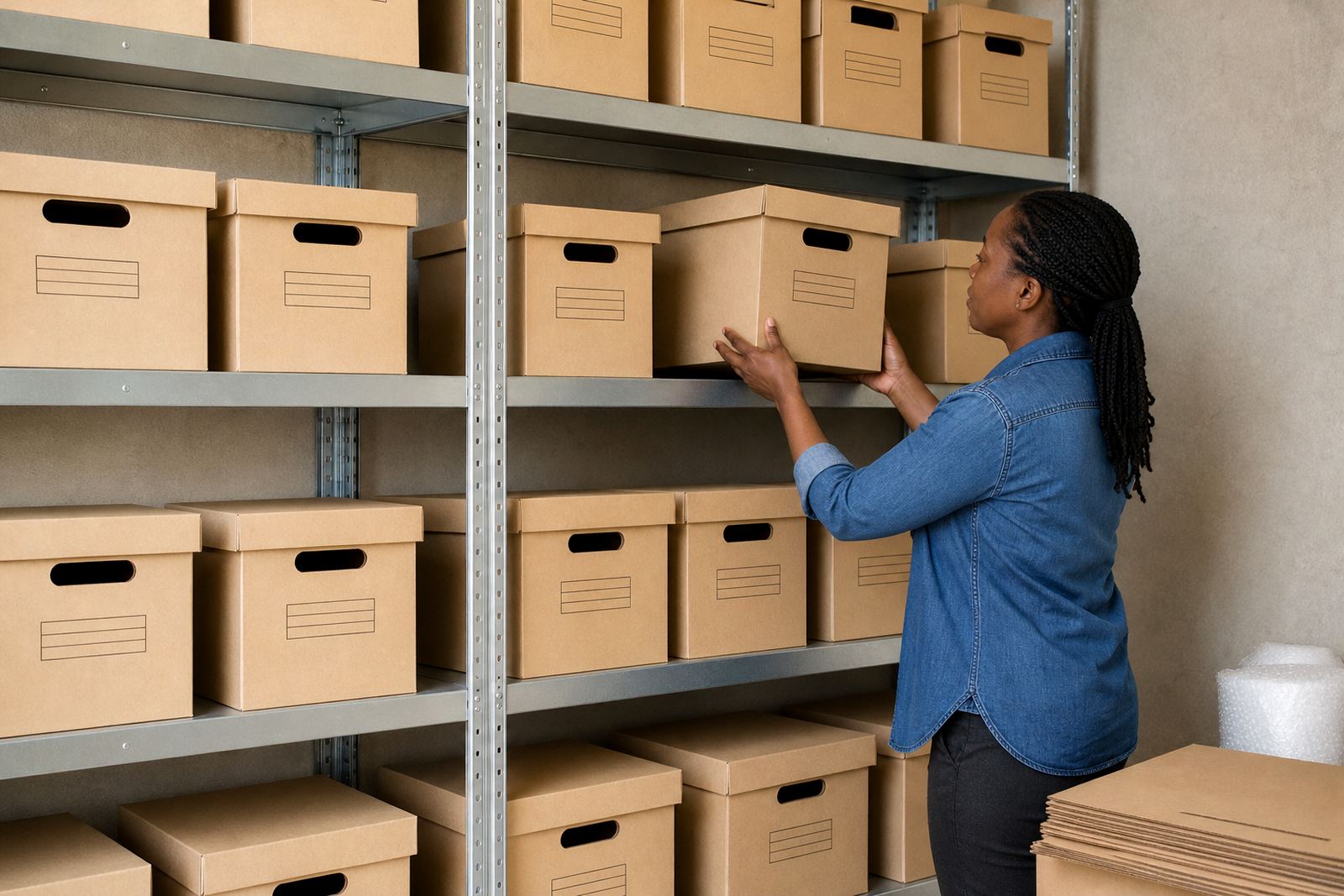
Not everything has to stay in the house to stay useful. Important documents, presentation materials, business samples and backup equipment can be packed neatly and stored in a unit until you need them again. That is especially handy if you work from home and still need space for family life, or if a room is shared with a teenager studying after school.
A good packing plan makes this easier. Use strong boxes, label them clearly and keep the items you need most often near the front of the unit. Put heavier things at the bottom and leave a small walkway so you can reach boxes without pulling everything out. In Gauteng, where dust and summer heat can build up quickly, it helps to use clean, dry packing materials and avoid overfilling boxes.
- Label boxes by category, not just by room
- Keep cables, chargers and adapters in one marked box
- Use shelving where possible to reduce stacking pressure
- Separate personal items from business items for quicker retrieval
Choose a unit that fits your working habits
Different work routines need different storage setups. A freelancer may only need a small unit for files and marketing material, while a small business owner might need space for stock, display items or packed equipment. The aim is to match the unit to what you actually store, not to guess and take more space than needed.
When choosing a unit, think about how often you will visit, what you will need to remove first and whether you are storing paper records, boxes or bulkier items. If you are running a home-based service from Midrand and collecting supplies every week, easier access matters just as much as unit size. The best setup is the one that saves time on busy days and keeps the office at home free for work.
- Office files and archive boxes
- Seasonal promotional materials
- Small business stock
- Spare chairs, shelving and equipment
Security and access matter when work items are stored offsite
When business papers, tools or stock are in storage, you need to know they are protected and reachable when you need them. Secure premises, controlled entry and well-managed access arrangements help make that possible. It is also useful to know whether you can collect or drop off items without disrupting your day too much.
A storage plan that lets you keep work items offsite but still within easy reach can reduce stress and keep the home office running smoothly. For someone in Kempton Park or Centurion, that can mean fewer trips across town and less time spent shifting things around the house.
Good access planning also helps if you are running a business from home with staff coming and going. Keep frequently used stock near the front and store archives, spare equipment or less urgent items further back. That way you are not wasting time searching when a client order or admin task comes in.
Packing supplies help the room stay organised from day one
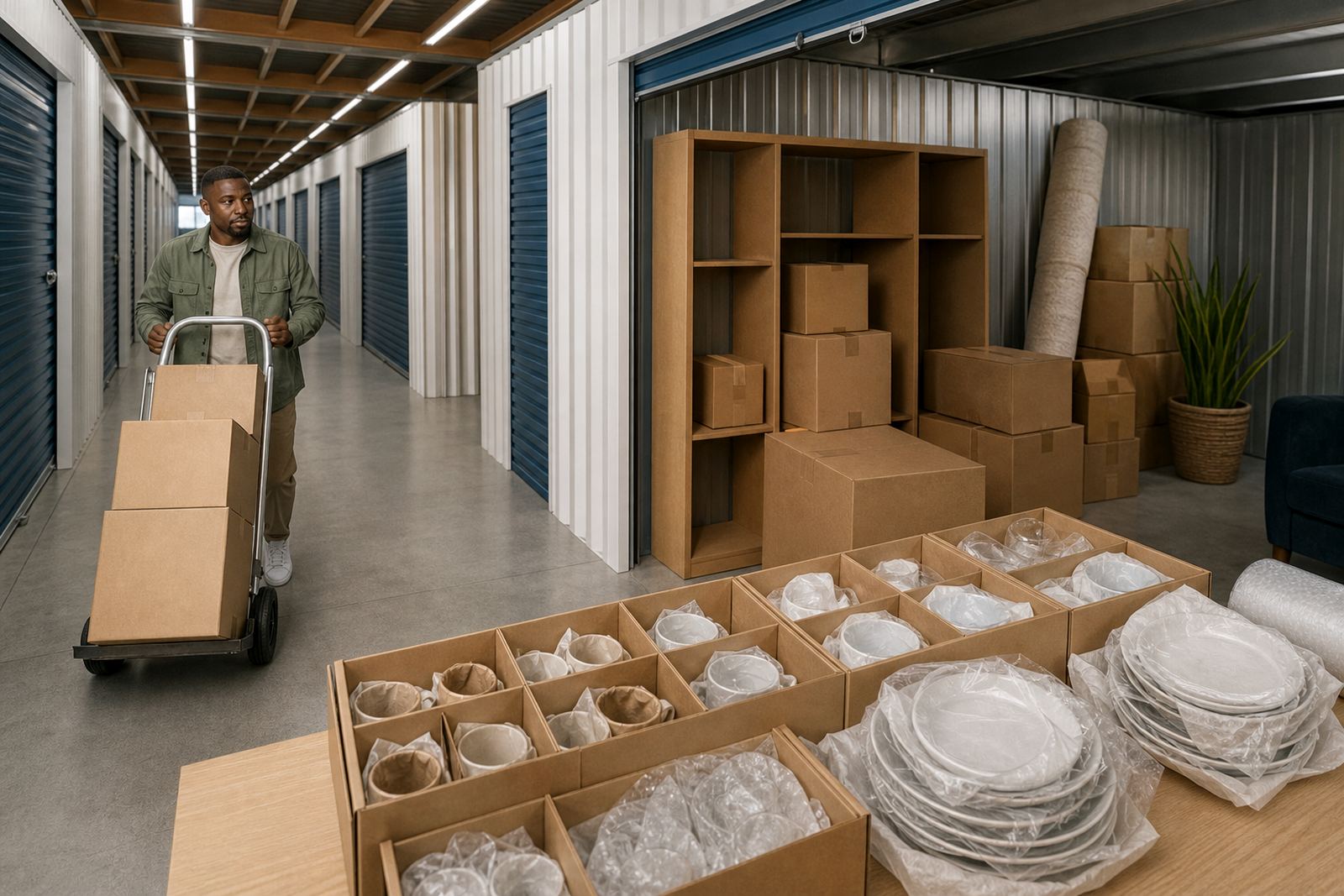
Once you clear a room, the next step is keeping it that way. The right packing supplies make it easier to sort, label and move items without damage. Strong boxes, tape, wrapping paper and markers all help when you are organising a home office or moving work materials into storage.
It is also worth setting up a small packing station before you start. That can be as simple as a flat surface, a marker, a stack of boxes and labels grouped together. If you are moving a home office in Sandton or Randburg, a bit of planning saves a lot of back-and-forth later.
- Use one box for cables, chargers and small tech items
- Wrap fragile items before stacking them
- Keep archive boxes upright and clearly marked
- Separate daily-use items from long-term storage items
A local example: from cluttered room to proper work zone
Take a household in Midrand where one room was being used for sewing supplies, office files, a spare printer and old furniture. The room looked full before the workday even started. By moving the furniture and archive boxes into storage, the family could set up a simple work area with space to move, better light and a cleaner surface for daily tasks.
That change did not require a full renovation. It just needed sorting, packing and a clear idea of what had to stay at home. Once the room was cleared, the person working there could focus better, and the rest of the household had one less area that was always in the way. Small changes like that matter, especially when the same room must serve more than one purpose.
For many Gauteng households, this is the practical value of storage: not keeping more stuff, but making the space you already have work harder for you.