
Start with a clean, dry kitchen before packing anything away
Before you box a single plate, clear out the cupboards and wipe everything dry. Food residue attracts pests, and a damp mug, lid or tray can cause musty smells if it sits in a storage unit for weeks or months. In Gauteng, where a sudden rain shower can catch you off guard during a move, it also helps to sort items indoors before they go near the loading area.
Set aside anything broken, expired or rarely used. This is a good time to separate daily kitchenware from seasonal pieces such as serving platters, spare glassware and cookware you only use for family gatherings. If you are storing business stock or catering items, group them by use so it is easier to find what you need later.
Use the right packing materials for plates, glasses and cookware
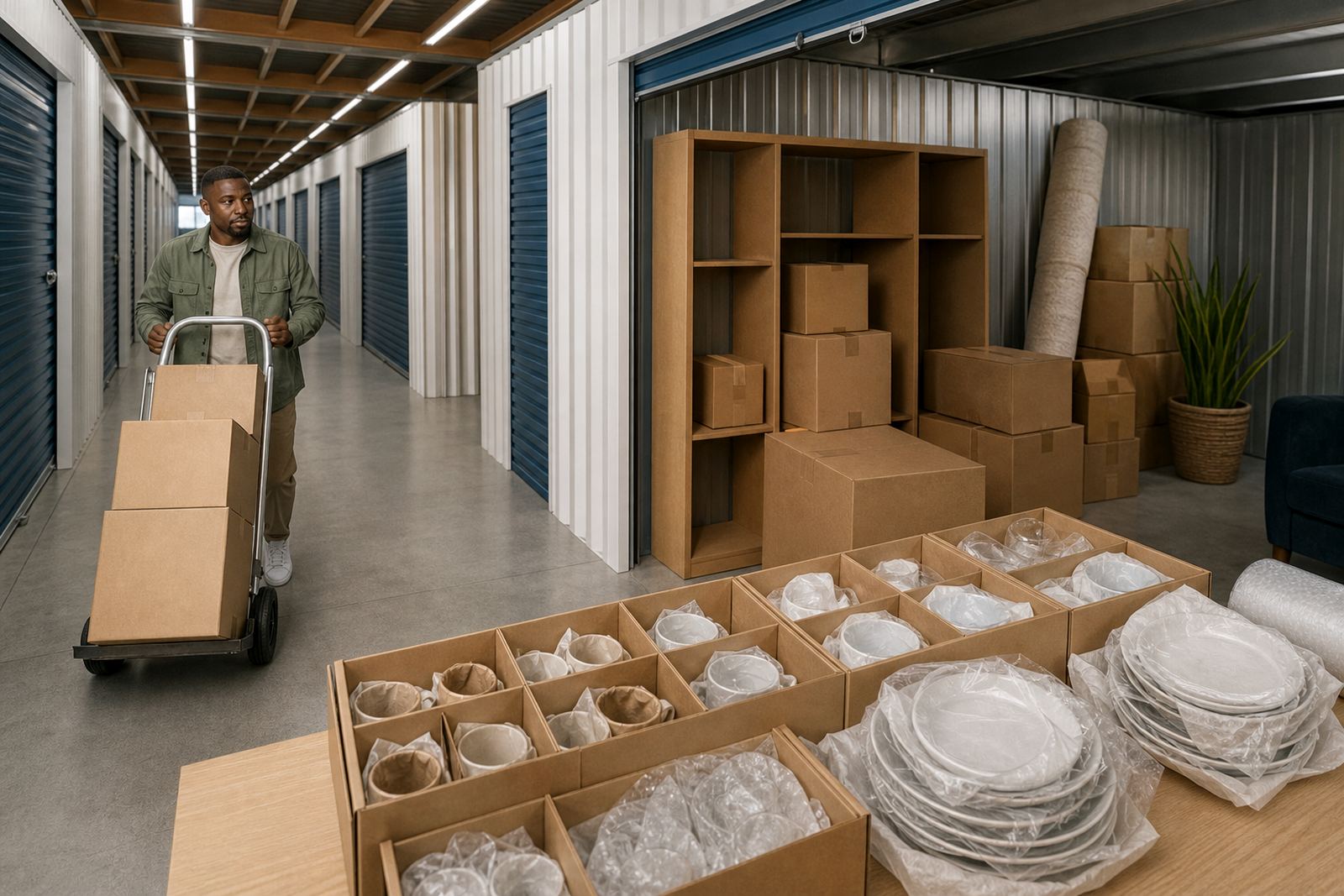
Kitchen items need more support than a normal household box. Wrap each item on its own and use enough cushioning to stop movement inside the box. Heavier pieces such as cast iron pans, baking trays and stoneware should go into smaller boxes so the weight stays manageable. Lighter items can share a box, but do not overfill it.
- Wrap crockery in plain paper or soft packing paper, then place plates upright, not flat.
- Use extra padding between bowls, mugs and glass lids.
- Pack pots and pans with a layer of paper or cloth between each piece.
- Keep sharp tools such as peelers and graters separately wrapped.
- Seal each box well and label the top and two sides.
If you are packing from a flat or townhouse in Midrand or a business kitchen in Johannesburg, stack the boxes in the order they will be unloaded. That saves time later and reduces the chance of fragile items being moved around more than necessary.
Keep pantry accessories separate from heavy kitchenware
Pantry accessories are often mixed together with cookware, but they should be packed on their own. Measuring cups, spice jars, clip seals, storage tins and small serving tools are easier to organise when grouped by type. This is also the best way to keep plastic lids from disappearing into bigger boxes.
Dry goods should only be stored if they are sealed, labelled and within date. Open food should not go into a storage unit. For long term storage, use sealed containers for empty pantry accessories so dust does not settle inside them. In humid areas closer to the East Rand, extra care with sealing helps prevent rust on tins and moisture on cardboard packaging.
- Group pantry items by cupboard zone, such as baking, tea and coffee, or meal prep.
- Place labels on the outside of containers as well as the box.
- Keep glass jars together and separate from metal tins.
- Store packet clips, scrapers and small utensils in a zip bag inside the main box.
Label by room and by urgency, not just by item type
A box marked kitchen is useful, but it is even better to know what belongs in which cupboard and what you will need first. Mark boxes as everyday, special occasion or spare. If you are moving into a smaller home in Pretoria or Centurion, this makes unpacking much easier because you can prioritise the pieces you use most often.
Write clearly on the label and note whether the box contains fragile items, heavy items or mixed contents. If you are using a self-storage unit for an office move support or stock organisation project, this system also helps staff and clients identify boxes quickly without opening everything. Keep one simple list on paper or on your phone so you know where the kettle, baking trays and serving dishes ended up.
Choose the right unit setup for kitchen storage
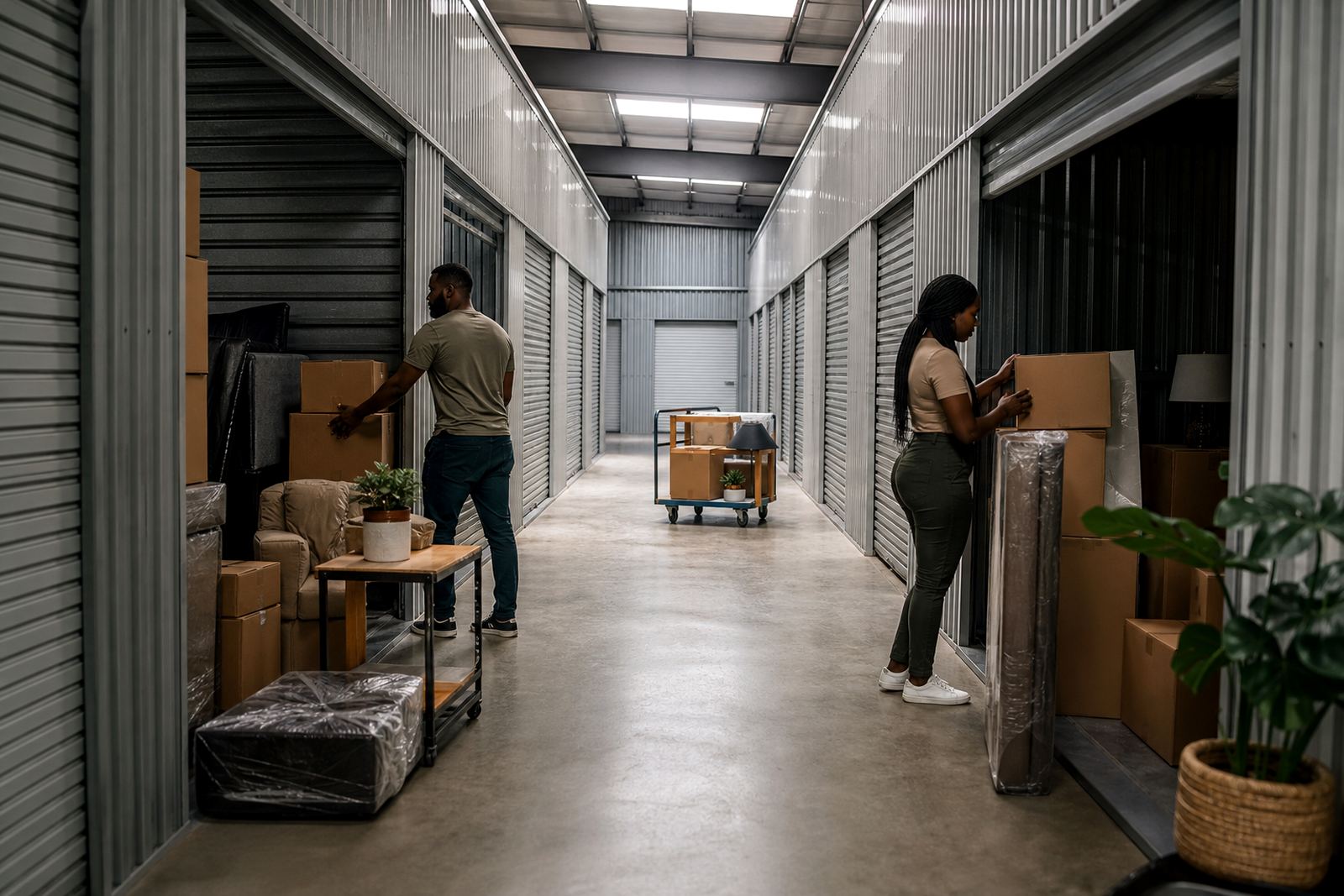
Kitchen items should be stored in a clean, dry unit with good access so you can reach your boxes without shifting everything else around. If you are storing home contents during a renovation, or keeping surplus stock for a catering business, ask for unit size guidance before you move in. A well planned layout helps you store items vertically on shelves or stack them safely on pallets where needed.
Access arrangement matters too. You do not want to arrive with a load of boxed crockery only to find that the layout makes unloading awkward. At our Midrand base and across Gauteng, customers often use self-storage for short term move-in support, archive planning, or decluttering support.
A local example: packing a family kitchen during a Midrand move
For a family moving from a townhouse in Midrand to a larger property in Centurion, the kitchen is often one of the last rooms packed and the first room needed again. The practical approach is to start with non-essentials such as serving bowls, spare glasses and special baking tins, then leave daily plates, mugs and one pot set for last. That way the household can still cook simple meals while the move is underway.
Once the move is complete, any extra items that do not fit the new cupboards can go into storage units until they are needed. This works well for seasonal cookware, backup pantry accessories and small appliances you do not use every week. It also gives businesses in Johannesburg, Sandton or Randburg a sensible way to keep extra stock organised without crowding the workspace.
What to do before placing kitchen boxes into storage
Before the final stack goes into the unit, check each box for spills, loose lids and hidden breakages. Heavy items should sit on the bottom, lighter fragile boxes above them. Leave a small aisle if possible so you can reach the back without unpacking everything. If you are storing for a long period, revisit the unit now and then to check for any dust, damp or shifting boxes.
- Make sure all boxes are fully closed and clearly labelled.
- Do not store food that can spoil or attract pests.
- Keep glass, ceramic and metal items in separate groupings where possible.
- Use packing supply advice if you are unsure how many boxes or rolls of paper you will need.
- Plan move-out planning early so your kitchen can be unpacked in the right order.
Good kitchen storage is really about keeping things clean, balanced and easy to find. With the right packing method, your crockery, cookware and pantry accessories can stay in good condition until you need them again.