
Start with the item, not the box
The best packing plan starts with what needs to be stored. Books, kitchenware, clothing, files, tools and soft furnishings all need different support, and using one type of box for everything usually leads to damaged items or wasted space. A storage unit is easier to use when the contents are sorted before the first carton is packed.
In Midrand and across Gauteng, many customers are packing while moving between homes, offices or storerooms. Choose materials that keep their shape, close properly and can be stacked without crushing the contents.
Which boxes suit which items
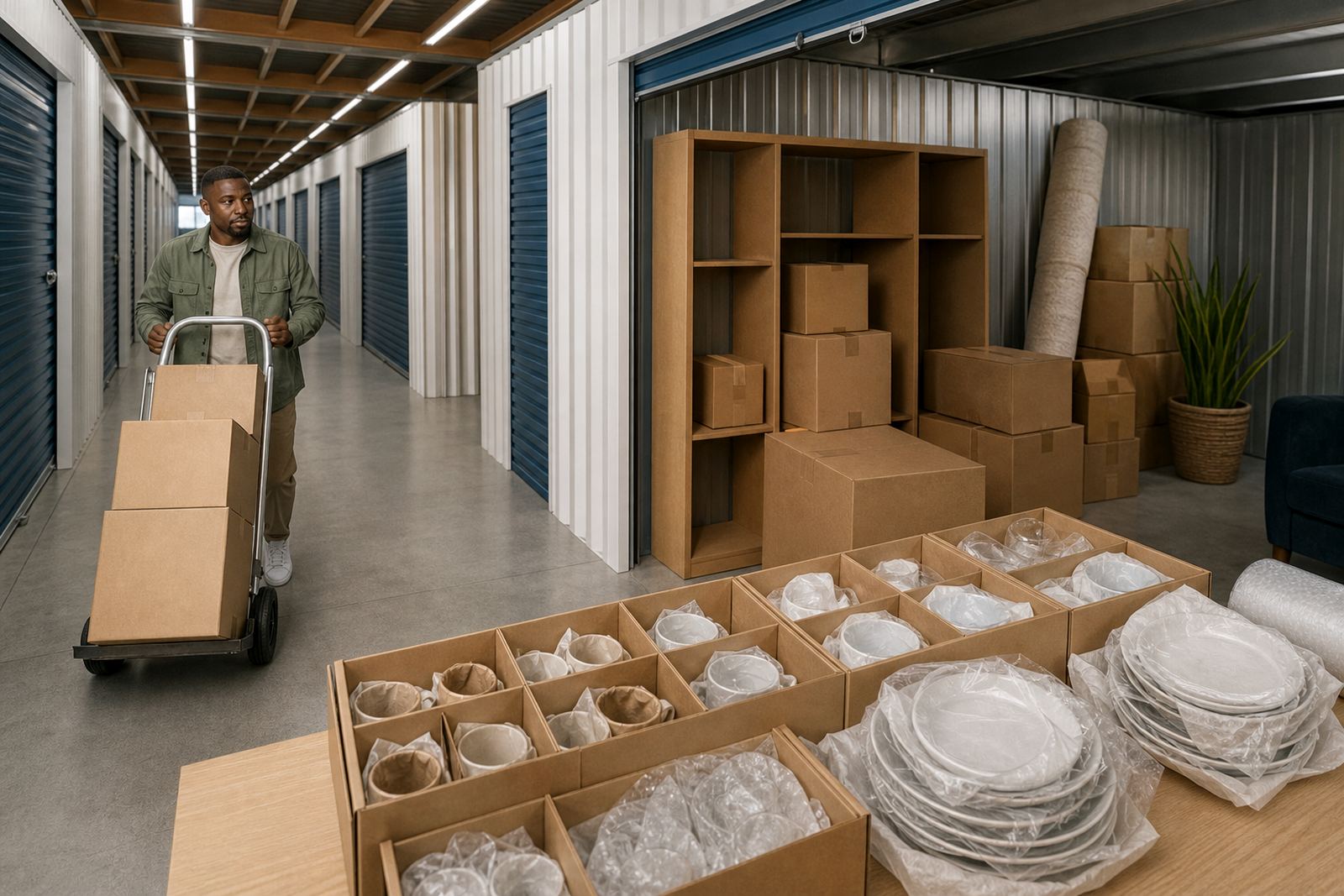
Different box styles help with different types of storage. Small cartons are best for heavy items like books, tools or tins, because they are easier to lift and less likely to break under weight. Medium cartons suit mixed household items, while larger boxes are better for light but bulky things such as bedding, cushions or winter jackets.
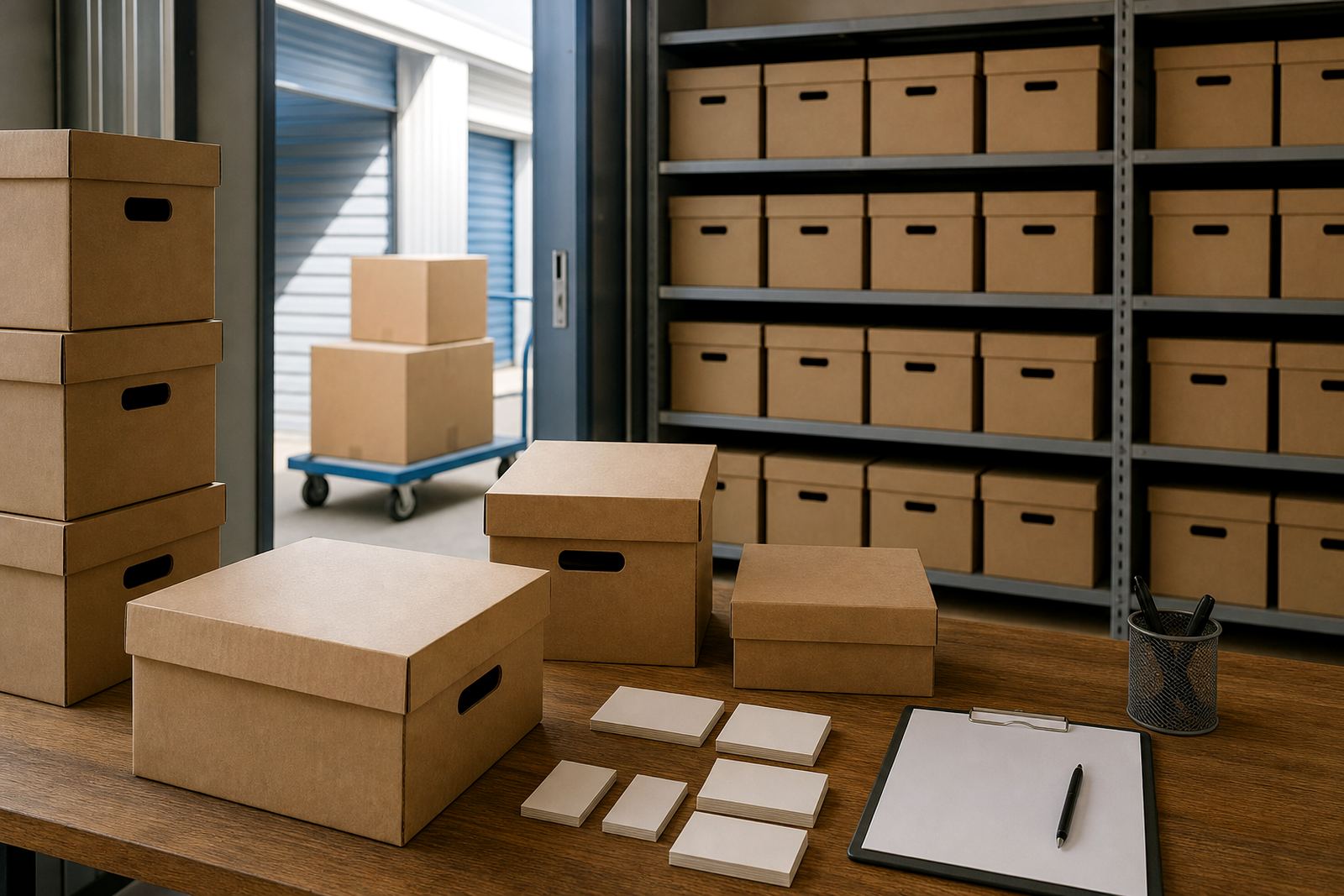
For offices and business storage, document boxes are useful for files, archived paperwork and stationery. Wardrobe boxes help with hanging clothing, and stronger cartons are useful when moving stock between Sandton, Randburg, Edenvale or the Midrand base. If the contents are fragile, avoid overfilling the box just to use up space. A half full box that stays intact is better than an overpacked one that bursts later.
- Use small boxes for dense items that add weight quickly.
- Use medium boxes for mixed household or office contents.
- Use large boxes only for light, bulky items.
- Choose specialised cartons for clothing, files or fragile goods.
Protective materials that do the real work
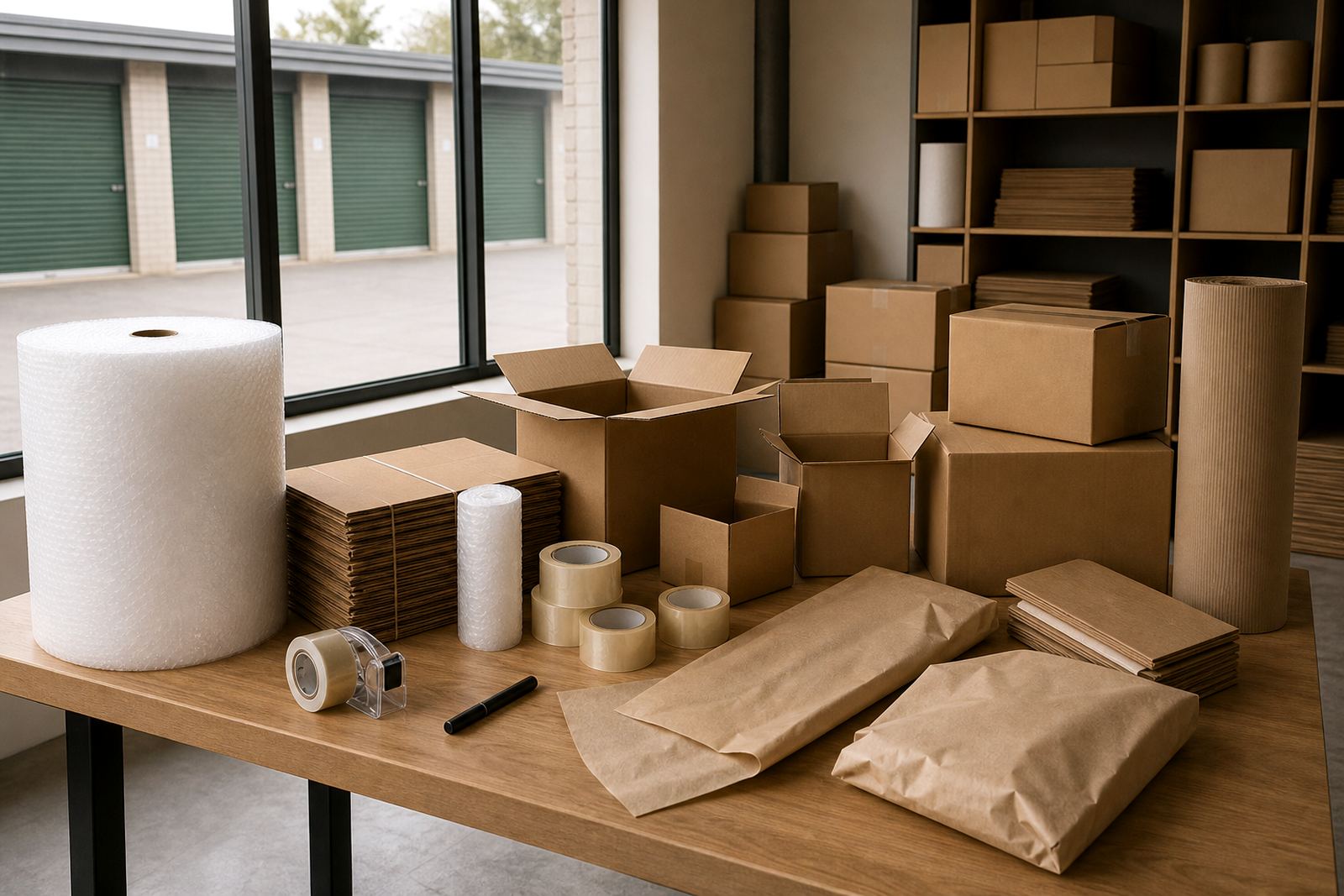
Boxes carry the load, but protective materials prevent movement inside the box. Bubble wrap helps protect glass, ceramics, electronics and framed items. Packing paper is useful for wrapping smaller pieces, filling gaps and keeping surfaces from rubbing together. Foam sheets and corner protectors are helpful for mirrors, pictures and flat items with sharp edges.
Strong packing tape matters too. A box that looks neat but opens at the bottom can create a mess very quickly, especially when it is moved through a parking area or up a stairwell. In Gauteng, where many moves happen between apartments, business parks and storage units, good sealing saves time. One missing roll of tape can turn a simple move into a long afternoon of repacking.
- Bubble wrap for fragile items and glass.
- Packing paper for general wrapping and filling gaps.
- Foam or corner protectors for frames, mirrors and screens.
- Wide packing tape for secure closure.
Packing for Gauteng weather and storage conditions
Not every storage area faces the same conditions, so materials should be chosen with the location in mind. In some parts of Gauteng, heat and dust are the main concerns. In others, dampness or coastal humidity is less of an issue than in the highveld but still worth thinking about if items are stored for months. Cardboard should be clean and dry before use, and anything that must stay moisture free should be wrapped properly.
If you are storing items through a seasonal change, use plastic covers for mattresses, soft furnishings and upholstered pieces. For business stock, keep items off the floor where possible and use sealed boxes for documents or retail items that must stay tidy. At a Midrand storage site, for example, a small business might keep archive files in document boxes, display stock in labelled cartons and spare promotional materials in sealed plastic tubs so everything stays sorted and easy to find.
Match your supplies to how often you need access
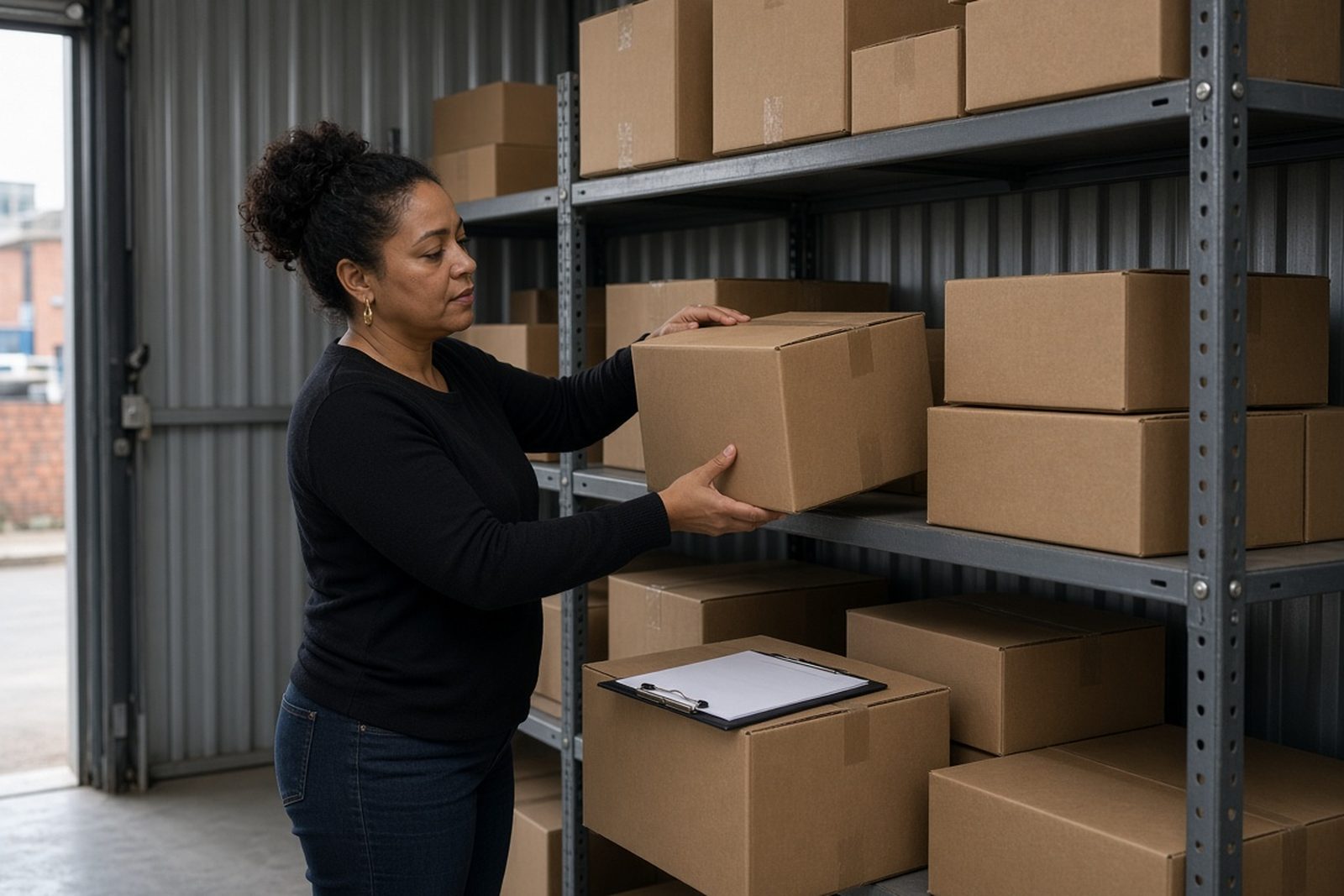
Some items stay in storage for months. Others need to be reached weekly. That changes the way you should pack. If you need regular access, label every box on at least two sides and keep similar items together. Use clear bags or transparent containers for smaller pieces that would be hard to identify later. Place frequently needed items near the front of the unit so you do not have to unpack half the space just to find one folder or charger.
For business users, access planning can save time and reduce mistakes. A clothing retailer storing stock between seasons may need one section for current orders, another for backup inventory and a separate area for packaging material. A student storing belongings during a holiday break may only need a few clearly marked cartons, not a full set of large boxes. Good packing means less searching later, and less frustration when you are tired after moving.
- Label boxes on more than one side.
- Keep fast-moving items near the front.
- Separate archived items from daily-use stock.
- Use clear containers for small loose items.
How packing support helps before the unit is loaded
Many people focus on the storage unit first, then realise the supplies matter just as much. If the right cartons are not on hand, packing slows down and the move becomes untidy. Good packing supply advice helps you choose the right mix before moving day, whether you are decluttering a family home in Pretoria, shifting office files in Centurion or clearing stock in Kempton Park.
LastBox supports customers across Midrand, Johannesburg, Pretoria, Centurion and Kempton Park with packing supply advice, unit size guidance and move-in support. The goal is simple: pack once, store neatly and avoid handling the same item two or three times. When boxes are sized properly and materials are matched to the contents, loading becomes easier and the storage space works better from the start.
A practical checklist before you buy supplies
Before buying cartons and wraps, walk through the space you are clearing and make a rough list. You do not need a perfect inventory, but you should know what is fragile, what is heavy and what may need to be accessed sooner rather than later. That makes it easier to choose the right mix of boxes instead of buying too many of one size and not enough of another.
It also helps to pack room by room or category by category. Keep kitchen items together, office files together and clothing together. That way the labels make sense and the contents are easier to manage when the unit is full. A little planning upfront saves time later, and prevents the usual mix of half packed cartons, missing tape and a pile of items that nobody wants to sort after dark.
- List fragile, heavy and bulky items first.
- Choose a mix of small, medium and specialised boxes.
- Buy enough tape and protective wrap before packing starts.
- Label everything before it goes into the unit.