

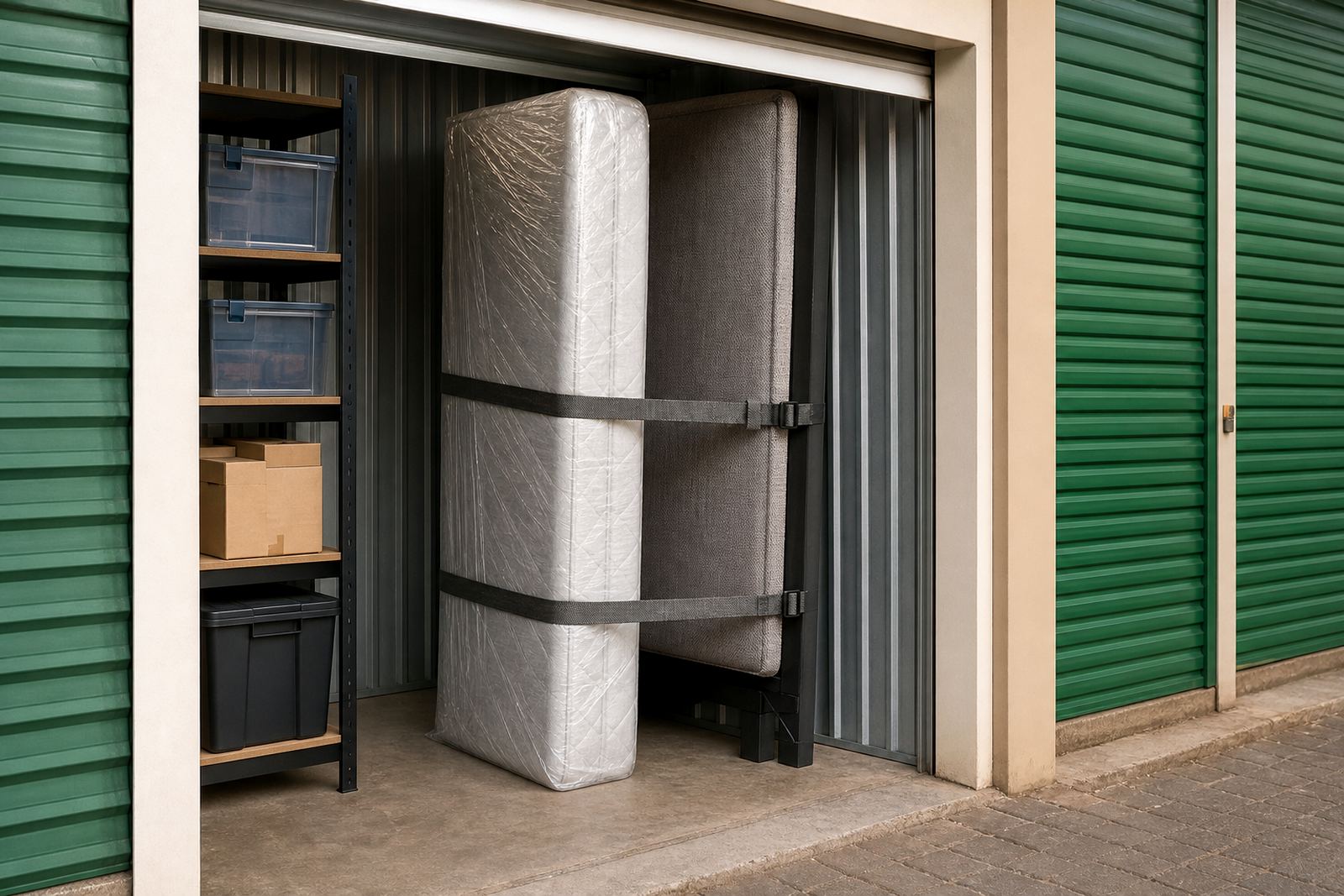
Why bed bases need proper packing before storage
Bed bases are often the first bulky item to get rushed during a move, but they deserve proper preparation. A base can hold dust, pet hair and moisture in the fabric or timber, and if it is dragged through a passage or loaded badly it can collect scratches on corners and feet.
For customers in Midrand, Johannesburg or Centurion, the main aim is simple: keep the base clean, dry and stable. If the bed base has drawers, loose fittings or a headboard attached, remove what you can and keep the small parts in a labelled bag. That makes move-in day easier and avoids the common problem of hunting for bolts after everything else is already stacked in the unit.
Mattress care: keep it clean, dry and easy to lift
A mattress should never be left exposed in a yard, on a bakkie tray or standing against a wall for long periods. Even a short delay can leave it dusty or damp, especially in summer rain or coastal humidity if you are moving goods through more than one area. Use a clean mattress cover, then add a layer that protects from scuffs and minor moisture while still allowing the mattress to breathe a bit. Sealing in heat and damp can cause a stale smell, which is the last thing you want when you unpack later.
If the mattress has handles, do not rely on them alone for lifting. Use two people, keep the mattress flat where possible, and avoid bending it sharply. Foam and inner-spring mattresses can lose shape if they are folded too tightly. A good rule is to move it straight from the room to the vehicle and then into storage without leaving it in the sun. That small bit of care saves a lot of trouble later and it keeps the mattress looking better for longer.
- Use a clean cover or wrap before moving the mattress.
- Keep it flat during transport if the vehicle space allows.
- Do not place heavy boxes on top of it.
- Avoid damp walls, concrete floors and direct sunlight.
How to move bed bases without damage
Bed bases are heavy enough to cause injury if they are carried badly, so start by clearing the route from bedroom to vehicle. Open doors fully, remove loose rugs and check for tight corners. If the base is long or awkward, use straps or furniture blankets to protect the fabric and make the grip more secure. A mattress and base should be moved as a team, not as separate afterthoughts, because once one item is damaged the rest of the move becomes harder.
When placing bed bases into a storage unit, keep them upright only if the structure supports that position. Otherwise lay them flat on a clean, dry surface. Do not rest them directly on bare concrete for long periods. At LastBox, many customers use a slightly raised layer or pallet-type support for bulky items so air can move underneath. That extra step matters in Midrand and other inland areas where dust is common and temperature changes can still affect fabrics and timber.
- Check for loose bolts, broken slats or damaged legs before storing.
- Keep fittings in a clearly marked packet.
- Wrap corners to reduce scuffing.
- Make sure the load is balanced in the vehicle so the base does not twist.
Storage unit conditions that help bed bases stay in better shape
Storage works best when the unit is clean, dry and easy to access. Bed bases and mattresses should not be squeezed into a space with no walking room, because that makes it harder to check on them later. A little breathing space helps with airflow and reduces the chance of accidental damage when you return to collect other items. If you are storing a full bedroom set with boxes, leave the mattress where it can be reached without shifting everything else first.
Security also matters. A locked unit, controlled access and a well-managed facility give you peace of mind when you are storing personal items or business stock. Customers often need a place for spare beds while they renovate, move home, or keep guest-room items out of the way. For a family in Pretoria, for example, the plan may be to store a spare bed base during a kitchen rebuild and retrieve it once the painting and flooring are finished. That kind of short-term storage should feel practical, not complicated.
Packing tips for moving day in Gauteng
Moving across Gauteng often means dealing with traffic, school runs and timing around work hours, so the packing job needs to be organised. Start with bed linen removed and packed separately. Then wrap the mattress, dismantle the base if it can be taken apart, and keep all screws, brackets and fittings in one clearly marked packet. If you are moving from Kempton Park to Sandton, or from Randburg to Midrand, the same principle applies: the more organised the load, the less handling the bed gets and the cleaner it stays.
It also helps to plan around the rest of the household move. Pack bedding last if the bed will still be used overnight, or pack it first if the bedroom is already empty. Keep one set of sheets aside if you will need the bed again before collection. Small practical steps like this reduce confusion when the mover arrives and help you avoid putting a mattress on the ground while you search for missing parts, which happens more often than people think.
- Label mattress, base and fittings separately.
- Keep bedding in sealed bags away from dusty boxes.
- Use gloves if the base has timber splinters or metal edges.
- Reserve clear floor space in the unit before arrival.
When to ask for unit guidance and packing support
Not every move needs the same setup. A single bed base for student storage is very different from a king-size set being kept for office staff accommodation or guest use. If you are unsure how much room you need, ask for unit size guidance before moving day. It is also useful to ask about access arrangement if you expect to visit the unit more than once, or if the bed base will be stored with archives, household items or business stock. Planning this properly saves time at the gate and makes loading smoother.
At the Midrand base, the team can help with move-in support, packing supply advice and move-out planning so the process stays practical from start to finish. For example, a customer in Johannesburg might need a spare bed stored while a rental unit is being repainted and fumigated. Another in Centurion may be clearing a room for family visitors and want the bed base out of the way for a few months. In both cases, the aim is the same: store the bed cleanly, keep it accessible and bring it back in the same condition if possible.
Bed bases and mattresses are easier to handle when the preparation is done well before the move. A few careful steps upfront can save you from dust, damp and unnecessary lifting later, and that makes the whole process less stressful.