Start with a clean, dry kitchen table
Before you pack anything, clear one work area and wash items that may carry grease or crumbs. Dry every piece fully, especially mugs, lids and saucepans, because trapped moisture can cause smells in storage and can leave cardboard soft. In Midrand and across Gauteng, humidity changes from week to week, so do not pack damp items and expect them to stay fresh.
Sort your kitchenware into groups first. Keep plates together, glasses together, and cookware together so the packing stage moves faster. It also helps when you need to find everyday items after a move or while you are using self-storage for a short time during renovations or a business move.
- Wipe down shelves, drawers and cupboard liners before packing.
- Check for chips or cracks and set damaged items aside.
- Use a clean towel or packing paper on the work surface.
- Keep one box for daily-use items and label it clearly.
Wrap plates and bowls with simple layers
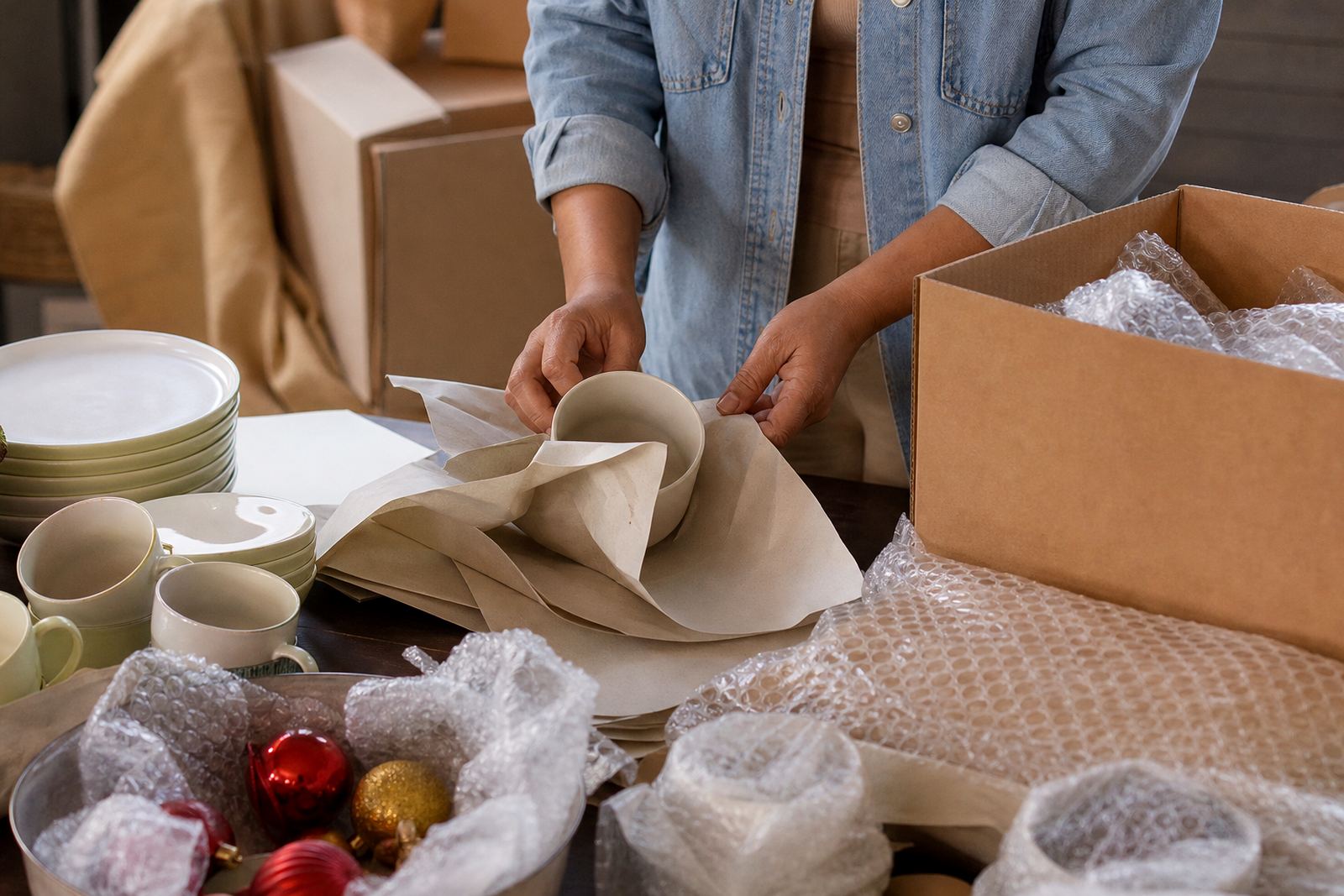
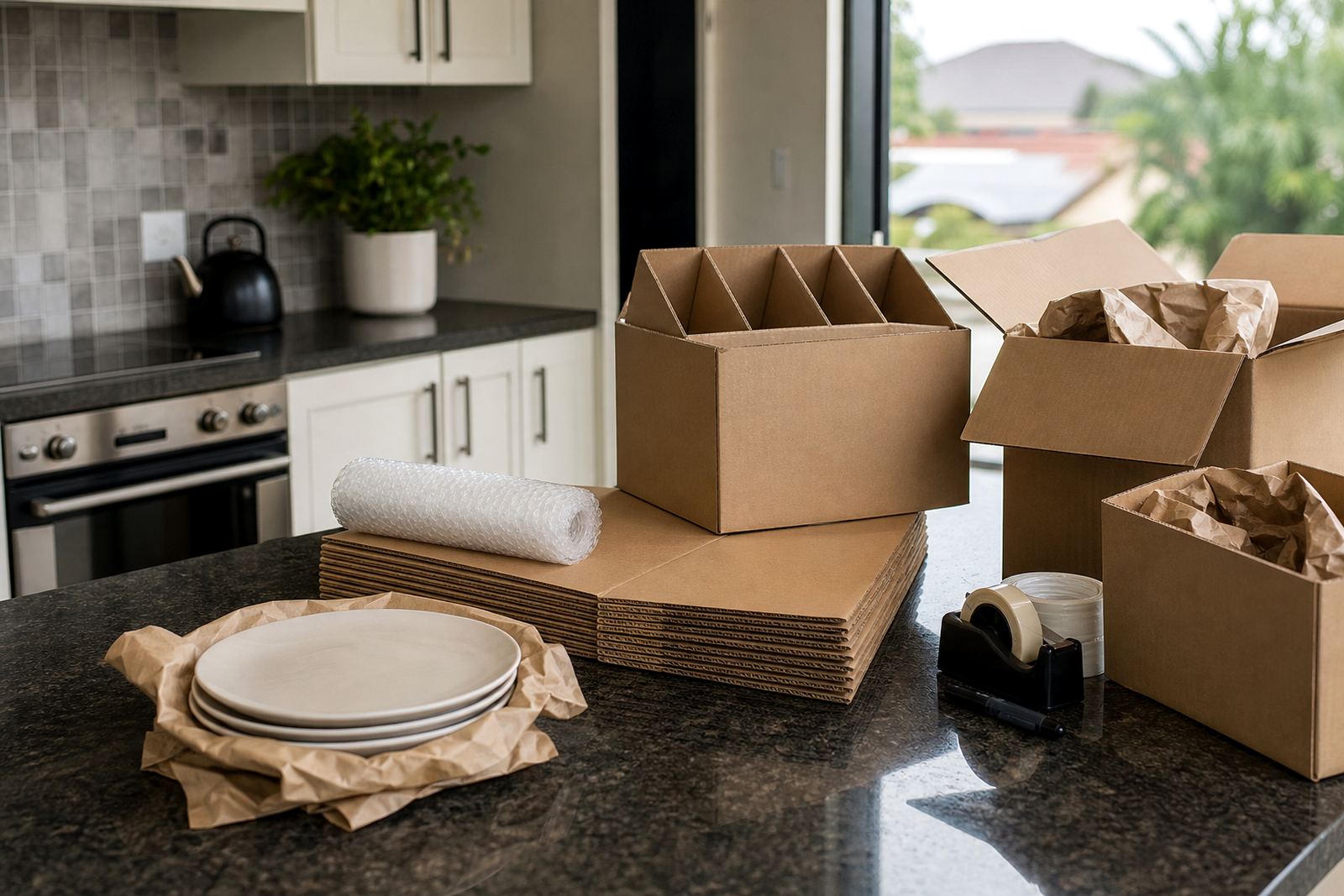
Plates and bowls should be wrapped one by one, not stacked loose in a box. Place packing paper between each item, then wrap the full bundle so the edges are covered. If you have thicker stoneware or heavy ceramic pieces, give them an extra layer on the corners and rims. This small step makes a big difference when the box is lifted in and out of a vehicle or storage unit.
Pack the heaviest plates at the bottom of the box and the lighter ones on top. Keep the stack snug but not forced. If there is too much movement, fill the gaps with crumpled paper or soft kitchen linen. A box that shifts during transport can break corners, and broken glass mixed into other items is never worth the risk.
- Never pack plates flat with empty space above them.
- Stand saucers and small plates on edge for better support.
- Use small to medium boxes so the load stays manageable.
- Label the box “Fragile” and note which side must stay upright.
Protect glasses, mugs and cups from knocks
Glasses need extra care because pressure on the rim or stem can cause hidden cracks. Wrap each glass individually and stuff the inside lightly with soft paper if the opening is wide. For stemmed items, protect the stem first, then the bowl and rim. Mugs and cups may seem sturdier, but handles snap easily if they are packed too tightly against each other.
Line the bottom of the box with a thick layer of paper or a folded towel. Place the heaviest glasses at the bottom and keep similar sizes together. If you are storing kitchenware for a business, such as a catering stock room or a guesthouse refresh, group items by type so stock checks stay simple. The same applies to glassware for events, because counting and repacking become easier when everything is sorted properly.
- Do not leave rims touching each other inside the box.
- Use dividers if you have them, but they are not essential.
- Keep glass boxes away from tools, books and heavy pantry items.
- Fill empty spaces so the contents do not rattle.
Pack pots, pans and lids so handles stay safe
Cookware often takes up more room than people expect. Stack pots by size, with paper between each one to protect the cooking surface. Pans can go in the same box if they fit neatly, but do not overload the carton. Handles, knobs and glass lids need their own protection because they catch on each other easily. A lid that slides around in transit can scratch a pot or crack against the side of the box.
If you have non-stick pans, avoid rough wrapping materials that could mark the surface. For stainless steel and enamel cookware, dry every piece well before packing. In coastal humidity or after a hot day in Gauteng, even a small amount of moisture can lead to unpleasant odours if cookware sits boxed for weeks.
- Pack lids vertically with paper between each one.
- Keep sharp utensils separate from pots and pans.
- Wrap handles so they do not press through the box wall.
- Do not use a box that is already soft from previous use.
Choose the right box size for kitchen items
Kitchenware is heavy, so smaller boxes are usually better than one large carton filled to the top. A box that is too big becomes hard to lift and is more likely to split at the base. For moving between homes, or into a storage unit in Midrand, Johannesburg, Pretoria, Centurion or Kempton Park, aim for neat weight rather than sheer volume. You should be able to lift the box safely with both hands without straining.
Keep fragile kitchen items separate from pantry goods, cleaning products and heavy appliances. If you are also packing for office kitchen use, store mugs, teaspoons and glassware in clearly marked groups so staff can find them later. Good labelling matters when boxes are moved more than once or shifted around during access changes.
- Use small boxes for plates, glasses and jars.
- Reserve larger boxes for light items like tea towels or paper goods.
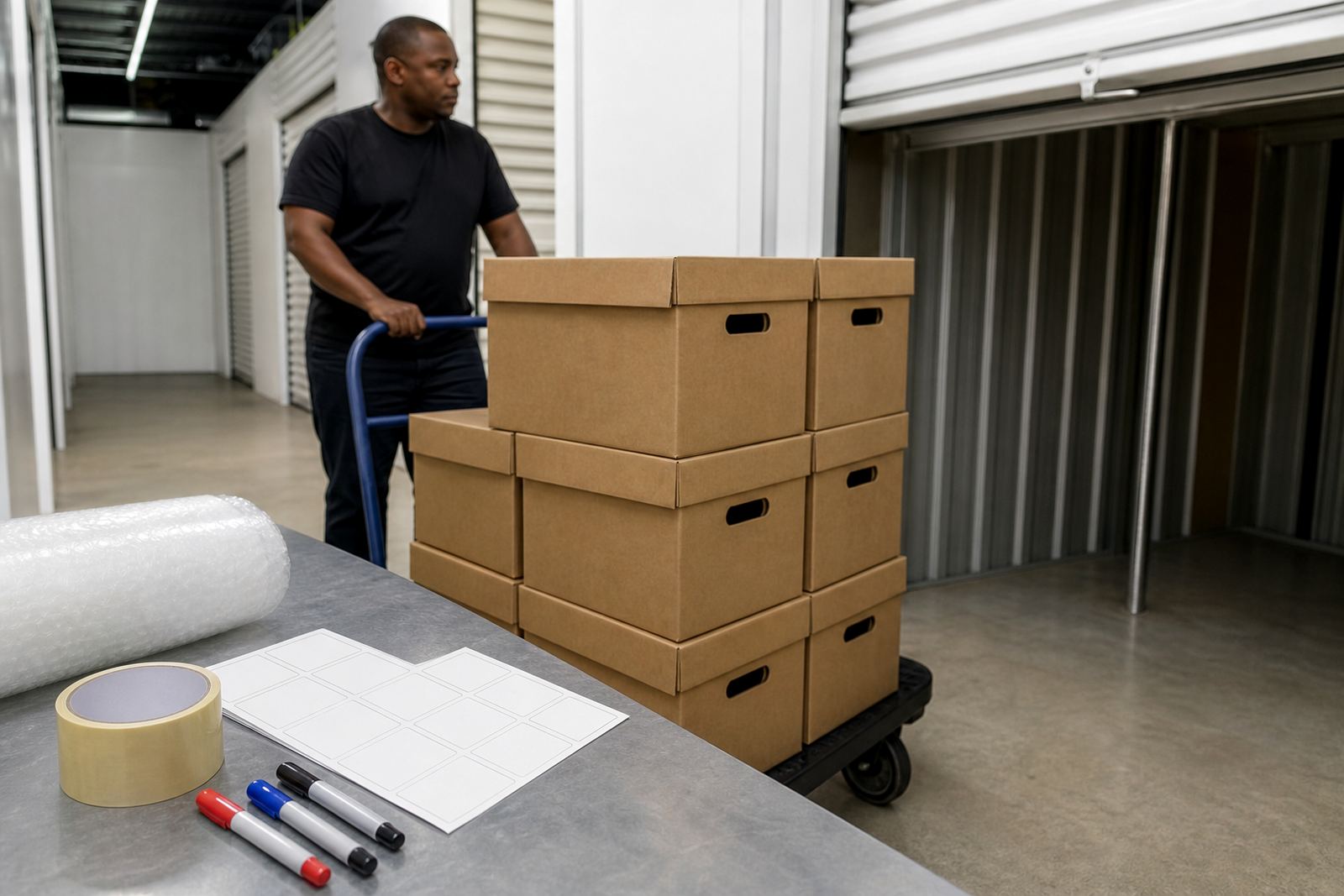
- Seal each box well with packing tape across the base and top.
- Write the room name and contents on two sides of the box.
Store kitchenware properly in a unit or keep it ready for move-out
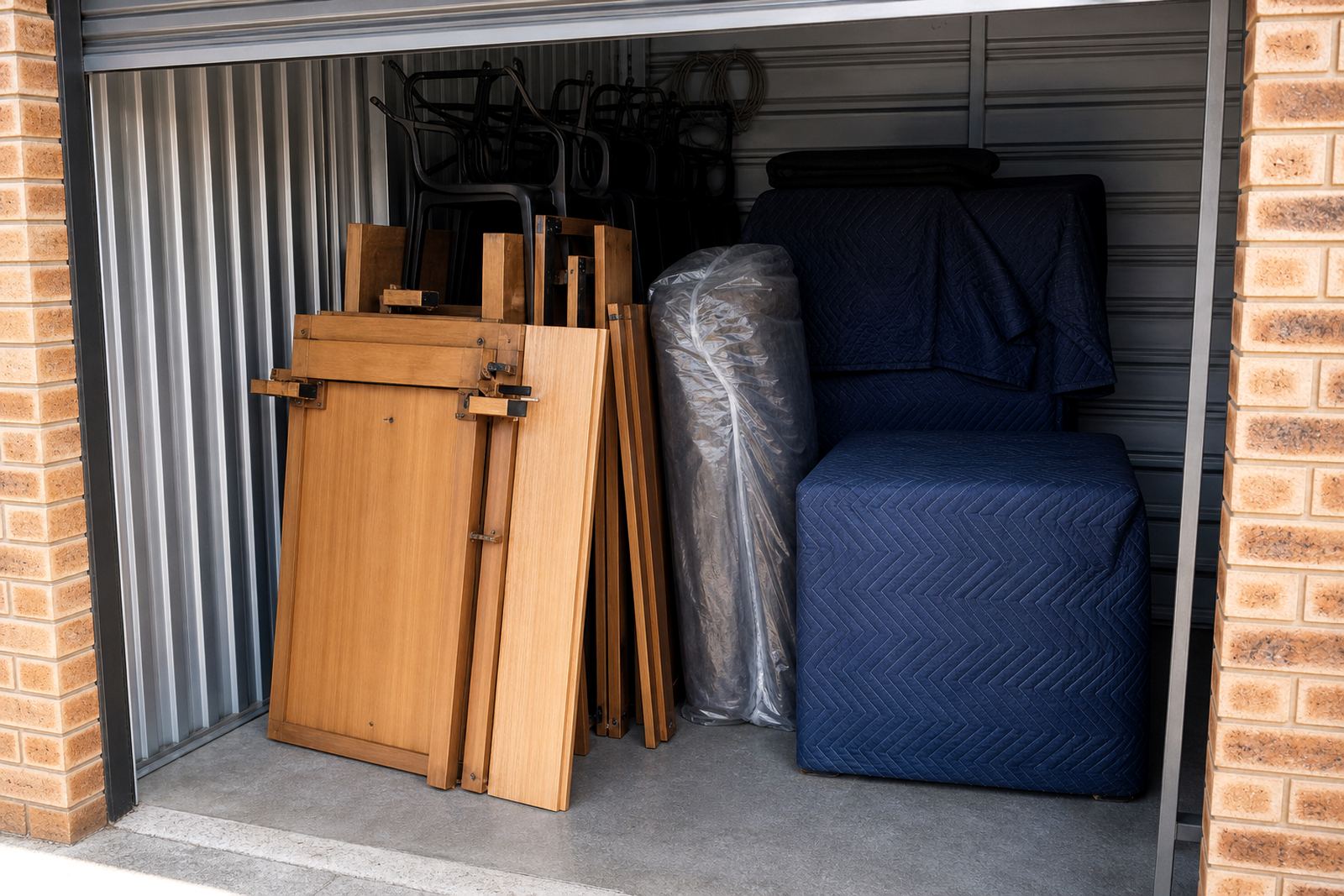
Once packed, place kitchen boxes on a dry, raised surface if possible and keep them away from damp floors and direct sun. Leave a small aisle so you can reach boxes without pulling the whole stack apart. If you are using self-storage for a move-out, renovation or business overflow, put the kitchen items you may need first near the front and label them clearly. That saves time when you collect stock, unpack after a lease ends, or prepare for a new place.
For long stays, check boxes from time to time if access is arranged. Look for signs of damp, sagging cartons or loose tape. If a box starts to weaken, repack it before damage spreads. Good packing is not only about the first day, it is about keeping things in the same condition until you need them again.
- Keep boxes off the floor where possible.
- Do not stack very heavy items on top of fragile kitchen boxes.
- Place a simple contents list on the side of each box.
- Plan the unpacking order before the move starts.