

Start with one simple naming method
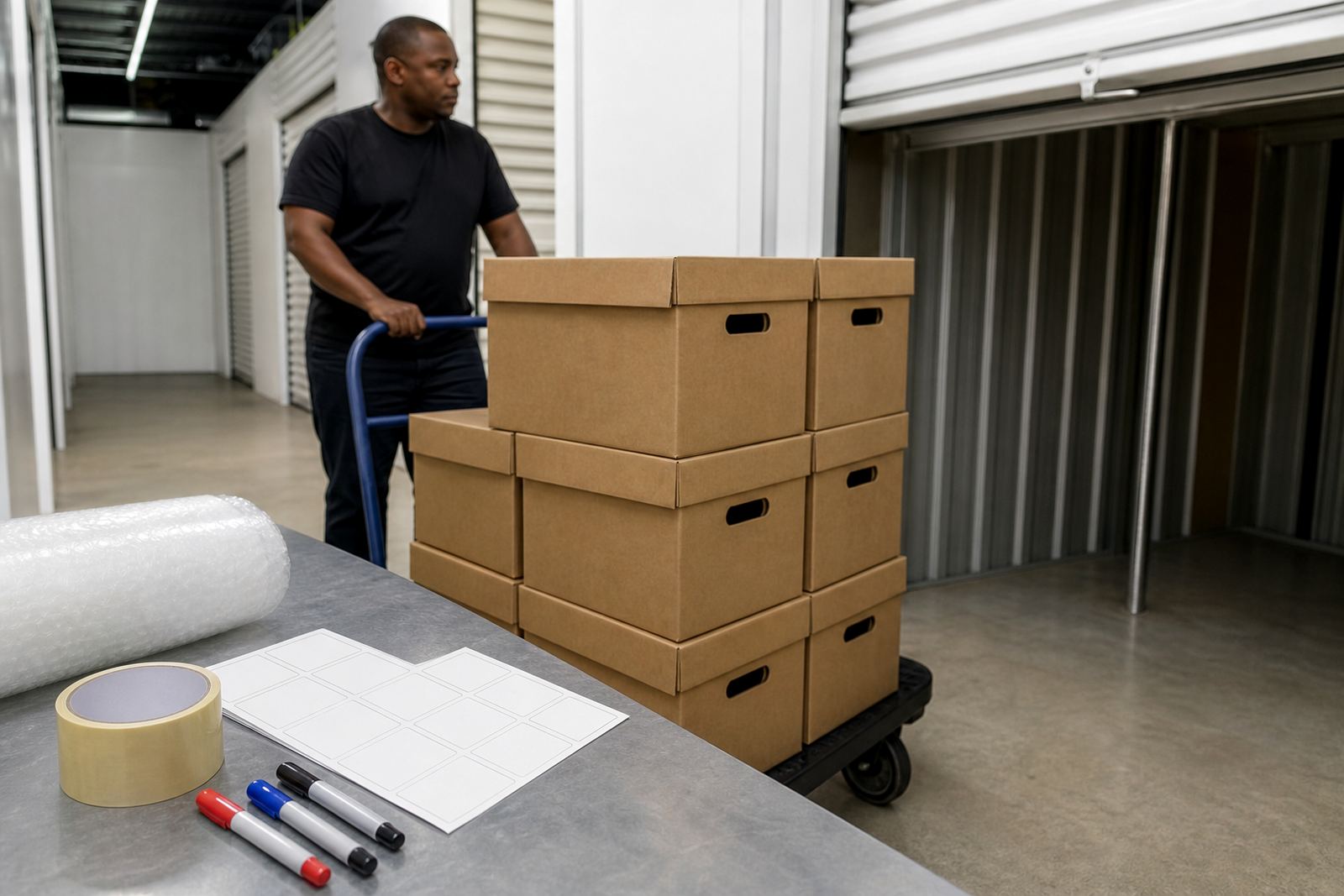
Before any carton is stacked into a storage unit, choose a naming system and use it on every box. Keep it simple enough that anyone helping you can follow it, whether you are packing at home in Midrand or preparing stock for a business move in Centurion.
Good labels should tell you what is inside, where it should go and how often you may need it. Do not rely on memory alone. Once boxes are stacked to the back of a unit, a box marked only with a vague note like "misc" becomes difficult to find when you need it most.
- Use the room name or use type first, such as kitchen, office, archive or stock.
- Add a short contents note, for example linens, printer paper or seasonal decor.
- Mark priority items that must stay near the front of the unit.
- Use the same wording on every carton, crate and bag.
Label the top and at least one side
When cartons are stacked, the top is not always visible. That is why each box should have the same label on the top and one side. If a box gets turned during loading or moved for access, the note still shows where you can see it.
For storage in Johannesburg or Pretoria, where many people use a mix of shelving and floor stacking, side labels are especially useful. Write large enough to read without lifting the box. A dark marker on a light label works well, and a printed label is even better if you are sorting business stock or archive files.
- Place the main label on the top left corner and the side facing out.
- Keep the writing clear and bold, with no tiny notes.
- Use waterproof tape if the boxes may be handled in damp weather or coastal humidity.
- Do not cover the label with packing tape if it makes the writing hard to read.
Build a colour code that works in one glance
A colour code makes loading and unpacking faster, especially when you have multiple people involved. You can use colour for rooms, departments or storage priority. This is handy for homes, offices and stockrooms around Gauteng where cartons may be moved from a loading bay straight into a unit.
Keep the system easy. Too many colours cause confusion, so use a small set and explain it on a master list. For example, blue for kitchen, green for bedroom linen, yellow for office files and red for urgent access. Stick a copy of the code near the front of the unit and keep one at home or at the office.
- Choose three to five colours only.
- Write the colour meaning on a master sheet.
- Use coloured tape, stickers or marker caps consistently.
- Match the colour to both the room and the box number.
Number every carton and keep a master list
Box numbers turn a pile of cartons into a proper storage system. Start with Box 1 and continue through to the last carton, then note the number, contents and any special handling on a list. If you need to retrieve one item later, you can go straight to the right box instead of opening several containers first.
This method is especially useful for business storage, stock organisation and archive planning. Keep the list on paper and on your phone, and if someone else is helping with move-in support they can follow it without guessing.
- Write one number per box, never repeat numbers.
- Record the number, contents and room or category.
- Mark fragile or heavy cartons clearly on the list.
- Keep the master list in a safe place outside the unit.
Mark fragile, heavy and access-needed items clearly
Some boxes need extra care, others need quicker access. Label these boxes so they do not end up at the bottom of a stack. Heavy items should be noted before lifting starts, while fragile items need clear handling notes and sensible packing. If you are storing office equipment, student items or household breakables, this part matters a lot.
Write the note in plain language. Short instructions are best, such as "fragile glass", "heavy books", "open first" or "monthly use". A box that may need to come out often should be placed near the front of the unit, not wedged behind full cartons of winter clothes or archive files.
- Use "fragile" for glass, ceramics and electronics.
- Use "heavy" for books, tools and dense files.
- Use "access first" for items needed regularly.
- Keep lighter cartons on top of heavier ones to avoid damage.
Make the system work for homes and businesses
Labeling is not only for moving house. A good system helps with decluttering support, office move support and business storage support as well. In Sandton, Randburg and Edenvale, many clients use storage to keep stock, displays or paperwork organised while they free up space at work or at home.
If you are storing for a business, add department names, season notes or reorder details. If you are storing for a home, use room names and a simple note about who the box belongs to. This keeps packing supply advice and unit size guidance practical because you can plan what should stay together and what can be stacked safely.
- For home storage: room, contents and priority.
- For business storage: department, stock type and access need.
- For student storage help: term date, subject items and personal box.
- For move-out planning: mark what must come out first and what can stay longer.
Quick checklist before cartons go into the unit
Before the last carton is loaded, do one final check. This is the point where small mistakes can still be fixed. A label that is upside down, a missing box number or a forgotten contents list can become a nuisance once the unit is packed tight and the gate is closed.
Use this short checklist before access arrangement is complete and the boxes are stacked. It takes only a few minutes and can save a lot of time later, especially when you are juggling moving day, municipal access times or a business stock count.
- Each box has a clear name, number and colour code if used.
- Fragile and heavy notes are visible on the outside.
- The master list matches the number on every carton.
- Urgent access items are packed last and placed near the front.
- Labels are dry, legible and not covered by tape.
Once your system is set, keeping it consistent matters more than making it fancy. A simple label done well is easier to follow than a complicated one done badly.