
Start with a clear furniture plan
Before you wrap a single table leg, decide what is going into storage and what needs to stay at home or at the office. Work room by room and group items by type, such as bedroom furniture, lounge pieces, office chairs and small cabinets. This makes it easier to measure what you have and choose the right unit size for the load.
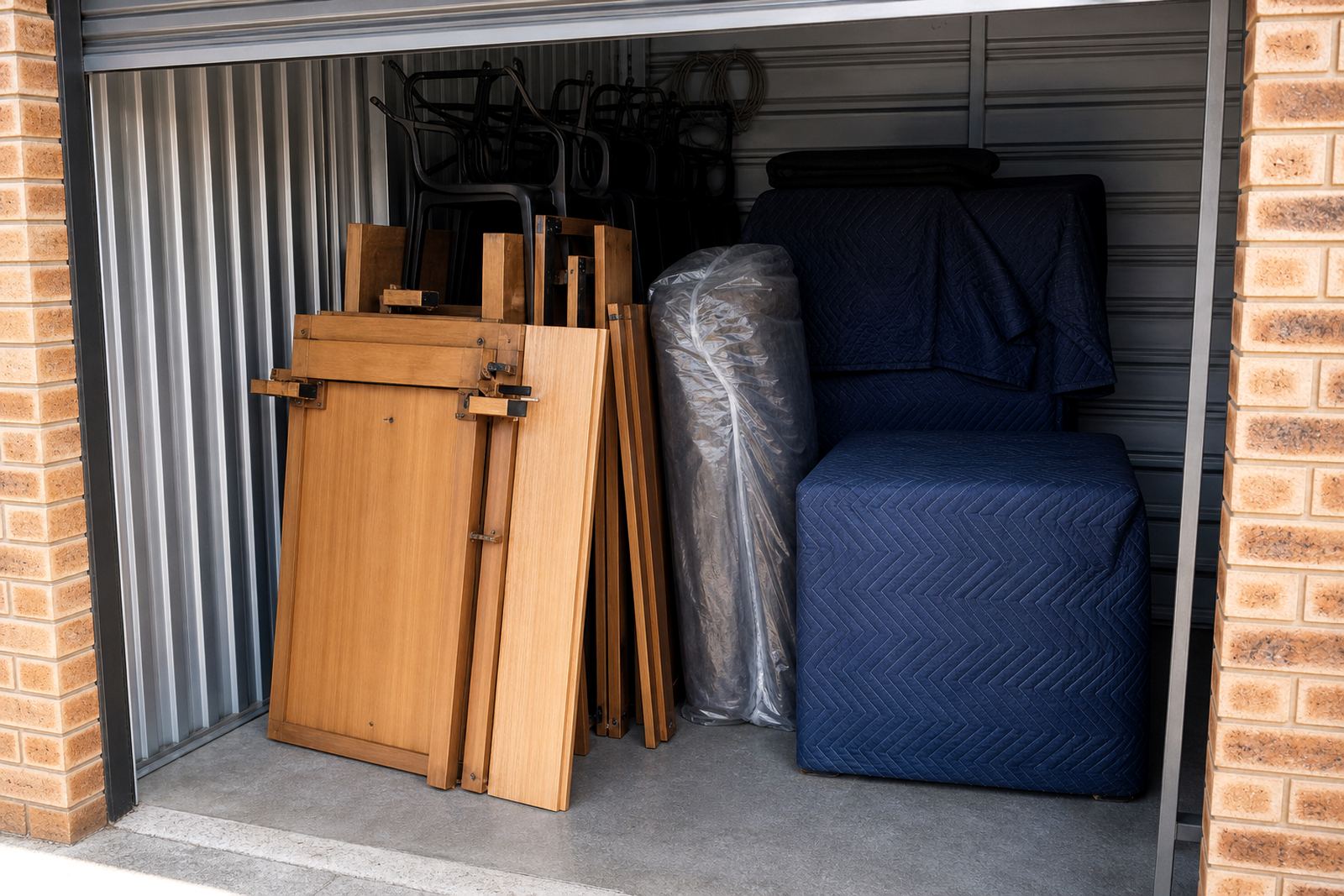
It also helps to check which items can be taken apart. A bed base, dining table or shelving unit often stores better once the legs, shelves or detachable panels are removed. Keep screws, bolts and fittings in labelled bags and tape them to the matching item so nothing goes missing during the move.
- List every item before loading the van or bakkie
- Mark anything that is fragile, heavy or awkward to carry
- Separate indoor furniture from outdoor pieces
- Keep a note of items that need upright storage
Clean and dry each item properly
Furniture should be clean and fully dry before it goes into storage. Dust, food marks and damp patches can attract odours or staining if they are left unattended for weeks or months. Wipe timber surfaces with a soft cloth, vacuum fabric items and allow all cushions and covers to air out before wrapping.
That makes it worth checking that no moisture is trapped under tables, inside drawers or in folded upholstery. If a piece has been cleaned with water, give it enough time to dry out completely before packing.
- Wipe down timber, metal and plastic surfaces
- Vacuum seats, couches and mattresses carefully
- Let drawers and cupboards air out
- Check corners and joints for hidden damp
Use the right covering for each material
Different furniture needs different protection. Soft furnishings do well with breathable covers, while timber and metal can be wrapped with blankets, bubble wrap or protective sheets. Avoid tight plastic against leather or polished wood for long periods, as it can trap moisture and mark the finish. If you are storing in a coastal area or moving items through humid weather, extra care is worth it.
Wrap corners first, then add full coverage. Use tape on the wrapping material only, not directly on the furniture surface. If you are stacking items, place cardboard or blankets between them to prevent scratches. Keep glass tops, mirrors and shelves separate and mark them clearly so they are handled with care.
- Use breathable covers for couches and mattresses
- Wrap table corners and chair legs with padding
- Keep glass and mirrors flat or upright as advised
- Do not place tape on painted or polished finishes
Group items by size and weight
Once everything is cleaned and covered, group furniture in a way that makes loading and storage simpler. Heavy items should be kept together and loaded first, with lighter items placed on top or alongside them. Small loose pieces like side tables, stools and shelves can be nested where possible to save space. This also makes the unit easier to organise later when you need to retrieve one item without moving everything else.
For business storage, group office furniture separately from stock displays or archive shelving. For home storage, keep bedroom sets apart from kitchen or patio furniture. That way you can find what you need quickly, especially if you are storing for a move, renovation or between leases.
- Keep heavy furniture low and close together
- Stack only when the shape and weight allow it
- Group matching pieces in one section
- Leave a small path so items can be reached later
Prepare drawers, legs and loose parts
Drawers should be removed if possible, emptied and packed separately. Leave cupboard doors closed but not forced shut, and secure them with soft ties or wrap. If a table or cabinet has removable legs, take them off and keep the parts together with the main frame. This helps reduce pressure on joints and makes transport safer for everyone handling the load.
Use labelled bags or boxes for hardware, remote controls, fittings and small accessories. Put a clear note on the outside of each bag saying what it belongs to. A simple list inside the box can save time later when you unpack, and it avoids the usual scramble for one missing screw or bracket.
- Empty drawers before moving them
- Bag all fittings together and label them clearly
- Secure loose doors, lids and shelves
- Keep parts for each item in one place
Load and store furniture with care
When loading into the vehicle, protect furniture from sliding by placing blankets or padding between pieces. Do not place heavy items on top of soft seating, curved backs or fragile corners. If you are bringing items into a self-storage unit in Midrand, Johannesburg, Pretoria, Centurion or Kempton Park, plan the layout so the most needed pieces are near the front and the less used pieces are further back.
Inside the unit, avoid pressing furniture directly against walls if there is any chance of airflow or damp. Stand mattresses on edge only where suitable, and avoid storing them flat under heavy objects. Keep a small gap from the floor with pallets or protective sheets where needed. A tidy layout makes access easier and helps with stock checks or office move planning later on.
- Load the heaviest items first
- Keep furniture stable and tied where needed
- Leave access to the items you may need sooner
- Use upright storage only for items that can handle it