Start with a clean, dry packing area
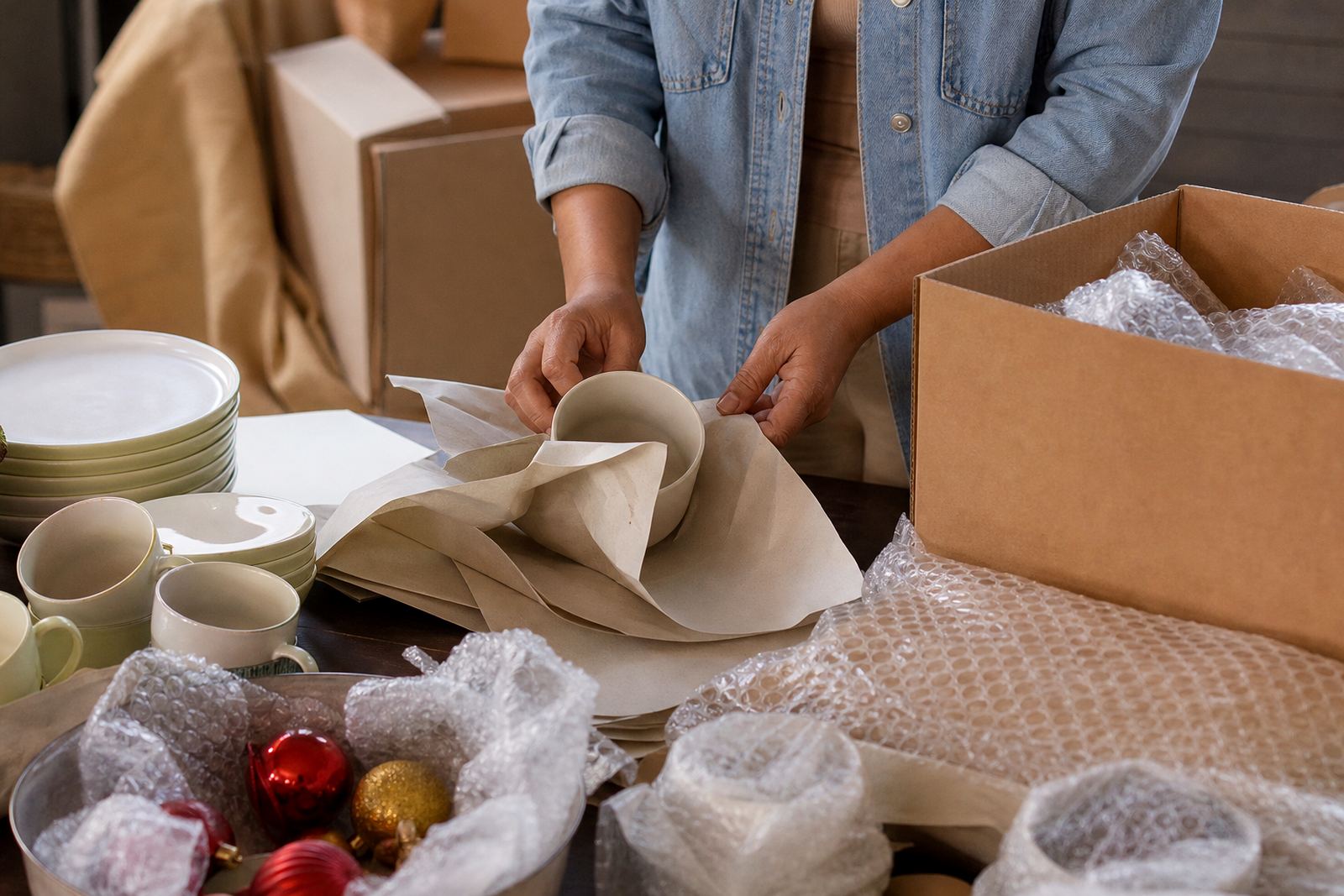
Before you wrap anything, clear a flat area where you can work without knocking pieces over. A table, clean floor space or a packing station works well, as long as it is dry and free from grit. Dust can scratch glass and polished frames, and even a small stone trapped under paper can leave a mark.
Check each item one by one. Look for loose hooks, cracked glass, weak backing boards and flaking paint on frames. If a piece already has damage, mark it clearly so it is not stacked face-down or pressed into a tight corner. For larger collections, separate items by size and weight before you start. That makes loading easier later and reduces the chance of bending slim frames or warping canvases.
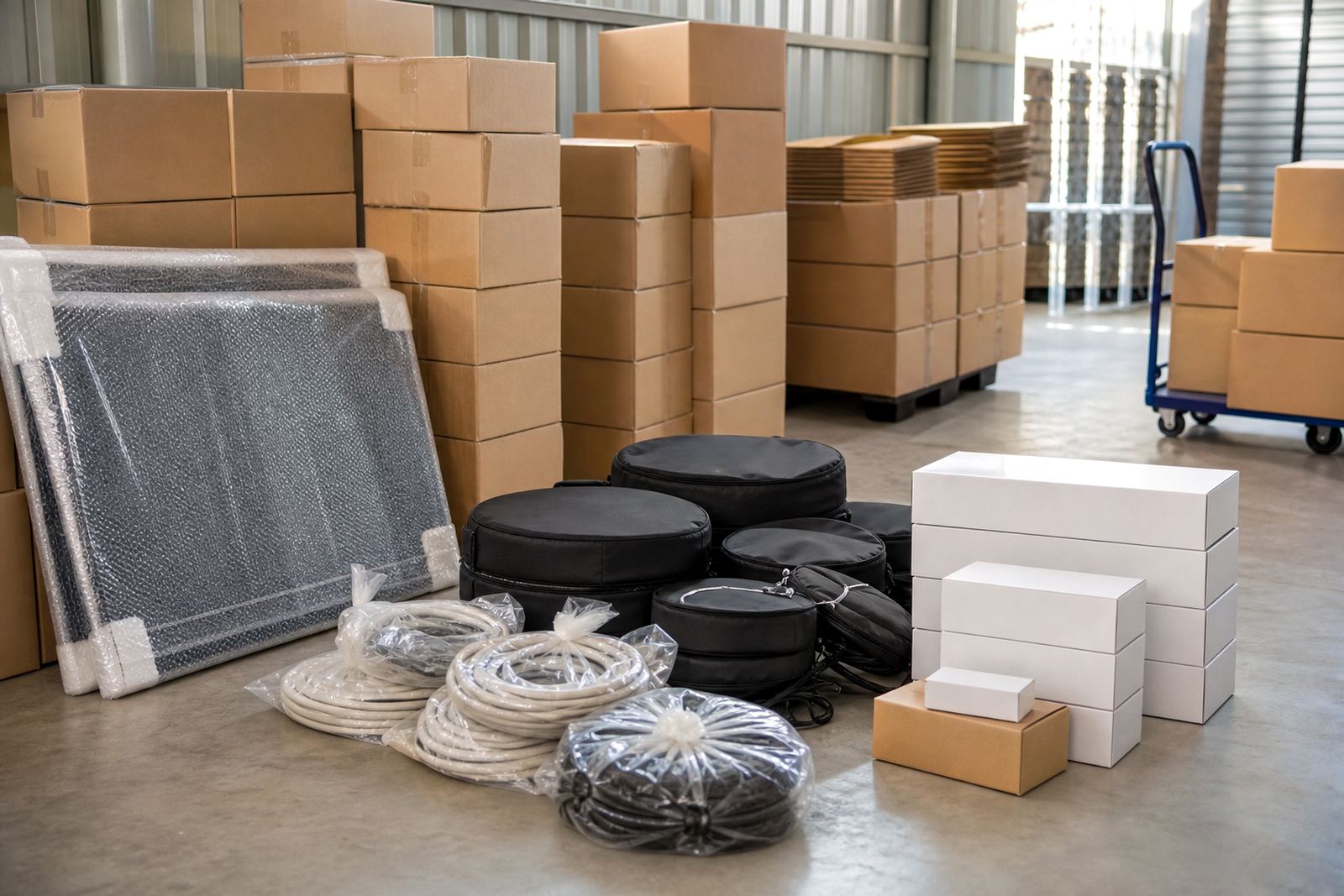
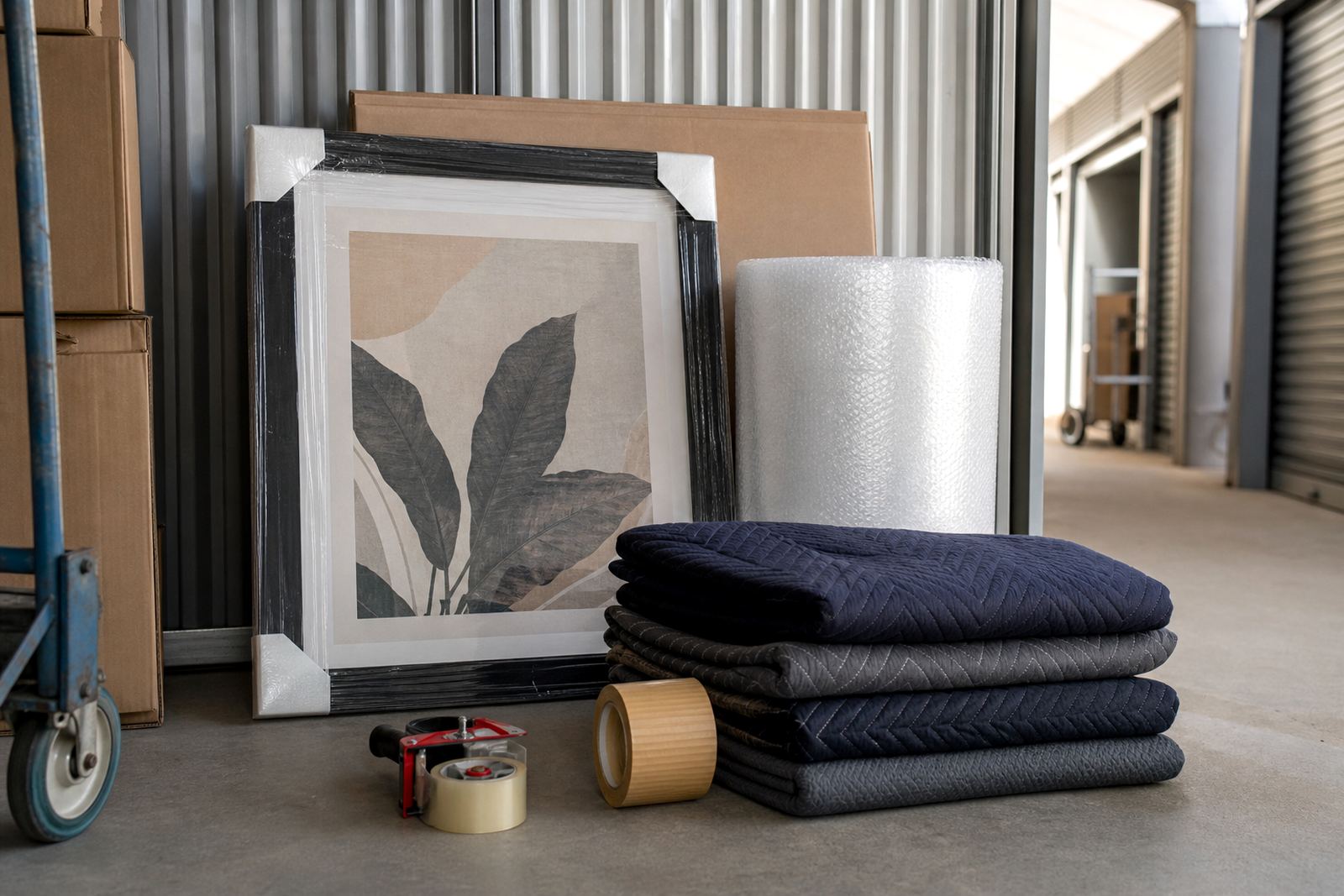
- Lay out clean paper, bubble wrap, tape, corner protectors and sturdy boxes
- Keep a marker nearby for labelling each item and its room
- Set aside extra cardboard for larger frames and mirrors
- Wash and dry your hands before handling unframed artwork
Wrap each piece so the surface stays protected
Use the lightest protective layer that still gives proper cushioning. For framed art and mirrors, start with a soft sheet of packing paper or clean newsprint, then add bubble wrap over the outside. The inner layer helps keep dust off painted or printed surfaces, while the bubble wrap protects against knocks. If the frame has a glass front, tape a large X across the glass only if you are comfortable doing so, because it can help limit movement if the glass cracks. Do not let tape touch the artwork itself.
Frames with ornate edges need extra attention. Protect the corners first with cut cardboard or purpose-made corner pieces, then wrap the full item. For canvases, avoid pressing anything directly against the painted face. Wrap the painting from the back where possible, and keep the wrapped surface facing a rigid board if it will be moved with other items. Mirrors should be wrapped flat, never rolled or bent, and then secured in a box or between stiff sheets of cardboard. This is one area where a little extra time now can save trouble later.
- Never place tape on the front of the artwork itself
- Use corner protection on every framed item, even smaller ones
- Keep glass items wrapped separately from books, tools or furniture
- Choose clean paper only, not newspaper that may transfer ink
Choose the right box or crate for the size
Artwork should not rattle inside a box. Pick a container that is close to the item size, then fill any spare space with soft packing material so the piece stays still. If the box is too large, the item can slide and take a knock every time the box is lifted. If it is too tight, pressure can crack glass or dent the frame. For very large mirrors or framed prints, a flat carton or double-wall box is often safer than forcing the item into an ordinary moving box.
Keep similar items together. Small framed prints can share a box if each one is separated by cardboard and paper. Heavy mirrors, large canvases and mixed décor pieces should travel on their own or in small groups only. When you are packing for storage in Gauteng, think ahead about lifting, stairways, and whether the item may need to stand upright during transport. A clear, straight path to the vehicle makes a real difference when you are carrying fragile items in and out of the unit.
- Use a snug box rather than one with too much empty space
- Separate each piece with cardboard or clean paper
- Mark every box as fragile and note which side should stay up
- Keep large pieces upright unless the frame or glass requires a flat position
Label boxes so access is quick later
Good labels save time when you return to the unit. Write the contents, room and handling note on at least two sides of every box. If you are storing artwork for a home, use labels such as lounge, passage or study. If it is business stock, use names that make sense for you, such as reception wall art or office framed prints. That way, you can find what you need without opening everything and disturbing the packing.
If you will need regular access, keep those items near the front of the unit. Leave a clear aisle if possible so you can reach the back without moving every box. This is useful for offices, decorators, shops and anyone who rotates displays through the year. It also helps during summer humidity and winter cold snaps, because you can check items quickly for any damp or dust before they sit too long. A tidy layout means less handling and fewer chances for damage.
Store artwork with the right conditions in mind
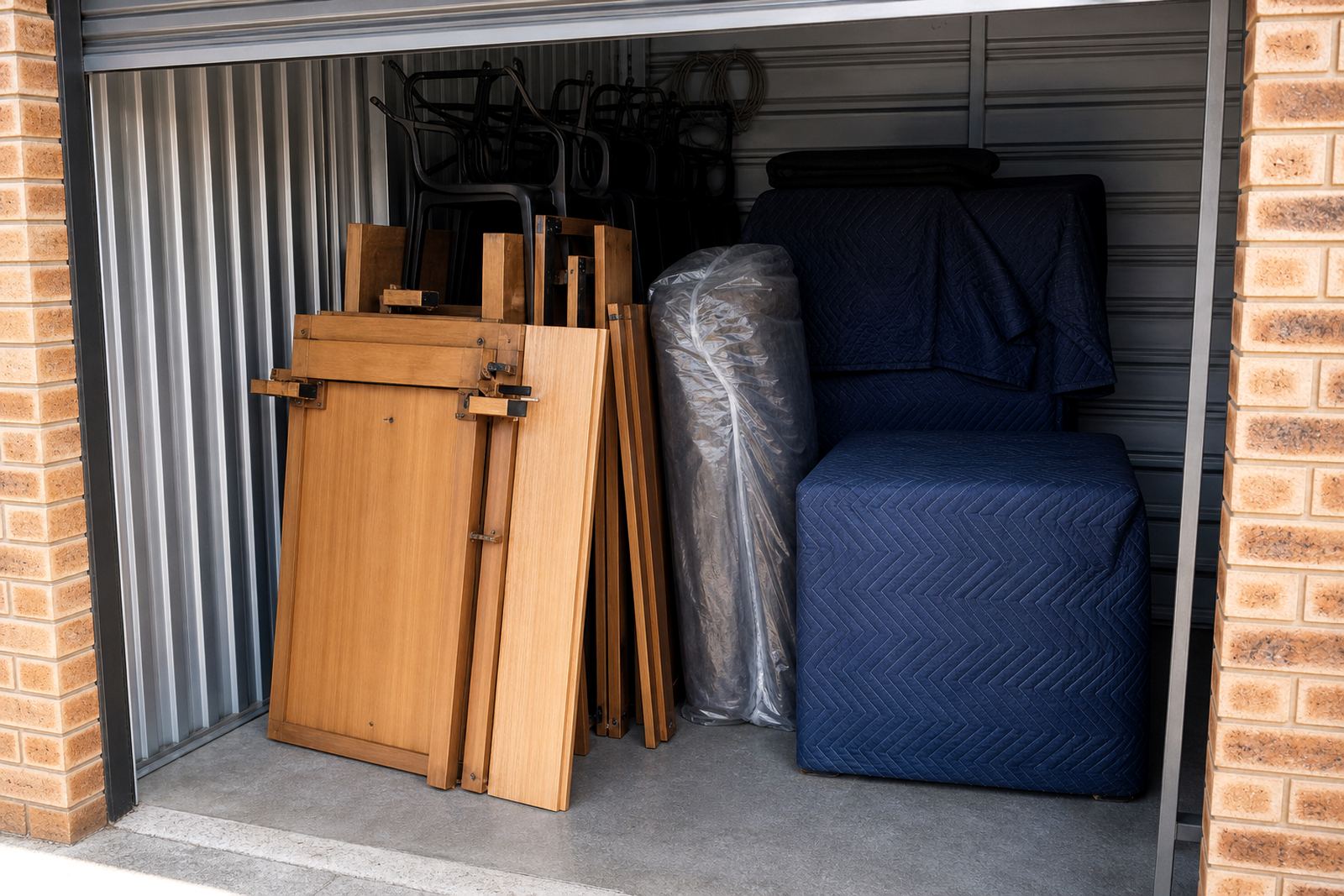
Artwork stores best in a clean, dry space with controlled access. Avoid placing it directly on the floor if you can help it. Use pallets, shelves or sturdy boards so boxes stay off any surface moisture. In coastal weather, humidity can creep into cardboard and soft backings, while inland dust can work its way into unsealed corners. If the piece has wooden framing, leave a little air space around it so trapped moisture is less likely to settle. Do not press artwork against walls that may sweat in cold weather.
Security matters too. Keep items out of plain sight as far as possible and stack them where they are not easy to knock over. Choose a unit size that suits the volume you have, rather than cramming pieces into a tight space. For business customers, this is useful when you are keeping promotional displays, office art or seasonal décor between moves. A practical storage layout also helps when you need access arrangement for a quick check before a delivery or client meeting.
- Keep artwork off the floor on boards, pallets or shelving
- Allow space for airflow around wooden frames and canvases
- Place fragile items where they will not be bumped during access
- Check for damp or dust after heavy rain or a long heat spell
Use a simple checklist before sealing the load
Before you close the boxes, run through a quick checklist. It only takes a few minutes and can prevent expensive mistakes. Make sure each item is wrapped, corner protected and clearly labelled. Confirm that glass faces are cushioned and that no frame edge is left exposed. If you are moving more than one piece, separate them so they do not rub together. For mirrors, check that the back is supported and that the box does not flex when lifted.
If you are unsure how to pack larger artwork or a mixed collection, get guidance before loading. Midrand customers often store pieces with furniture, archive boxes or packing supplies, so it helps to plan the load in stages. Keep the heaviest items at the bottom, lighter artwork on top and fragile pieces where they can be removed first. A careful start makes move-out planning much easier later, and it means less chance of a cracked frame or chipped corner. Packing well now is simpler than fixing a problem later.
- All items wrapped, boxed and labelled
- Glass protected and frames cornered
- Boxes marked fragile and kept upright where needed
- Artwork placed for easy access and safe lifting
When to ask for packing help
Some artwork is straightforward, but large mirrors, oversized frames and business displays can be awkward to handle alone. If you are preparing for a house move, office move or stock reorganisation, it may help to get packing supply advice, unit size guidance or move-in support before you begin. That is especially useful when you have a deadline, limited parking, or bulky items that need careful loading. A small amount of planning can save time on the day and reduce the chance of someone rushing with a heavy piece.
For customers in Midrand, Johannesburg, Pretoria, Centurion and Kempton Park, it also helps to think about the full trip. If the artwork is going into storage, plan the route from your vehicle to the unit. If it is staying in the unit for a while, make sure the labels are still visible after stacking. That simple habit makes later access much easier. Well packed artwork is easier to store, easier to move and easier to keep in good condition over time.