Start with the item, not the box
The best way to choose box types is to work from the item itself. Heavy things need smaller cartons so the base does not give way, while light but bulky items can go into larger cartons without pushing too much weight onto the handles and seams. If you are packing from a flat in Midrand, a home in Sandton or stock in Centurion, the same rule applies: weight first, then shape, then how often you need to move the box.
Also think about how the box will be used after packing. A box going into self-storage for a few months can be packed more neatly and tightly than one that must be opened every week for stock checks, school terms or office files. For storage, it helps to keep contents grouped by use so you dont spend time unpacking everything just to find one item.
- Heavy items: choose smaller cartons
- Light but awkward items: choose medium or larger cartons
- Fragile goods: leave space for wrapping and cushioning
- Frequent access: use cartons that are easy to lift and relabel
Match common box types to everyday packing jobs
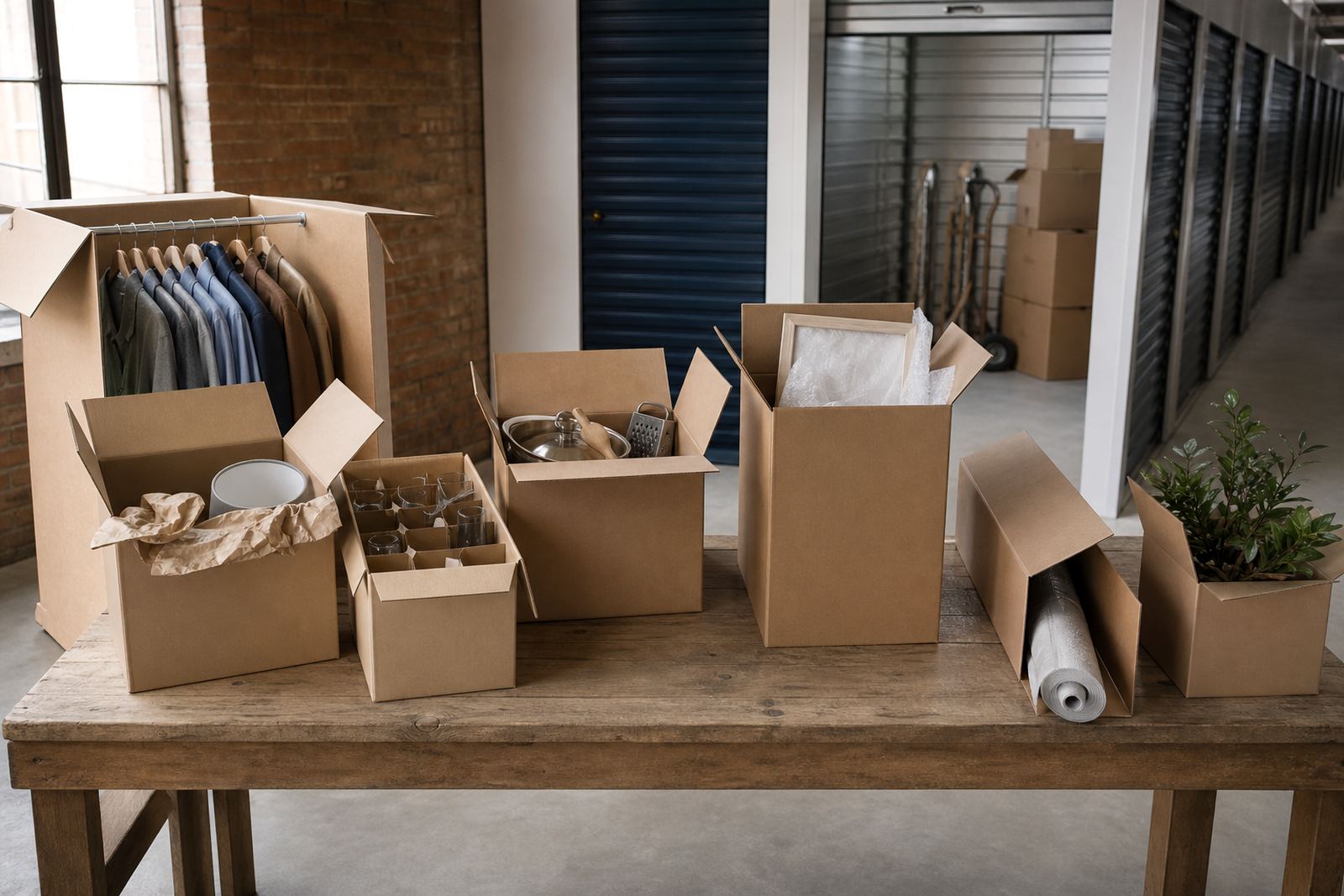
Different cartons suit different jobs. A standard moving box works well for books, toys, kitchen goods and general household packing. Stronger cartons suit heavier loads such as documents, tools or bottled items. Taller cartons help with light, upright items such as lampshades, cushions and linen. For wardrobes, hanging garments need a specialist carton with a rail so clothes stay neat in transit.
When packing for Gauteng moves, remember that stop-start traffic, loading in the heat and quick trips between units can put extra strain on the carton. A box that seems fine for a short lift can fail once it is stacked in a vehicle or moved through a parking area. It is better to use the correct carton than to overload a large one and hope for the best.
- Books and files: smaller strong cartons
- Kitchenware and mixed household goods: standard moving cartons
- Clothes on hangers: wardrobe cartons
- Soft goods and bedding: larger light-load cartons
- Loose office items: medium cartons with clear labels
Use special packing supplies for fragile or awkward items
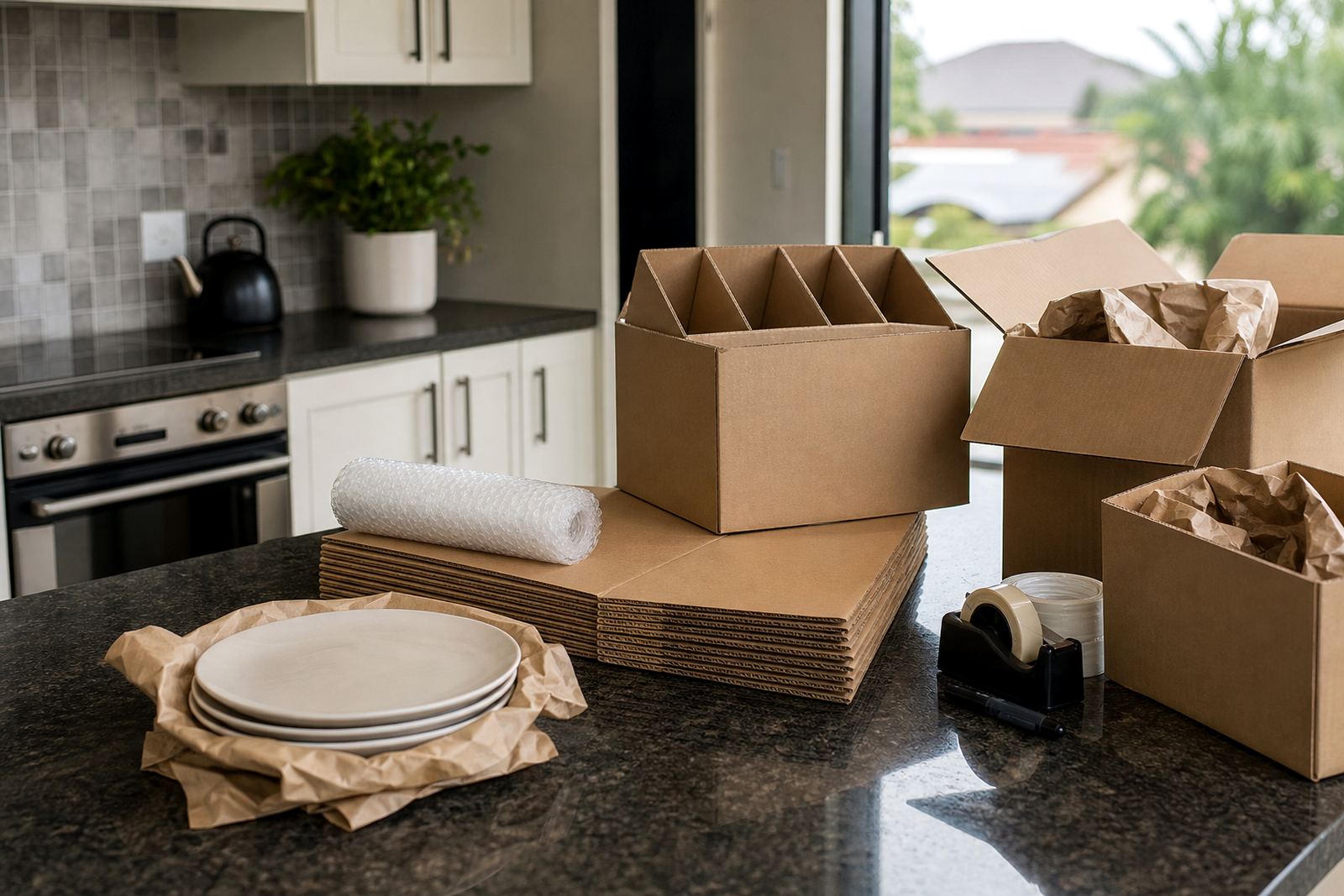
Some items need more than a plain box. Glassware, framed prints, electronics and ornaments benefit from wrapping, partitions and cushioning material. A carton with internal dividers helps keep bottles, mugs and smaller breakables separated so they do not knock together. For awkward shapes, fill voids with paper or padding so the contents cannot shift during transport or while in storage.
Coastal humidity can affect cardboard if it is left open or placed directly on a damp floor, so keep cartons off the ground where possible and seal them properly. In storage units, use pallets or shelving for better airflow. If you are storing near Pretoria or Kempton Park during rainy months, label fragile cartons clearly and place them where they are less likely to be crushed.
- Wrap each fragile item before boxing
- Use partitions for bottles and glass
- Fill empty spaces so items do not move
- Seal boxes fully against dust and moisture
- Mark fragile boxes on more than one side
Choose box strength for weight and stacking
Not all cartons handle weight in the same way. If you plan to stack boxes in a storage unit, choose stronger cartons for the bottom layers and lighter cartons for the top. A box filled with books can look neat from the outside but still be too heavy to lift safely if it is overpacked. The rule is simple: if the box feels hard to carry with one person, it is probably too full.
For business storage support, good stacking matters because inventory, archive files and packing stock often stay in place for longer periods. Make sure heavier cartons are packed squarely and sealed well. Bent flaps, bulging sides and damaged corners are signs that the load is too much. It is better to split the contents into two smaller cartons than to risk a collapse inside the unit.
- Bottom layers: strongest cartons
- Middle layers: medium-strength cartons
- Top layers: lighter cartons
- Bulging sides: repack immediately
- Damaged corners: do not stack above them
Pack by room, by department or by use
A useful way to plan box types is to pack by room, department or task. That makes move-out planning easier and helps with unit size guidance. At home, keep kitchen items together, bedroom items together and garage items separate. In an office, separate files, stationery, small equipment and archive material. In a retail setting, keep stock categories apart so stock organisation stays tidy after the move.
Label each carton with what it contains and where it should go next. Add a simple note such as kitchen, archive, winter clothes or retail stock. This saves time when you are arranging access to your storage unit or preparing a packing station setup. It also helps if different family members or staff members are involved, because everyone can see what goes where at a glance.
- Keep one category per box where possible
- Use clear labels on the top and two sides
- Mark urgent access boxes separately
- Set aside a first-open box for essentials
A practical checklist before you buy or pack
Before you collect boxes, take a short inventory of what you need to store or move. This avoids buying the wrong mix and helps with packing supply advice. If you are moving from Johannesburg to Midrand or clearing space in Pretoria, a quick checklist will show whether you need more small cartons for heavy goods, more medium cartons for mixed items, or specialist cartons for clothing and fragile goods.
Use this final check before sealing the last carton. It is a small step but it saves a lot of time later, especially when you are balancing move-in support with work and family schedules. A neat packing plan also makes it easier to use self-storage for student breaks, office moves or decluttering projects where access needs to stay simple.
- Have you separated heavy, light and fragile items?
- Are the cartons the right size for the load?
- Have you used padding for breakables?
- Are the labels clear and visible?
- Will the boxes stack safely in storage or a vehicle?
When in doubt, choose a smaller carton and split the contents. It is quicker to carry two safe boxes than one overfilled one, and it makes loading, storing and retrieving much easier.