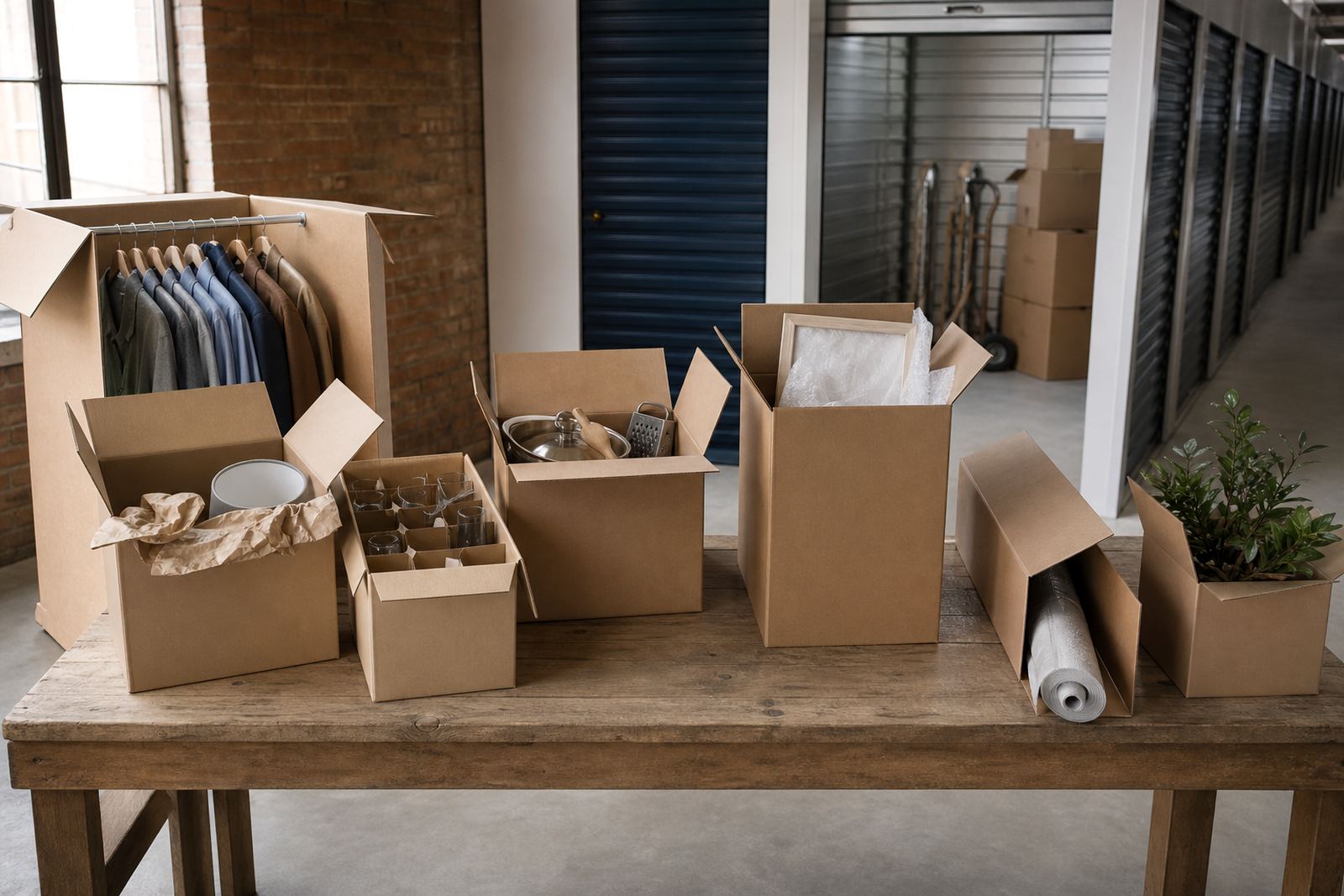


Choose the right box size before you start
When books are packed into a large box, the bottom layer gets too heavy very quickly. Use smaller, stronger boxes for books and keep the weight even across each one. If you are sorting a home library, office files or study books, it helps to work in batches rather than filling one box until it is full.
At our Midrand base, customers often ask for advice on how much to pack in each box for storage or moving. The rule is simple: a box should be firm and easy to carry by one person, with the flaps closing without strain. Leave enough space to seal the top properly, because overstuffed boxes can split open in transit.
- Use smaller boxes for hardcovers and mixed books.
- Keep heavier reference books in shorter stacks.
- Avoid overfilling one box just to save space.
- Choose clean, dry boxes with strong sides and intact bases.
Sort your books before packing them
Before you start, separate what you want to keep, donate, sell or store long term. This saves packing time and reduces the number of boxes you need. It also helps if you are storing books in a unit for a few months while moving house, decluttering, or reorganising stock and archives for a business.
Place similar books together so the box weight stays balanced. For example, keep paperbacks with paperbacks, and place a few heavier titles in between lighter ones. If you are packing for student storage in Johannesburg or Pretoria, group textbooks by subject so you can find what you need later without opening every box.
- Remove books you no longer need before packing.
- Group by size, type or room.
- Set aside valuable or fragile editions for extra care.
- Make a simple list of what each box contains.
Pack so the weight stays stable
Start with a flat layer of books on the bottom and keep the spines facing the same way. Then fill small gaps with lighter books or packing paper so the contents do not shift. The goal is a box that sits level and does not bulge on one side, especially if it will be stacked in a storage unit or loaded with other items.
If you are packing mixed books, alternate the direction of a few stacks to help the box settle evenly. Do not place very heavy volumes only on one side, and avoid leaving empty pockets inside the box. A stable box is safer to lift, easier to stack and less likely to cause damage during a move from Midrand to Centurion or Kempton Park.
- Build even layers rather than one tall stack.
- Keep the weight centred in the box.
- Fill small spaces with paper, not loose items.
- Check that the sides stay straight and the base remains flat.
Protect covers, pages and corners
Books do not need fancy wrapping, but they do need protection from scuffing and damp. Use clean packing paper around special editions, photo books or paperbacks with delicate covers. In Gauteng, dust can get into open boxes during loading, so it helps to keep every box sealed once it is packed. If you are storing books near the coast later, extra care is needed because humidity can soften covers and encourage mould.
Never use wet paper, damp cloths or open boxes for long periods. Keep food, liquids and cleaning products away from books at all times. If a book has a loose dust jacket, place it flat inside the wrap rather than folding it around the cover. For important documents, bound reports or archive files, pack them upright where possible and avoid crushing the spine.
- Wrap special books in clean paper.
- Keep boxes dry and fully sealed.
- Store away from liquids and household chemicals.
- Do not press heavy items onto soft covers.
Label every box clearly for easier unpacking
Good labelling saves time later, especially when books are split between home storage, office storage or a move. Write on at least two sides of each box so you can read it even when it is stacked. Include the room, subject or shelf area, and note whether the box contains fragile items or reference material that should be handled carefully.
For business storage support, clear labels make stock checks and archive planning much easier. If you are using a storage unit in Sandton, Randburg or Edenvale, a simple label can help you find the right box without moving everything around. Keep a master list if you have many boxes, especially when the books are part of a larger house move or office move.
- Label two sides and the top of each box.
- Write the room, category or shelf number.
- Mark fragile or important boxes clearly.
- Keep a written inventory for longer storage periods.
Store books in a way that keeps them in good condition
If your books are going into a storage unit, place them off the floor on pallets or shelves where possible. This helps protect them from moisture and makes cleaning easier. Choose a dry, secure unit with controlled access and make sure the boxes are not packed tightly against a wall where condensation can build up. In summer, closed units can warm up quickly, so it helps to allow a little airflow around the stack.
Stack boxes neatly, with the heaviest at the bottom and lighter ones above. Avoid placing books next to items that may leak, crumble or attract insects. If you are storing business records, school books or personal collections for longer periods, check them now and again so you can catch any problem early. For customers across Midrand, Johannesburg, Pretoria, Centurion and Kempton Park, this is often the difference between books that stay in good condition and boxes that become difficult to use later.
- Keep boxes off bare concrete where possible.
- Leave a little space around stacked boxes.
- Do not store books next to liquids or chemicals.
- Inspect long-term storage periodically.
A simple final checklist before sealing the box
Before you close the box, give it a quick check. Pick it up slightly to see if the weight feels reasonable. Press the top gently to make sure nothing is pushing up from inside. If the box feels too heavy, remove some books and split them into another box. That extra step can save damage to the books and your back.
If you need help choosing the right storage unit size or you are planning a larger move, LastBox can assist with practical packing advice, access arrangement, moving box supply and move-out planning through the enquiry form on our contact page. The main thing is to keep each box tidy, balanced and easy to carry from start to finish.
- Box closes cleanly without bulging.
- Weight is manageable for one person.
- Contents are labelled and listed.
- Box is dry, sealed and ready to move.