
What archive units are used for
Archive units are self-storage spaces set aside for documents, files, archive boxes, archived stock records and other items that must be kept in order for months or years. They are useful when office cupboards are full, when a move is coming up, or when you need to keep old records close by without leaving them in the way. Many clients use them for tax files, HR records, client paperwork, supplier documents and project folders that must still be accessible when needed.
At LastBox, archive storage is generally arranged so boxes can be stacked neatly, labelled clearly and checked without trouble. The aim is simple storage that stays tidy. If your archive includes loose papers, ring files, lever arch files or mixed boxes, the unit should be planned so you can find what you need without unpacking everything. That saves time and helps avoid damage from careless piling.
Archive storage also suits smaller businesses that do not have a separate records room. In Midrand, Johannesburg and Centurion, it is common for firms to keep older files off-site while still needing fast access during audits, claims or year-end admin. For homes, archive units can hold personal records, family documents and important papers that should not be left in a garage or garden shed where damp and dust can get in.
Unit sizes and storage options
Archive units are available in different sizes so you can choose space for a few archive boxes or for a larger run of records. Some customers only need enough room for a compact file holding area, while others need floor space for shelving, box stacks and a small working aisle. The best option depends on how often you need access and how many boxes you plan to keep on site.
- Small archive storage for a limited number of boxes and short-term records
- Medium units for business files, seasonal records and mixed document storage
- Larger units for bulk archives, office records and stock support paperwork
- Units that can work with shelving, labelled cartons and clear access paths
If you are unsure, a storage advisor can help you work out the right layout from your box count and access needs. In some cases it is better to choose a slightly larger unit so you can leave a narrow walkway and avoid crushing cartons at the back. That is especially helpful if the records will be checked often by staff or a bookkeeper. For archive work, neat packing matters more than squeezing every last box in.
Where archive units suit best
Archive units suit offices, professional practices, schools, contractors, retailers, medical rooms and any business that keeps records in physical form. They are also a practical option for student records, family archives, estate documents and home office files. In Gauteng, many customers in Midrand, Sandton, Randburg, Pretoria, Kempton Park and Edenvale use archive space when their premises are full or when building works are taking place.
These units are especially useful where records must be kept tidy but not handled daily. That includes closed accounting years, supplier paperwork, archived proposals, old contracts and records held for compliance or reference. If your business works from a busy site, archive storage can free up space in the office and keep sensitive papers away from daily traffic. It is a simple way to keep things in order while still making them retrievable.
Archive storage can also help during office moves. Instead of packing files into random boxes and hoping for the best, you can separate active files from archived files before the move. That makes unpacking easier and reduces the chance of misfiled documents. It also helps when the move is spread over several days and you still need some records available for staff or clients.
Access, security and site conditions
Archive units should be placed in a location that is dry, secure and easy to reach when needed. Good access matters because records may have to be collected during office hours, before a deadline or after a client request. A site with controlled entry, clear loading space and sensible operating rules makes that far easier. In busy areas around Midrand and Johannesburg, orderly access also helps reduce delays at handover times.
Security is important because records can contain private or business sensitive information. Storage arrangements should include controlled access, basic site monitoring and a unit lock that is suitable for the contents. If you are storing client files or HR records, it is wise to keep a clear log of what went in and who may retrieve it. That makes checking easier and helps with compliance on your side.
Gauteng weather can shift quickly, so dry conditions matter too. Files and cartons should not sit where they can pick up damp from floors, leaking walls or poor ventilation. If the archive will hold paper long term, use sturdy boxes, leave a little space off the ground where possible and keep cartons away from direct contact with concrete.
- Use strong boxes with lids that close properly
- Label every carton on more than one side
- Keep a box list for quick retrieval
- Store the most accessed files near the front
Shelving, access and what not to store
Archive units need very little beyond a clean floor area and a sensible packing plan. Archive storage works best as a dry, simple unit rather than a fitted office space, so plan to retrieve files and work on them at your office.
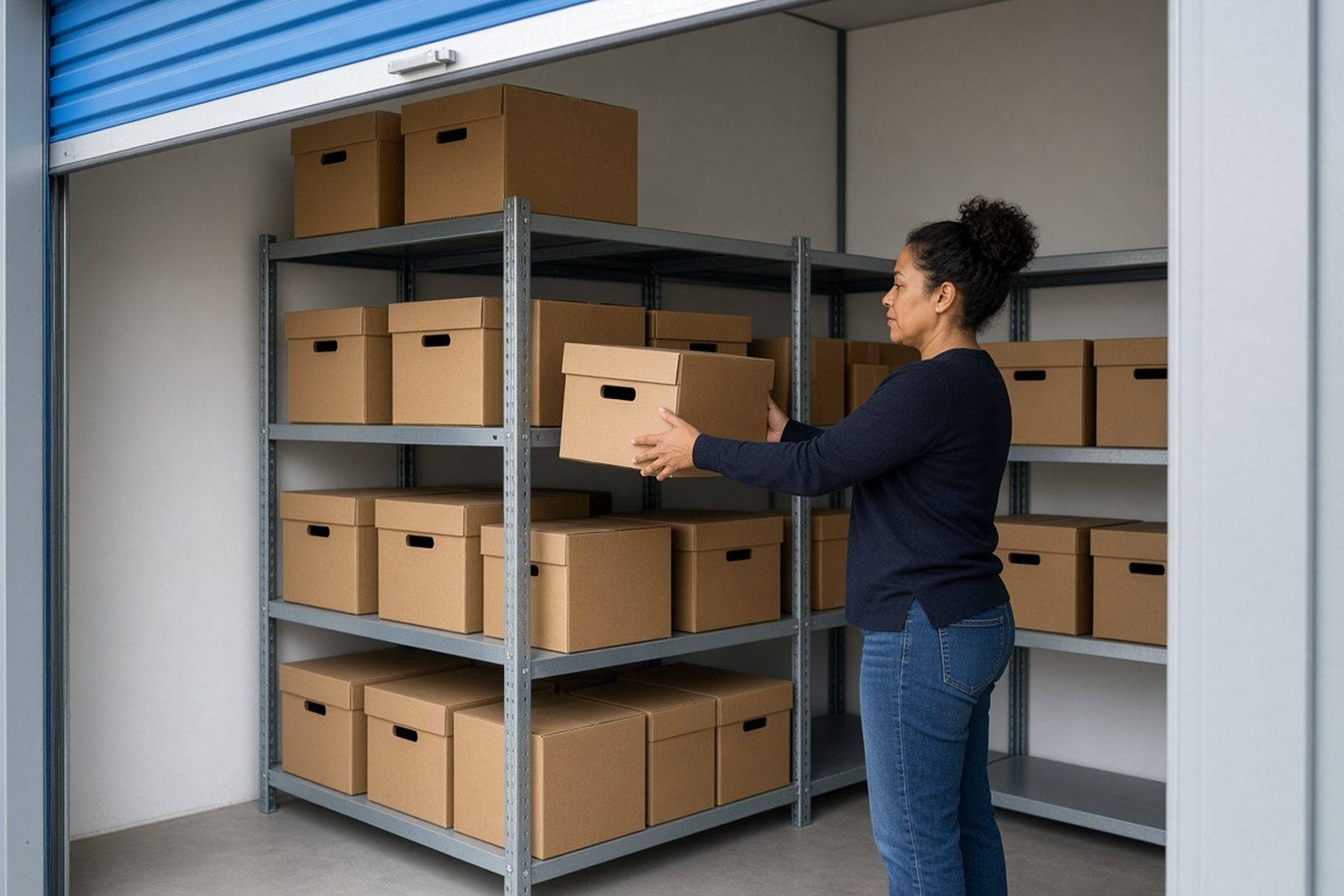
Shelving should be stable and suited to the weight of files once they are full. It is better to use shelving designed for cartons and records than to stack boxes too high on their own. In one or two cases, businesses have tried to make the unit too clever and then struggled to reach the back row of files, so keeping the layout straightforward usually works best.
For long term use, think about air circulation, pest prevention and how often the unit will be opened. File cartons should not be packed against a wall if moisture is a concern. A small gap can help with inspection and cleaning. If you are setting up a dedicated archive, ask for advice on layout before delivery day so the boxes go in in the right order from the start.
Packing and care before move-in
Archive storage works best when it is checked now and then. A good routine is to review the boxes, sweep out dust, inspect labels and make sure nothing has shifted or picked up damp. If the unit is used for business records, nominate one person to keep the box list updated. That avoids confusion when staff change or when a file is needed in a hurry. It also helps if you need to move some files from archive storage back into active use.
When ordering archive space, check the access times, security arrangements, box height you can use, and whether the unit suits shelving. You should also confirm how easy it is to collect or return records, especially if different people may visit the site. If your archive has confidential material, ask how access is controlled and what the site rules are for visitors. It is better to know these details upfront than to find out when you are already loaded with boxes.
- Estimate your current box count and likely growth
- Decide how often you need to visit the unit
- Check if shelving or pallets will fit your plan
- Separate active files from closed files before packing
- Use clear labels, especially for year-end records
For customers in Midrand, Pretoria, Centurion and the wider Gauteng area, LastBox can help with archive planning, unit size guidance and packing supply advice so the space is set up properly from the start. That support can make a big difference when records are sensitive or when the archive has to stay organised over a long period.
How archive storage is handled across Gauteng
LastBox supports archive storage needs across Midrand, Johannesburg, Pretoria, Centurion, Kempton Park, Sandton, Randburg and Edenvale from the Midrand base. The service suits customers who want a practical storage arrangement for records without unnecessary extras. If you are moving offices, clearing space or setting up a records room away from the main workplace, archive storage can be arranged to suit the way your team works.
Our team can also help with packing supply advice, move-in support, access arrangement, business storage support, archive planning and packing station setup. That is useful when files need to be boxed in order and kept that way. If your records are already sorted, the next step is simply choosing the right unit and making sure the boxes are packed safely for storage.
Unit details
| Product type | Self-storage units for archive boxes, records and organised paperwork |
|---|---|
| Typical use | Business files, personal records, closed years, HR files, project documents |
| Access | Controlled site access with arranged collection and return of boxes |
| Security | Secure storage setting with unit lock and managed entry rules |
| Packing method | Strong labelled boxes, shelving where suitable, clear box lists |