What document tubes are used for
Document tubes are rigid or semi-rigid containers made for rolled paper items that need shape support and protection from creasing. They are commonly used for building plans, permit copies, presentation posters, maps, artwork prints and large-format paperwork that should stay dry and tidy. For offices in Midrand, Sandton or Pretoria, they are also useful when archiving project files that are needed again later.
In storage, a tube keeps rolled items together instead of loose in a box where edges can bend or get crushed. This matters in busy moves where cartons are stacked, shifted and moved by hand. A well packed tube makes it easier to label, retrieve and sort paperwork later, especially when you have more than one project on the go.
They are also handy for students, contractors, architects, estate agents and anyone handling oversized paper documents. If you are decluttering a home in Randburg or making space at an office in Centurion, tubes help protect important paper without taking up much room.
Sizes and build options that suit different jobs
Document tubes are usually chosen by length, internal width and closing style. Shorter tubes suit posters and smaller plans, while longer tubes are better for A0 and other large-format sheets. Some tubes are round and some have a square profile for easier stacking in a storage unit or car boot. If you want faster handling, a tube with a shoulder strap or handle can be easier to carry between the office, site and unit.
- Common lengths range from about 600 mm to 1,200 mm
- Typical internal diameters range from 50 mm to 150 mm
- Closure options may include end caps, screw tops or tie-off lids
- Material options usually include cardboard, plastic or lightweight composite builds
- Some tubes accept name labels, project tags or colour coding
For business storage, a wider tube may be better when you need to roll several sheets together with a protective sleeve. For personal use, a narrower tube often works well for a few posters or a small stack of prints. The right choice depends on how often you access the contents and whether the tube will travel regularly between Midrand, Johannesburg and Pretoria.
Where document tubes work best in storage and moving
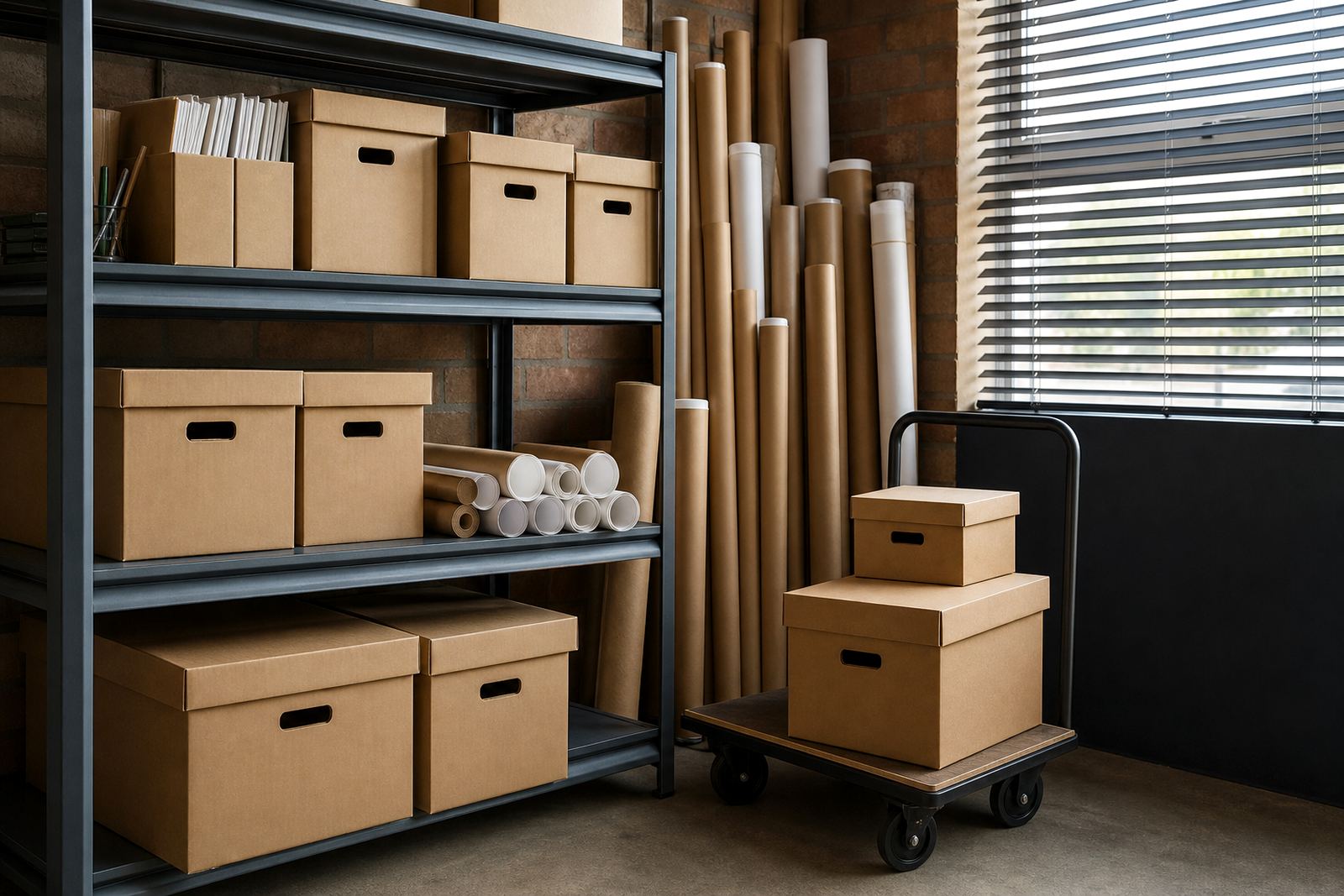
Document tubes are useful for secure storage units because they fit neatly on shelving, in labelled crates or in upright bundles. They help keep paperwork separate from bulkier items like office chairs, archive boxes and moving cartons. In a unit, tubes should be stored upright or flat on a clean dry surface, away from standing water and heavy objects that may press on the sides.
They also suit move-in days, office relocations and short term holding while you sort through records. For businesses in Kempton Park or Edenvale, document tubes are a practical way to keep plans and drawings together when teams are moving stock, files and equipment at the same time. If you are using a storage unit for archive planning, tubes can help you group by client, project or date without mixing paperwork in loose stacks.
- Best for rolled plans, posters, artwork prints and large copies
- Useful for office moves where paper needs to stay flat and clean
- Handy for students storing projects between terms
- Suitable for archive sets that need quick retrieval later
- Helpful when packing for vehicle transport in wet or dusty conditions
Packing and handling tips for safe use
Before rolling any document, make sure the paper is dry and free of staples, clips or sharp inserts that may mark the surface. If a plan is already folded, flatten it carefully first so it rolls without hard bends. Use a clean sheet or sleeve inside the tube if the paper is delicate, and avoid overfilling the container because too much pressure can cause curling at the edges.
Label each tube clearly with the project name, date and contents. This saves time later and prevents unnecessary opening. For busy offices, a simple colour label system can make sorting much easier, especially when several departments are using the same storage area. In Gauteng summer heat, do not leave paper in a closed vehicle for long periods if you can avoid it.
- Roll documents with the printed side facing inward when extra protection is needed
- Keep tubes dry and out of direct sun for long periods
- Use end caps that close properly so dust cannot slip in
- Do not place heavy cartons on top of a tube
- Check that labels are visible even when the tube is stacked
Care and cleaning for storage renters
Document tubes need very little maintenance, but they should still be checked from time to time. Look for bent ends, cracked caps, torn seams or crushed sections that may affect protection. If the tube is reusable, wipe it with a dry or lightly damp cloth and let it air out before packing paper back inside. Moisture trapped in a tube can lead to paper smell or marking, especially in coastal humidity and in closed storerooms.
If a tube has been used for dusty site plans or outdoor work, clean it before putting it back into storage. For businesses using units across Midrand, Pretoria and Johannesburg, it is a good habit to inspect tubes during monthly stock checks or archive reviews. That way damaged items can be replaced before the next move-out or project handover.
Document tubes keep plans, maps, certificates and artwork rolled and free of creases. Store them upright or on a shelf where they will not be crushed, and label each end so you can find the right tube without opening them all.
Before you move in
When ordering document tubes, start with the size of the paperwork you need to store. Measure the longest sheet and allow a little extra space for sleeves or labels. Check whether you need a tube for occasional use or for regular transport, because that affects the material and closure style. If the contents will be handled often, a stronger build may be worth considering.
It also helps to think about how the tubes will be stored. If they need to fit in a storage unit, in a vehicle or on office shelving, shape and stacking ability matter. If you are ordering for a team, ask how many tubes are needed per project or department so sorting stays simple. A quick check at the start can save time later, and it keeps the packing process tidy.
- Confirm paper size before choosing length
- Check if the tube needs to stack, hang or stand upright
- Choose a closure that suits how often the tube will be opened
- Decide whether labels or colour coding are needed
- Make sure the build suits the transport route and handling frequency
How LastBox supports document storage decisions
At LastBox, customers often ask for help matching document tubes with the rest of their packing and storage plan. That may include move-in support, packing supply advice, unit size guidance or access arrangement for regular pickups. For business storage support, we can also help with archive planning, stock organisation and packing station setup so paper and box storage stay in order.
Our Midrand base supports customers across Gauteng, including Johannesburg, Pretoria, Centurion and Kempton Park. If you are storing plans, posters or rolled paperwork with other belongings, a simple label system and the right tube size can make retrieval far easier later. For many customers, that small bit of planning is what keeps moving day calm and the files intact.
Unit details
| Product type | Document tubes for rolled paper storage and transport |
|---|---|
| Typical use | Plans, posters, drawings, maps and archive paperwork |
| Common sizes | Approx. 600 mm to 1,200 mm lengths, 50 mm to 150 mm diameters |
| Material options | Cardboard, plastic or composite styles |
| Closure options | End caps, screw tops or tie-off lids |
| Care | Keep dry, label clearly and store away from heavy pressure |