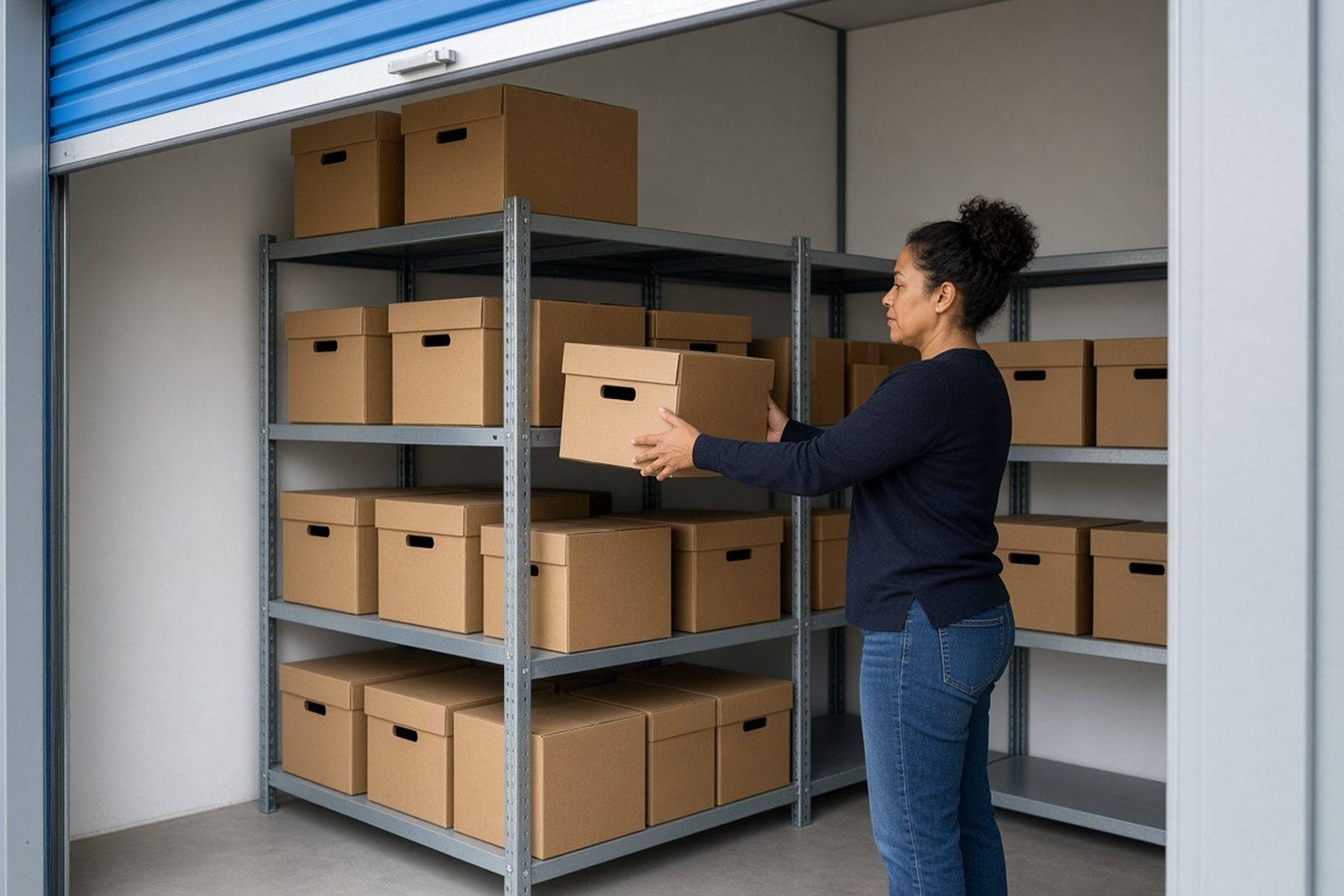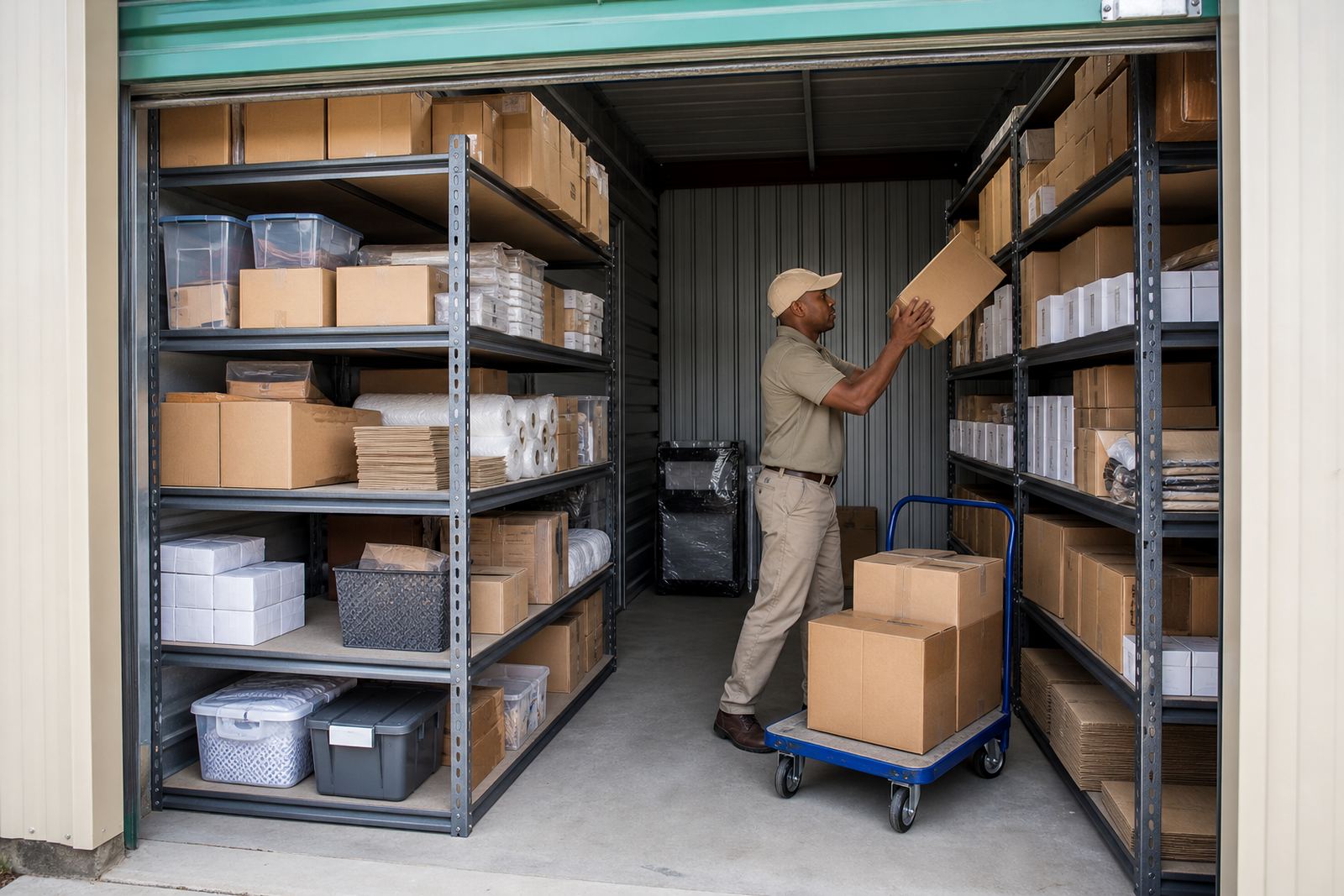


Business units for stock, files and working overflow
Business units are for companies that need a clean, organised place to keep items that should not take up office, workshop or retail floor space. They suit files, archived records, promotional material, boxed stock, point of sale material, tools, samples and spare equipment. For many businesses in Midrand and nearby areas, the main reason for renting is simple: space runs out faster than expected, especially when stock comes in before it goes out.
These units can help when a team is moving premises, opening a new branch, dealing with seasonal stock, or clearing out a room that has become a catch all. They also suit accountants, clinics, agencies, suppliers and small manufacturing businesses that need orderly storage rather than open yard space. It is practical storage, not a long term commitment to extra premises.
- Keep boxed records away from the office floor
- Store surplus stock between deliveries
- Hold tools and equipment that are not needed daily
- Separate business items from home storage when working from home
Size guidance and what changes from unit to unit
Business units are not one size fits all. A small unit can work for archive boxes, a few shelves of supplies or a limited amount of sample stock. A larger unit is more suitable for palletised goods, trade equipment, overflow inventory or the contents of a small office during a move. The right choice depends on how often you need access, how items are packed and whether you want floor stacking or shelving inside the unit.
When ordering, check the internal layout and ask how the usable space is measured. A unit that looks adequate on paper may feel tight if you have awkward items, large cartons or trolleys that need turning space. It helps to measure your boxes and equipment in metres and note the height of stacked items, not just the floor area. If you are storing files, ask how many archive boxes you expect to keep and whether you need regular access or just long term holding.
- Small units suit archive boxes and compact stock holdings
- Medium units suit mixed business storage with regular top ups
- Larger units suit equipment, office contents and bulk stock
- Ask about access width for loading cages, trolleys or hand trucks
Where business storage works best in Gauteng
Business units are useful across Gauteng where premises are expensive, parking is limited and storage rooms are already full. In Midrand, they help companies that work between Johannesburg and Pretoria and need a central point for stock or records. In Centurion and Sandton, they suit firms that want to keep business premises tidy without giving up valuable office space. In Kempton Park and Edenvale, they are handy for businesses with movement through OR Tambo routes or frequent collections.
They also suit businesses in Randburg, Johannesburg and Pretoria that need a place for seasonal promotions, conference materials, event stands or workshop supplies. If your team works odd hours or handles deliveries before opening time, the right unit can reduce pressure on the workplace. For companies with multiple branches, one storage point can make stock control easier too, provided the team agrees on a clear system for what goes in and what comes out.
- Midrand for central access between north and south Gauteng
- Johannesburg for city based offices and trading teams
- Pretoria for public sector, professional and admin records
- Centurion, Sandton and Randburg for mixed business use
Access, security and practical site rules
When storing business items, access matters as much as space. You want to know how entry works, whether visits need to be booked or arranged, and what times suit your staff. That is especially important for businesses that collect stock after hours, handle early deliveries or need to pull a file on short notice. Clear access arrangements help avoid delays and reduce confusion between team members.
Security should be checked carefully before you move anything in. Ask how the site controls entry, how the units are monitored and whether there are procedures for visitor movement and vehicle access. Also check the basics that affect day to day use, like loading points, lighting, corridor width and whether your team can get a vehicle close enough for easier offloading.
- Confirm who may enter and how access is arranged
- Check lighting, monitored areas and perimeter controls
- Ask about vehicle approach, loading space and trolley use
- Make sure your staff know the site rules before the first visit
Using the unit day to day
Business units are designed for storage rather than production, so the main job is safe packing and sensible placement from the start. Heavy boxes go on the bottom, frequently used items near the front, and fragile stock should be protected with proper wrapping and clear labels. If you are keeping files, leave room for a walking path so staff are not pulling boxes down one by one.
Check what may be stored before you move anything in. This protects the building and your stock and avoids fire risk.
For businesses storing display fridges, electronics or other powered items, make sure the equipment is switched off, cleaned and prepared correctly before storage. In coastal humidity or damp conditions, proper covering and ventilation can help prevent rust and mould. It is also wise to check that cartons are dry and well sealed, because one wet box can damage more than just the contents inside.
Packing and care before move-in
Good business storage is not only about putting items away. It also needs regular checking. Ask whether the site has a process for cleaning shared areas, reporting damage and keeping access routes clear. Inside your own unit, review stock from time to time so old files, broken equipment and dead stock do not build up. A quick check every few weeks can save a lot of sorting later, and it keeps the unit working as intended.
Before you order, check the main practical points: the size you actually need, how often you will visit, whether you need help choosing packing supplies and whether your staff need access on predictable days. Also confirm if you will be storing boxed goods, archive material, tools or mixed business items, because the packing method may differ for each. If your stock changes often, choose a unit size with a little spare capacity rather than packing everything edge to edge. That way you can move items without making the whole unit unstable.
- Confirm the unit size against your actual inventory list
- Ask how access works for your team and deliveries
- Check whether the site allows the type of items you want to store
- Plan for labels, shelving and regular stock checks
Support for growing businesses in Midrand and beyond
Many businesses rent storage because growth creates pressure in places people do not expect. The filing room fills up, stock starts taking over the office, or tools get stacked in corners because there is nowhere else to put them. Business units give you a practical place to reset that order. They are useful for move in support, archive planning, stock organisation, packing station setup and move out planning when your company needs a cleaner working environment.
LastBox serves businesses across Midrand, Johannesburg, Pretoria, Centurion, Kempton Park and surrounding areas from the Midrand base. If you are comparing options, focus on fit, access and day to day usability rather than just the name of the unit. The right storage setup should make work easier, not add another job for the team.
Unit details
| Product type | Business storage units for files, stock, tools and equipment overflow |
|---|---|
| Area served | Midrand, Johannesburg, Pretoria, Centurion, Kempton Park and nearby Gauteng areas |
| Typical uses | Archive boxes, promotional materials, boxed inventory, workshop tools and office move storage |
| Access | Arranged access for business users, with site rules to be confirmed at enquiry |
| Storage conditions | Dry, enclosed storage suitable for general business goods and packed items |
| Ordering checks | Unit size, access needs, item type, restricted items and packing requirements |