Why event gear needs a repeatable packing system
When you handle events regularly, the same items tend to come in and out of storage: trestle cloths, signage, display stands, extension leads, table décor, cables, folders and branded items. If each job is packed differently, it takes longer to load, unpack and check stock.
For businesses in Midrand, Johannesburg or Pretoria, this is especially useful when venues need quick turnaround. A consistent system means one person can collect a box and know it contains the right items for that event type. It also helps when you are splitting gear between branches or keeping backup supplies ready for short-notice bookings.
Choose storage units that match event cycles
Event gear does not all move at the same pace. Some items are used every week, while others sit for months between exhibitions, product launches or year-end functions. That is why a storage unit should be arranged around access, not just size. Place fast-moving stock near the front and seasonal items deeper inside the unit so collection stays simple.
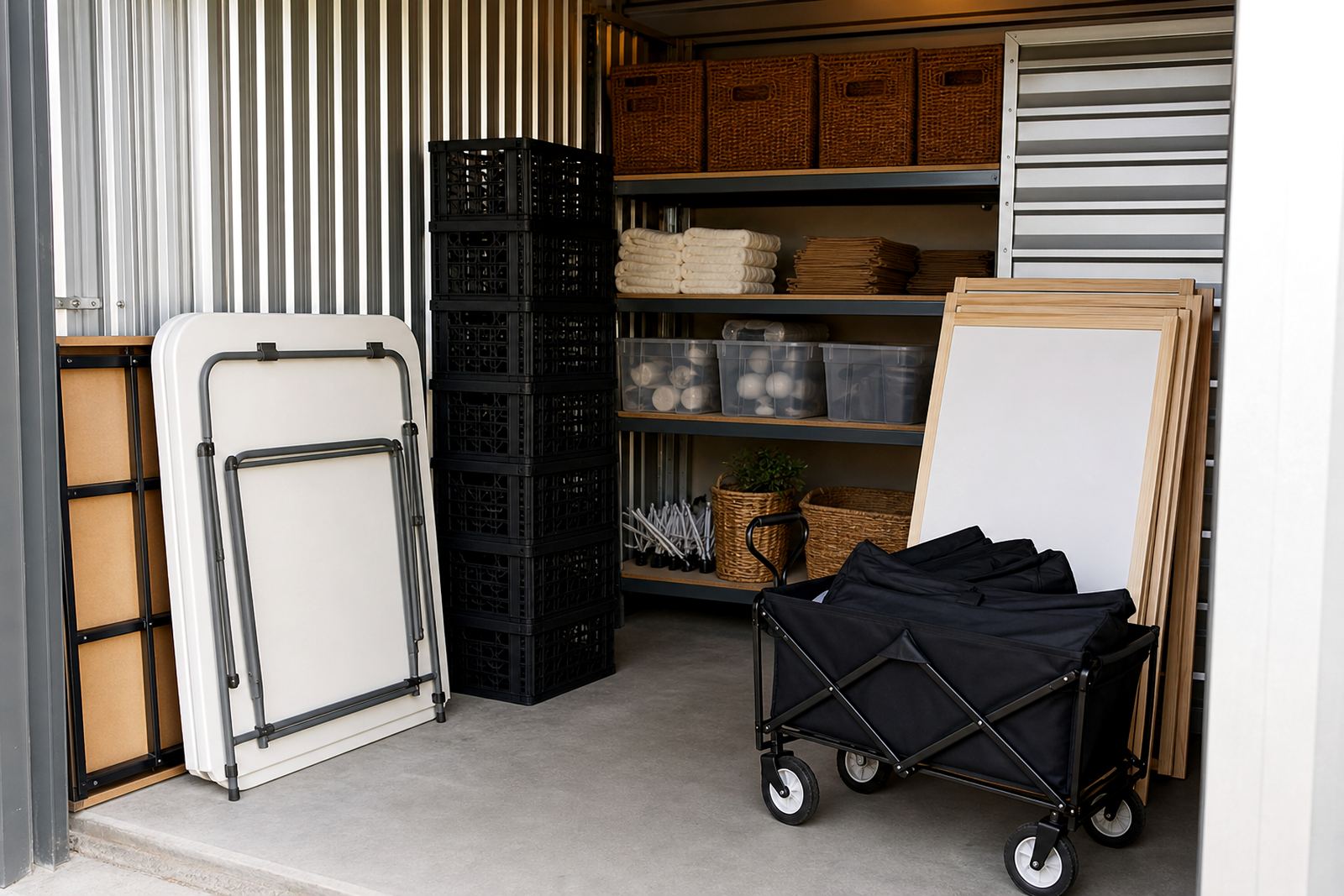
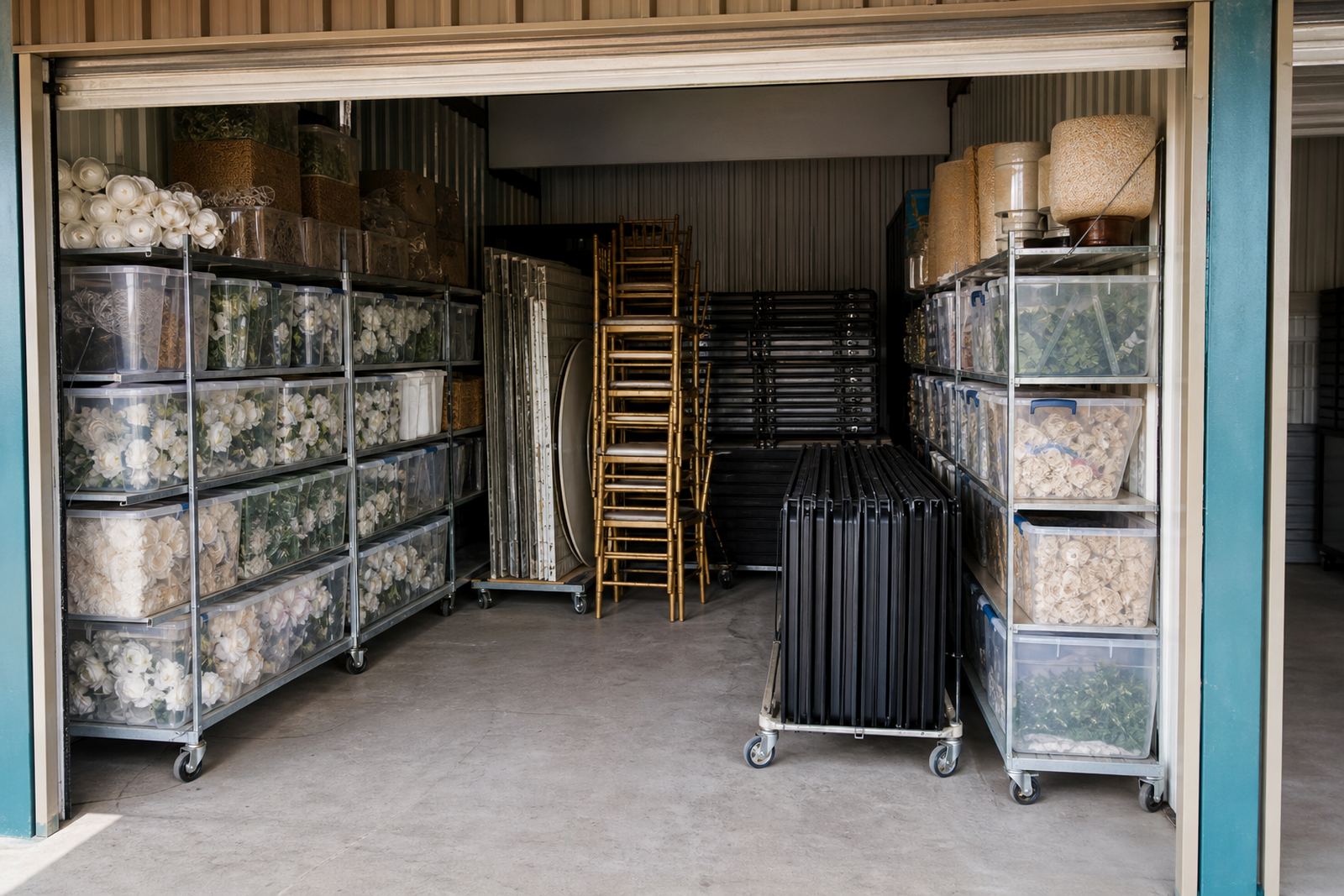
In Gauteng, many event teams also need room for packing tables, fold-up display materials and sealed stock tubs. A dry, secure unit is useful for keeping items clean between bookings, especially if your gear travels between Midrand, Centurion and Kempton Park. If you store printed materials or fabrics, avoid putting them directly on the floor and allow for airflow where possible.
- Keep frequently used items at waist height for quicker loading.
- Store fabric, paper and printed items in sealed boxes or tubs.
- Leave a clear aisle so you can check stock without unpacking everything.
- Group items by event type, such as expo, conference or activation.
Label boxes by event type, not by odds and ends
Loose labelling slows everybody down. If a box is marked only with vague notes like misc or event stuff, the team still has to open it and check. A better method is to label by event type, zone and contents. For example, you might separate display cloths, counter items, cables and consumables into different boxes, then add a simple colour or number system that stays the same across all branches.
That approach is especially useful when stock is shared between a storage unit in Midrand and another collection point in Sandton or Edenvale. Your staff can prepare a quick load list before collection, and your event crew can confirm missing items before leaving the venue. It saves time and reduces the chance of leaving out a small but important item like gaffer tape or spare clips.
- Use bold external labels that can be read in low light.
- List the main contents on at least two sides of the box.
- Mark fragile items clearly and keep them on top of heavier stock.
- Use the same naming style for every event, so records stay easy to follow.
Packing supplies that help event stock stay ready
Good packing is not only about the box. It depends on the material inside and the way each item is secured. Bubble wrap, kraft paper, strong tape, marker pens, cable ties, resealable bags and plastic tubs all help keep event stock organised. For mixed gear, smaller containers inside a larger box often work better than one overfilled carton.
In humid coastal conditions gear needs extra care, but even in Gauteng dust and temperature changes can cause problems if items are left open. Keep paper materials flat, wrap sharp edges and store cords so they do not tangle. If you are packing items that need assembly at the venue, keep all the fittings in one bag and tape it to the main piece or place it in the same marked box.
- Use one box for one category of item where possible.
- Keep screws, clips and small fittings in sealed labelled bags.
- Wrap delicate décor so it does not rub against hard surfaces.
- Do a quick check before sealing each box so missing items are spotted early.
Access planning for fast collections and same-week events
Event work often changes fast. A client confirms on Monday, stock moves on Tuesday and the setup happens by Thursday. That means access to your storage unit must be simple enough for quick collections, but still controlled enough to keep gear secure. Decide who may collect stock, when they may access it and which items can leave the unit without a full sign-out.
For teams working between Midrand, Pretoria and Johannesburg, it helps to separate recurring jobs from one-off events. Create a packing station setup in the unit or at your premises so items can be checked, counted and re-packed the same way every time. This avoids the common problem of opening boxes on a busy morning and finding cables mixed with table décor and signage hardware.
Access arrangement also matters for business storage support. If your event team, installers and drivers all use the same stock pool, make sure every collection follows the same process. It keeps the unit tidy and cuts down on replacement costs for items that get misplaced.
A Midrand example: keeping expo gear turn-key
A local exhibition team based in Midrand may need to move between venues in Johannesburg, Centurion and Kempton Park within the same month. Their common gear includes branded tablecloths, display boards, extension cords, product samples and registration materials. If that stock is packed by event type, the team can pull one set of boxes and know the main items are all together. No one needs to open six cartons to find a single cable or spare clip.
This is where storage units and packing advice work hand in hand. A clean layout with clear labels, regular stock checks and a simple restocking routine helps the team stay ready for the next booking. It is practical for small businesses too, especially where one person handles both sales and event setup. With the right system, the stock is easier to count, easier to move and less likely to go missing between jobs.
What to sort before the next order goes out
Before you place the next order for event gear, take time to review what is already stored, what needs repacking and what should be grouped differently. This is where decluttering support and archive planning help, especially if your unit also holds old banners, retired display items or paperwork from previous events. Keep active stock separate from archive material so the team does not waste time searching through outdated items.
If you are preparing for a season with several bookings, break the work into small steps: check stock, clean items, replace damaged packaging and confirm what should be held ready for the next dispatch. For businesses in Gauteng, that kind of preparation is often the difference between a smooth collection and a rushed one. It also makes it easier to train new staff, because the system stays the same from one event to the next.