
What book boxes are made for
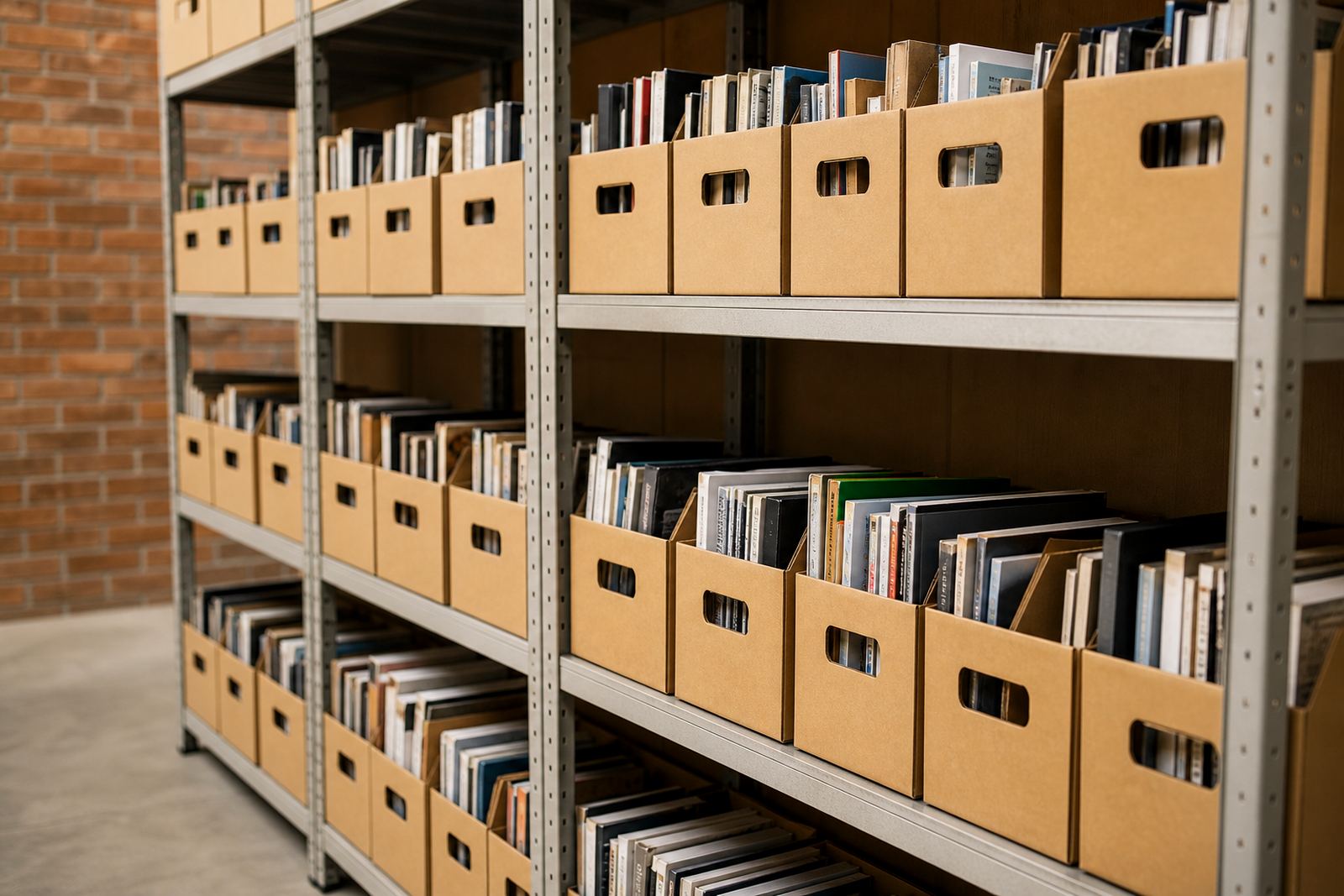
Book boxes are used for dense items that can overfill a larger carton, making the box too heavy to lift safely. They are a sensible option for home moves, office packing, archive work and storage runs between Midrand, Johannesburg, Pretoria, Centurion and Kempton Park.
Because the carton is compact, you can keep the weight down while still packing a fair amount inside. That makes it easier for staff, movers or family members to handle the load, and it helps reduce crushing during stacking in transit or in a self-storage unit.
- Books and study material
- Files, folders and records
- CDs, manuals and small stationery packs
- Heavy kitchen items like tins or jars
- Archived paperwork for business storage
Sizes and packing options
Book boxes are normally chosen in one practical size range rather than many very large formats, because the aim is to manage weight not just volume. When ordering, check whether you need standard cartons only, or a mix of cartons and packing materials for protection and spacing.
For heavier loads, use the box for the base items and add lighter fillers on top. Do not leave empty space if the carton will be handled often, because shifting contents can split the sides over time. A properly packed box is easier to lift and store, and looks neater in a stack.
- Single wall cartons for light to medium book loads
- Double wall cartons for heavier packing and longer storage
- Bundle orders for moving day or archive projects
- Optional packing supplies such as tape, wrap and labels
Where book boxes suit best
These cartons suit flats, family homes, offices, school rooms and retail back rooms where small, heavy items need to be moved or stored in an organised way. They are also useful for students packing up after term, or for companies that need to sort records by department and date.
In Gauteng, the main advantage is practical handling. A smaller carton is easier when lifts are busy, stairs are involved or access times are limited at a storage facility. They also work well in Midrand and nearby industrial areas where teams may need to move stock in stages through the day.
- House moves and decluttering
- Office move support and archive planning
- Student storage over holidays
- Stock organisation for small businesses
What you need to pack
Book boxes are a packing product, so the main requirement is enough space to sort, tape and label your cartons before moving them into storage or onto a vehicle.
If you are preparing a garage, storeroom or office packing station, keep a clear surface and a safe cutting tool nearby. On hot or damp days, especially along the coast or in buildings with poor ventilation, it helps to keep the cartons off a wet floor and away from direct moisture. That small step makes a real difference over time.
- Best kept dry and off the floor
- Label each carton before sealing
Care and storage
Book boxes are simple to care for, but they perform best when treated properly from the start. Keep them clean, dry and folded flat until needed, then tape the base well before loading. If a box becomes soft from moisture or overfilling, replace it rather than reusing it for another heavy load.
For storage use, place the heaviest boxes low and build lighter stacks above them. This helps prevent sagging and crushing. If you are packing for a long stay in a unit, use a clear label on at least two sides so you can find the right carton without unpacking everything.
- Store unused cartons flat in a dry area
- Avoid overpacking one box with loose books
- Keep packed cartons away from damp walls
- Replace any crushed or water marked box
Before you move in
Before ordering, think about what you are packing and how the cartons will be moved. A small box can hold a surprising amount, but weight still matters. If your load includes mostly paper or hardcover books, it is better to plan more cartons than to overload a few.
It also helps to check the access at your home, office or storage unit. Narrow passages, stairs and basement storerooms all affect how much you can carry at once. If you are combining boxes with self-storage, ask about unit size guidance and access arrangement so your packing plan suits the space.
- Type of items being packed
- Weight limits for safe lifting
- Quantity needed for the move or storage stay
- Whether you also need tape, wrap or labels
- How the cartons will be transported and stacked
Unit details
| Product type | Smaller packing carton for heavy items |
|---|---|
| Typical use | Books, files, records and dense household items |
| Size approach | Compact carton format chosen to manage weight |
| Material | Corrugated cardboard packing carton |
| Care | Keep dry, sealed and stored flat before use |
| Best suited for | Moves, storage, archives and office packing |