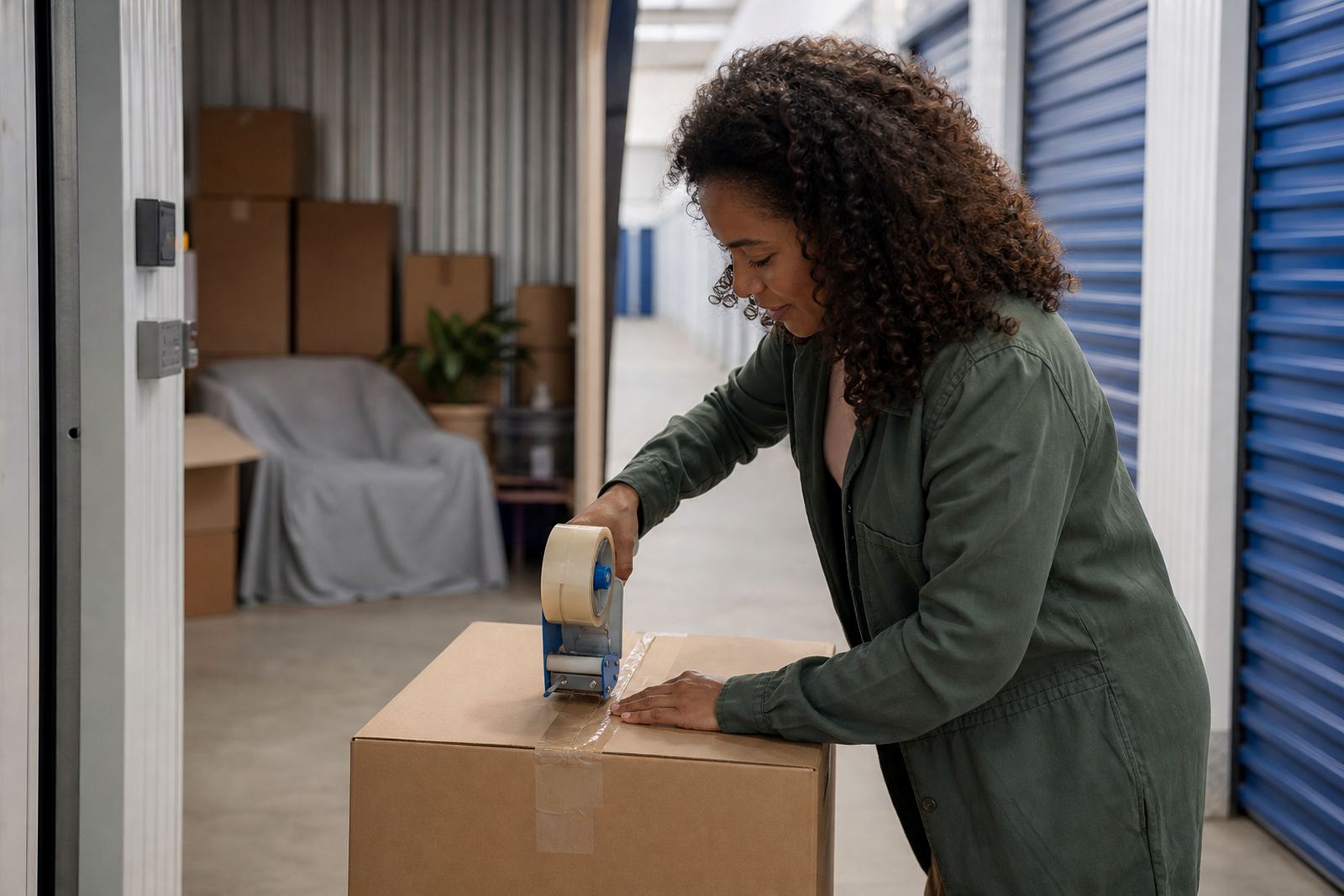


Start with a quick sort before you pack
Before you seal a single box, sort what you are keeping, donating, selling and storing. This saves space and helps you avoid paying to store things you no longer need. In Midrand, Johannesburg and Pretoria we often see people rush this step, then arrive with mixed boxes that are hard to stack and even harder to find later.
Set aside one area for storage items only. Keep fragile items together, paperwork together, and seasonal items together. If you are storing business stock, group by product type or dispatch priority so you can find what you need when orders come in. A bit of planning now makes move-in faster and easier to manage.
Pack room by room and keep each box focused
Pack one room at a time so the contents stay organised. Try not to mix kitchen items with office files or bedding with tools. When each box has a clear purpose, you can unpack only what you need without opening every carton.
- Use smaller boxes for books, files and dense items
- Use larger boxes for linen, cushions and light household goods
- Keep heavy items low and avoid overfilling
- Fill gaps with packing paper so items do not shift in transit
- Seal each box securely with tape along the base and top
If you are moving from a flat in Sandton or a family home in Centurion, room-by-room packing also helps your mover place items in the right order at the storage unit. That saves time on arrival and makes stacking neater.
Protect fragile items from heat, moisture and movement
Gauteng weather can swing from dry heat to summer rain, so pack delicate items with protection in mind. Wrap glass, ceramics, mirrors and ornaments individually. Use packing paper, bubble wrap or soft linen around breakables and keep them upright where possible. Do not leave empty space inside a box because movement during transport can cause chips and cracks.
For coastal humidity concerns are common, but even inland storage can pick up damp if items are packed wet or dirty. Make sure bedding, curtains and clothing are completely dry before boxing. Clean garden tools, appliances and sports gear first so rust and smells do not spread to other items. It is worth the extra half hour, trust me.
Label clearly so you can find things later
Good labels make storage much easier, especially if you will need regular access. Write on more than one side of the box and keep the wording simple. A box marked “Kitchen, mugs and plates” is more useful than a vague label like “misc”.
- Mark the room or category on every box
- Note fragile items with a clear warning
- Number the boxes if you have many cartons
- Keep a list of what is inside each box on your phone or notebook
- Use colour-coded tape for different rooms if that helps your team
If you are storing archive files, office stock or event equipment, labels should also show priority. That way your staff can get to the right items quickly without unpacking half the unit. Clear labels are small work but they make a big difference.
Prepare furniture, appliances and bulky items properly
Large items need a different approach. Remove loose shelves, detachable legs and drawers where possible, then keep screws and fittings in a labelled bag taped to the item. Clean furniture before storage so dust and crumbs do not attract pests. Cover pieces with blankets, moving covers or plastic sheeting that still allows air flow if needed.
Appliances should be dry and empty. Defrost fridges and freezers well before move-in, wipe them clean and leave doors slightly open for ventilation. For office furniture and business equipment, bundle cables neatly and label the parts. A tidy load is easier to store, and it helps prevent scratches when units are accessed later.
Plan the unit layout before move-in day
Think about what you will need first and last. Items you may want soon, like documents, tools or seasonal stock, should go near the front of the unit. Heavy and rarely used items can go to the back. Leave a narrow walkway if you expect to visit the unit often, especially if you are managing business storage or student storage during term breaks.
Stack heavier boxes on the bottom and lighter boxes on top. Keep mattresses, artwork and mirrors upright if they are stored flat only, and avoid placing anything directly on top of them.
Final checklist before you leave home or office
Before you head out, do one last walk-through. Check that boxes are sealed, labels are visible and fragile items are marked. Make sure you have keys, access details and any paperwork you need for the move-in. If you are using packing supplies, keep spare tape, a marker and a knife in a small carry bag so they are easy to find.
- All boxes sealed and labelled
- Furniture cleaned and wrapped
- Appliances defrosted and dried
- Loose parts packed together
- Access details ready before arrival
- Important documents kept separate from storage items
At LastBox, we help customers across Gauteng with move-in support, packing supply advice, unit size guidance and access arrangement. Whether you are storing household goods, office files or stock, a solid checklist keeps the job straightforward and helps you settle in without last-minute stress.