
What Plastic Bins Are Used For
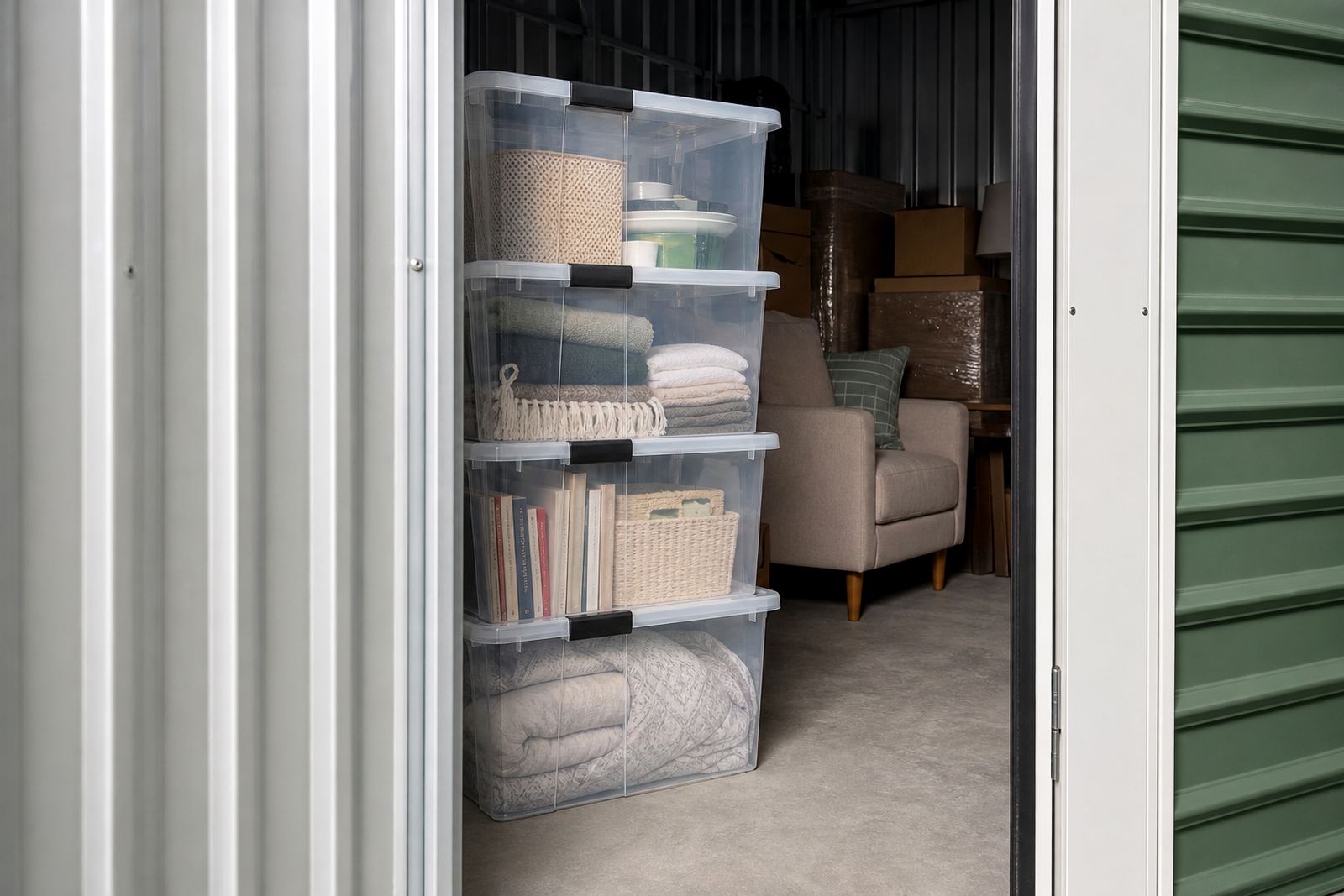
Plastic bins are rigid reusable containers made for general storage and transport. They are useful when you need one container that can hold mixed items, stack safely and be handled often without the box breaking down quickly. In a storage setting, they help keep loose goods in order, which makes loading, moving and later retrieval much simpler.
They suit personal and business use. At home, people use them for clothing, toys, books, documents and seasonal items. For business customers, they are handy for stock holding, parts, files, sample products and packed equipment. They are also useful for move days, archive planning and packing stations where items need to be separated by category.
- Reusable for repeated moving and storage cycles
- Stackable for better use of floor space
- Suitable for mixed items that do not need a full carton
- Easier to wipe clean than many soft containers
Sizes and Options We Supply
Plastic bins are not all the same size, so the right choice depends on what you are packing and how often you need to lift it. Smaller bins are better for heavier items such as tools, files or pantry goods because they stay manageable when full. Medium and larger bins suit lighter but bulkier contents like clothing, bedding or promotional stock.
When choosing between options, look at the internal space, lid fit and whether the bin has handles or grip points. A bin that is too large can become awkward and unsafe when packed with dense items. A smaller bin with a firm lid can be easier to stack in a unit or vehicle and gives better control during move-in.
- Small bins for dense or heavy contents
- Medium bins for mixed household items
- Larger bins for light but bulky goods
- Lidded options for dust protection and stacking
- Handle or grip features for easier carrying
For customers in Midrand, Johannesburg, Pretoria, Centurion and Kempton Park, the best option often depends on where the bin will be used first, then whether it will move into a storage unit afterwards. If you are packing for a business, it helps to group by department or shelf section so retrieval is faster later on.
Where Plastic Bins Suit Best
Plastic bins work well in dry storage and in places where items are handled regularly. They are often chosen for garages, storerooms, offices, retail back rooms, student rooms and temporary move storage. In Gauteng, they are useful for customers who need practical protection from dust and day-to-day handling, especially when packing mixed contents that do not fit neatly into one size of carton.
They are also a good choice for business storage support. Shops and offices often use them for archive boxes, stationery, event items, point of sale materials and seasonal stock. If you are decluttering before a move or arranging an office move, bins help separate what stays, what goes into storage and what needs to remain easy to access.
- Home decluttering and seasonal storage
- Moving house and short term holding
- Office records and stock organisation
- Student storage between terms
- Retail back room sorting and overflow
For coastal humidity in parts of Gauteng outside the province, or in damp garages and outbuildings, it is still important to pack items properly. Plastic bins help, but they should not be used as a reason to pack wet or unclean items inside. Always dry goods first and allow airflow where needed.
Stacking bins in the unit
Plastic bins are ready to use as soon as they arrive, which makes them a simple choice for fast packing and move planning.
What matters is the space where they will be stored. Make sure shelves, floor areas or storage unit corners can take the stacked height without blocking access pathways. If bins are being kept in a storage unit in Midrand, Sandton or Randburg, allow space to reach items at the back without unloading everything first. For business use, leave enough room for labels to face outward so you can identify contents quickly.
Sealed bins keep stock organised and protected from dust and damp, which helps when you only visit the unit now and then. Store them in a clean, dry area and do not press them tightly against walls where moisture can build up.
Care, Cleaning and Long-Term Use for storage renters
Plastic bins are easy to care for, but good handling makes them last longer. Wipe them out before first use and again after moving contents, especially if they held dusty items, packing filler or food packaging. A mild detergent and a soft cloth are usually enough. Avoid harsh scrubbing that can scratch the surface and weaken the appearance over time.
Check lids, handles and corners before each use. If a lid no longer closes properly, the bin may still be useful for open storage but not for stacking or dust-sensitive contents. Keep heavier items in the bottom and lighter items on top. Do not overload a bin beyond what one person can lift safely, because dropped loads can damage the bin and the contents.
- Clean before and after use
- Store empty bins nested where possible
- Keep out of direct sun for long periods
- Check for cracks, warping or loose lids
- Use labels so items are easy to find later
In busy storage areas, a bin that is sorted and labelled properly saves time during move-out planning and archive retrieval. That is one reason they suit offices and homes that need order without taking up too much space.
Before you move in
Before ordering plastic bins, think about what will go inside them, how often they will be moved and where they will be stored. A bin for books or tools needs a different strength and size from a bin for clothing or linens. You should also check whether you need lidded bins, clear sides, reinforced handles or a nesting shape for return storage.
It is also worth measuring the space where the bins will sit. This helps if you are planning for a storage unit, a packing station or a room at home where every metre counts. If the bins are for business stock, consider how they will be labelled and whether your team needs quick access to the contents from the front or top.
- Contents type and weight
- Need for lids and stackability
- Storage space and access route
- Labelling method and sorting system
- How often the bin will be moved or opened
Clients across Gauteng can use the enquiry form on our contact page to ask about the right bin type for moving, storage or stock control. We can help with unit size guidance, packing supply advice and practical storage planning so the bins you choose suit the job from the start.
Unit details
| Product type | Reusable plastic storage bin |
|---|---|
| Use | Home storage, business stock, moving and archive sorting |
| Construction | Rigid moulded plastic |
| Handling | Often supplied with grip points or handles depending on option |
| Stacking | Designed for stable stacking when correctly loaded |